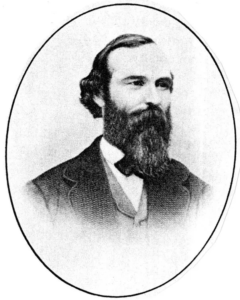
James Leonard Plimpton patented the “guidable parlor skate” on January 6, 1863, fundamentally transforming roller skating into a controlled, graceful sport. Born in Medfield, Massachusetts, Plimpton developed a four-wheel “rocking” mechanism that allowed users to mimic the curves of ice skating, sparking a global trend and the rise of dedicated skating rinks.
The evolution of modern skating was not an accident of leisure but a result of medical necessity and mechanical curiosity. James Leonard Plimpton, born on April 14, 1828, spent his youth in rural Medfield as a tinkerer fascinated by the machinery of the Industrial Revolution. By age 16, he was already apprenticed to a machine shop, and by 18, he had risen to foreman in a large shop in Claremont, New Hampshire. This early immersion in precision engineering provided the technical foundation for a discovery that would later redefine urban recreation.
The catalyst for the invention arrived during the winter of 1860–1861. At age 32, Plimpton experienced a decline in his health, leading his doctor to recommend ice skating in the fresh air of Central Park. The results were immediate and positive. However, the seasonal nature of ice created a problem: when spring arrived, the ponds melted, and the health benefits vanished. Plimpton sought a way to replicate the fluid, graceful movements of ice skating on dry land.
Engineering the Rocking Action Mechanism
cluster (priority): medfieldhistoricalsociety.org
Plimpton’s breakthrough was the creation of what he termed “parlor skates.” Unlike previous attempts at wheeled footwear, Plimpton’s design focused on maneuverability. According to the Medfield Historical Society, these skates utilized two rollers under the ball of the foot and two under the heel.
The genius of the design lay in the arrangement of the wheels, which allowed them to rock in the direction the skater leaned. This “Rocking Action” technology enabled the skater to control both speed and direction simply by shifting their body weight. By utilizing foot pressure to guide the skate, Plimpton successfully duplicated the curves and elegance of ice skating on a hard surface.
The early prototypes were not the high-performance polyurethane machines seen in modern arenas. Plimpton’s original wheels were crafted from boxwood, a choice that reflected the materials available to a 19th-century New England entrepreneur.
From Social Elite Invitations to Global Rinks
cluster (priority): nfl.com
Plimpton understood that a superior product required a superior launch. Rather than relying on conventional advertising, he targeted the social hierarchy of New York City. He sent engraved personal invitations to the city’s elite, offering free demonstrations of his invention. This strategy positioned skating not just as a form of exercise, but as a sophisticated social activity.
The impact was immediate. As Kalki Online reports, the success of this design led to the establishment of dedicated “skating rinks” across the globe. The ability to safely and predictably navigate a space transformed the activity from a novelty into a structured sport.
By securing a patent for his “guidable parlor skates” on January 6, 1863, Plimpton gained the exclusive right to manufacture, sell, and lease the invention for the next 17 years. This period of market control allowed the “rocking” standard to become the dominant architecture for wheeled skating.
The Lasting Legacy of the Quad Skate
cluster (priority): news.google.com
While the industry eventually expanded to include in-line skates, the fundamental principles of the quad skate remain rooted in Plimpton’s 1863 blueprint. The four-wheel configuration and the emphasis on weight-shift control continue to be the standard for many professional skating disciplines today.
The cultural footprint of Plimpton’s work is still recognized by organizations like the Roller Skating Association International of Indianapolis, Indiana, which designates October as National Roller Skating Month.
The transition from boxwood wheels to modern materials has changed the speed and durability of the sport, but the physics of the “rocking action” remain unchanged. Plimpton did more than invent a tool; he created a mechanical language for movement that allowed the human body to glide over land with the same fluidity as it does over ice.
For the modern enthusiast, every turn taken on a quad skate is a direct application of a 160-year-old mechanical insight. Plimpton’s journey from a Medfield machine shop to the ponds of Central Park underscores a timeless truth in sports innovation: the most enduring designs often emerge from a desire to overcome a personal limitation.