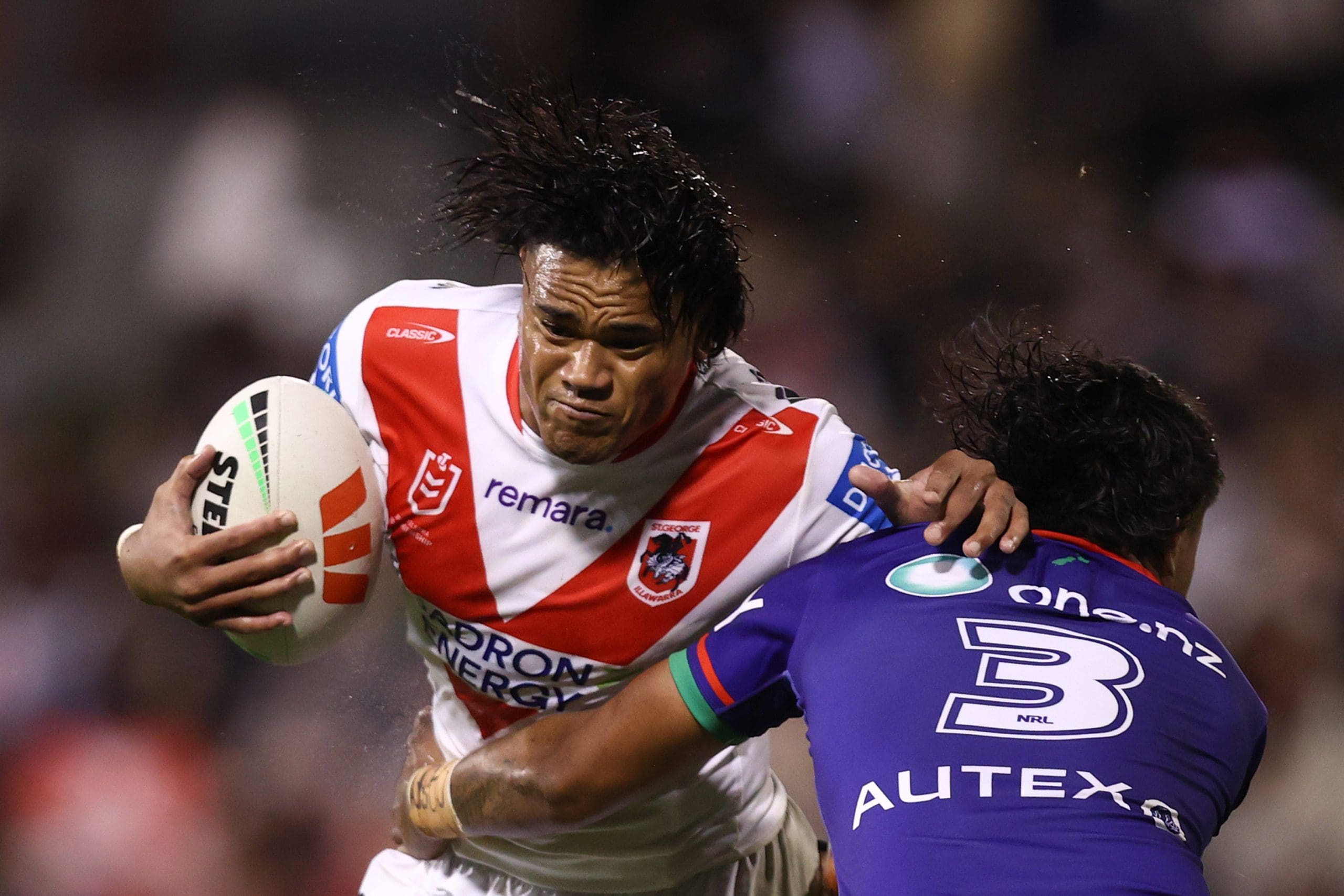
St George Illawarra Dragons powerhouse centre Moses Suli has been granted permission to leave the club at the end of the season despite having a year remaining on his contract. This move comes as the joint-venture accelerates a massive roster rebuild following a brutal 15-match losing streak.
The Dragons are no longer pretending that the status quo is sustainable. After a stretch of failure that saw the club drop 15 consecutive games—including 11 in the current campaign—the front office has shifted into a scorched-earth phase of roster management. While a recent victory over the Brisbane Broncos provided a momentary reprieve, the long-term strategy is now clear: out with the expensive underperformers, in with a targeted core of new talent.
The most high-profile casualty in this shift is Moses Suli. The club has effectively tapped Suli on the shoulder, informing him that he will not be re-signed beyond 2027. More urgently, the Dragons have signaled they will not stand in his way if he secures a new deal elsewhere for the upcoming season.
The Market Struggle for Moses Suli
On paper, Suli remains a destructive force in the outside backs, but his value in the current NRL market is proving volatile. According to reports from Zero Tackle, Suli’s management has been actively shopping the centre to rival outfits, yet the initial response has been lukewarm. Two clubs have already declined the approach, suggesting that other teams are wary of his mixed form over the last 18 months.
This creates a precarious situation for Suli. While he is free to leave, he is only “free” if someone else is willing to pick up his contract. If no one bites, he remains at the Red V for another year, but the relationship has clearly shifted from “franchise cornerstone” to “available asset.”
The decision to move Suli isn’t just about form—it’s about the ledger. By offloading a high-earning powerhouse, the Dragons free up critical cap space to prioritize extensions for their elite junior crop and potentially bring in another outside back who fits the new tactical direction.
Emre Guler and the Super League Exodus
Suli isn’t the only one packing his bags. The Dragons are experiencing a genuine exodus of talent, with Emre Guler officially heading for the Super League. Guler, who featured in every single one of the Dragons’ 12 matches this season, has signed a multi-year deal with Wakefield Trinity.
Guler joins a growing list of Dragons departures, following the exits of Damien Cook, Mathew Feagai, and Jadyn Su. His move to Wakefield is particularly notable as he will reunite with Roger Tuivasa-Sheck, who has also agreed to join the Trinity.
For Guler, the move is a fresh start after a career that spanned nearly 150 first-grade matches and included a stint with the Prime Minister’s XIII in 2023. For the Dragons, it is another piece of the puzzle in a total systemic reset.
The New-Look Dragons Roster
cluster (priority): Fox Sports
The Dragons aren’t just subtracting; they are aggressively adding. The club has already secured a wave of high-profile signings for next season to replace the departing veterans and underperformers.
Scott Drinkwater: Set to take over at fullback.
Phillip Sami: A versatile addition capable of playing wing or centre.
Luke Metcalf
Keaon Koloamatangi
Connor Watson
This influx of talent creates a logistical headache for the coaching staff. The arrival of Drinkwater forces a repositioning of Clint Gutherson, while Phillip Sami’s versatility puts further pressure on the roles of Valentine Holmes and Setu Tu.
There is a palpable tension regarding the “backend” of the careers of stars like Holmes and Gutherson. While both delivered exceptional performances in the win over the Broncos, their long-term fit in a rebuilding side is a point of internal contention. The club is balancing the need for veteran leadership with the reality that they cannot afford to carry aging stars who no longer fit the athletic profile of a modern, high-tempo system.
Wider NRL Fallout: The Royce Hunt Factor
cluster (priority): Zero Tackle
The Dragons’ volatility is mirrored across the league as clubs scramble to clear cap space. A prime example is the Wests Tigers, who are reportedly looking to move star front-rower Royce Hunt to make room to re-sign Samuela Fainu.
Hunt, contracted until the end of 2027, has been linked with a move to the Leeds Rhinos. This represents a potential end to his NRL career given his age and the remaining years of his playing prime. Leeds coach Brad Arthur has been candid about the ongoing negotiations.
“We’re looking at our options. Bleasey is getting a few guys thrown at us from the NRL, but we just need to be patient and make sure we know exactly where we need to continue to strengthen our roster. There’s been some discussions with Royce – and quite a few other guys. But Bleasey is doing a good job of being patient and we’ll work it out soon, what direction we need to go in.”
Brad Arthur, Leeds Rhinos Coach
The Hunt situation underscores a broader trend: the “chopping block” is becoming the primary tool for NRL list managers. Whether it is the Dragons gutting their outside backs or the Tigers weighing the value of a veteran prop against a rising star, the league is in a period of aggressive correction.
For the Dragons, the next 30 days are critical. They have successfully broken their losing streak, but the real test will be whether this new-look roster—built on a foundation of strategic exits and high-priced imports—can transform a culture of failure into one of consistency. The “tap on the shoulder” for Suli was the signal; the results on the field will be the verdict.