
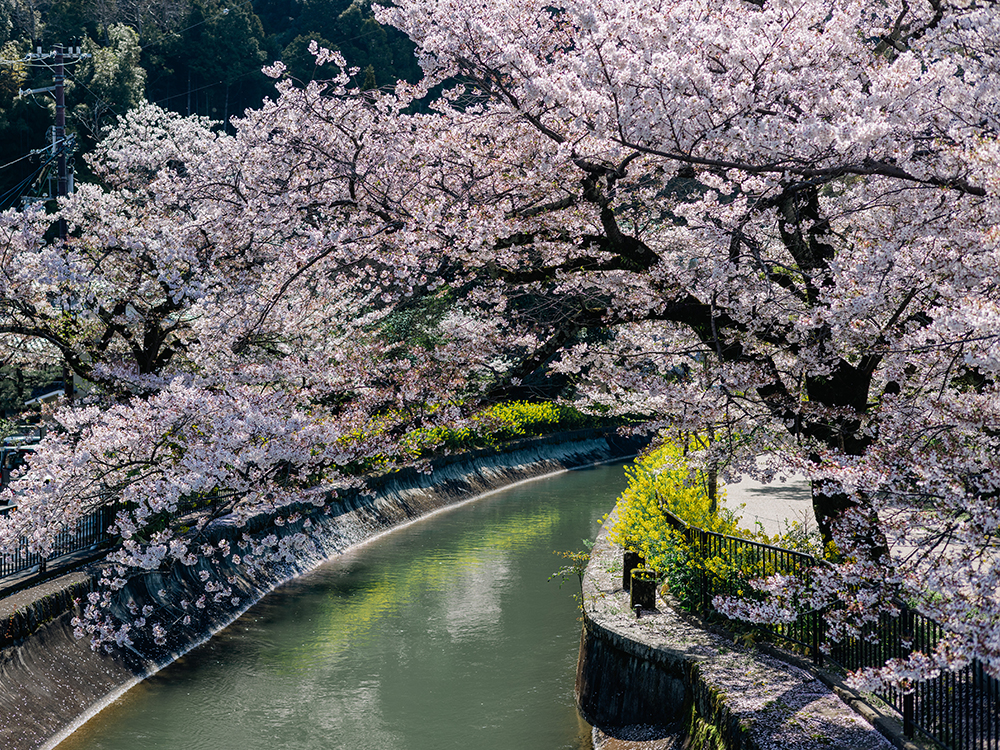
On April 4, 2025, Yasuyuki Aono recorded the peak bloom of the mountain cherry in Arashiyama, Kyoto, as he had done for decades, leaving a blank row below for 2026 that he would never fill.
The Osaka Metropolitan University researcher died on August 5, 2025, halting one of the world’s longest continuous climate records, a dataset stretching back to 812 that tracks the flowering of Prunus jamasakura through historical diaries, court documents and personal observation.
Aono’s work revealed a clear trend: cherry blossoms in Japan have been arriving earlier each year, a shift attributed to rising temperatures and now widely cited as evidence of climate change’s impact on seasonal cycles.
His method relied not on satellites or sensors but on linguistic scholarship — Aono taught himself archaic Japanese to interpret centuries-old texts, extracting bloom dates from poetic descriptions and imperial records that others could not read.
In January 2026, Tuna Acisu of Our World in Data noticed Aono’s university profile had gone inactive, confirming his death and realizing no successor had emerged to maintain the mountain cherry record specific to Arashiyama.
Unlike broader national efforts such as the Japan Weather Association’s tracking of the Somei-yoshino cultivar, Aono’s dataset focused exclusively on a single species in one location, preserving ecological continuity that other projects lack.
After Acisu publicly appealed for a new observer, dozens responded, and a researcher in Japan has now stepped forward to continue the work using the same historical sources and location, though they remain unnamed pending final agreement.
The new keeper will consult the same diaries and records Aono used, aiming to confirm the 2026 peak bloom date in the coming days, thus preventing a break in a sequence that has endured through wars, dynasties and societal transformation.
Acisu said the response to her search brought relief, noting that the record’s continuation honors not just scientific rigor but a quiet, lifelong commitment to observing nature’s rhythms.
The mountain cherry, unlike the more common Somei-yoshino planted across modern Japan, has deep roots in the country’s wild landscapes and cultural history, making its bloom a more authentic indicator of long-term ecological change.
While cherry blossom festivals remain a major spring attraction nationwide, few initiatives track the same variables with the same historical depth, leaving Aono’s record uniquely valuable for understanding how climate shifts alter biological timing.
The blank space for 2026 in Aono’s spreadsheet was more than an empty cell — it was a pause in a 1,200-year conversation between human observation and the natural world, now poised to resume.
Why did Yasuyuki Aono focus on the mountain cherry instead of the more common Somei-yoshino variety?
Aono chose the mountain cherry, Prunus jamasakura, as it is native to Japan and has remained unchanged for centuries, unlike the Somei-yoshino, which was cultivated in the 19th century and lacks the historical continuity needed for a long-term ecological record.

How does the new observer plan to maintain the integrity of Aono’s 1,200-year dataset?
The researcher will leverage the same historical sources — archaic Japanese diaries and court records — and make observations in the exact same location, Arashiyama, Kyoto, ensuring methodological consistency with Aono’s original approach.
