Residents of Chennai, Tiruvallur, and Kanchipuram have taken to the streets to protest frequent, unannounced power outages during a severe heatwave in June 2026. While opposition leaders accuse the TVK government of failing its promises of free electricity, Energy Minister Nirmal Kumar maintains the state is supporting private investment in power production.
Public Protests and Grid Failures in Chennai
Severe summer heat has pushed residents of Chennai and neighboring districts into the streets. According to Tamil Murasu, the intensity of the heat during the Agni Natchathiram period in May increased night-time temperatures, leaving citizens trapped in stifling homes. When prolonged power outages hit the city and its suburbs, public frustration boiled over into street protests.
The crisis is not limited to residential areas. In Vyarspadi, located within the Perambur constituency of Chief Minister Vijay, reports indicate multiple power failures over a two-day period, with outages lasting for extended durations.
Citizens attempting to report these failures have faced further obstacles. Allegations have surfaced that electricity board officials are not providing adequate responses and that phone lines to the offices have been disconnected, leaving the public without a formal channel for grievances.
Political Fallout over the 200-Unit Electricity Promise
The outages have triggered a sharp political offensive against the TVK administration. Critics argue that the government’s current performance contradicts its campaign pledges. Daily Thanthi reports that Nainar Nagendran expressed deep distress seeing families protest in the heat after trusting the government’s electoral promises.
“If we come to power, everyone will get 200 units of free electricity.”
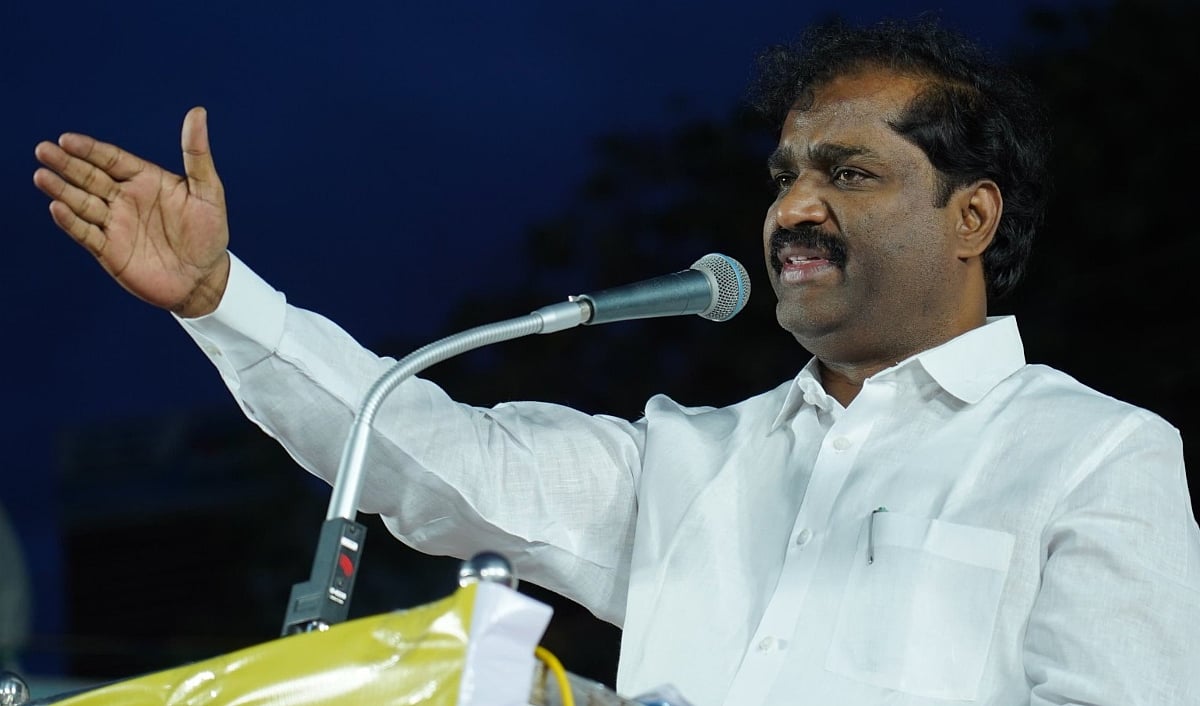
Photo: Daily ThanthiPhoto: Hindu Tamil ThisaiNainar Nagendran, via Daily Thanthi
Nagendran further criticized the government’s justifications for the outages. He noted that while a previous administration blamed squirrels for power cuts, the current TVK government attributes failures to the theft of electrical equipment. He asserted that while the ruling party has changed, the public’s hardships remain the same.
AMMK General Secretary TTV Dinakaran also issued a statement challenging the government’s credibility regarding unannounced cuts.
“From the very day ministers claimed that power cuts were occurring only in a few places and that there would be no unannounced outages, unannounced power cuts lasting several hours have continued throughout Tamil Nadu, demonstrating that the TVK government says one thing and does another.”
TTV Dinakaran, via news.google.com
Demands for Production and Distribution Transparency
Power cut protests rock Chennai; sabotage angle emerges | #shorts
The outages are creating a ripple effect across different socio-economic groups. Students preparing for exams have been forced to study by candlelight, and small-scale entrepreneurs have seen their livelihoods disrupted. As Hindu Tamil Thisai highlights, electricity has shifted from a convenience to an absolute daily necessity for the poor and middle class, including the elderly and people with disabilities.
TVK leader T. Velmurugan has demanded that the government stop treating these outages as a matter of political criticism and instead provide hard data to the public. He is calling for the disclosure of:
Full details of electricity production, demand, and distribution categorized by district.
Transparent records of power distribution provided to corporate entities and industrial firms compared to the general public.
Velmurugan argues that only through the release of this data can the “real reason” for the continuous outages be understood.
In response to the mounting pressure, Energy Minister Nirmal Kumar has focused on the structural approach the state is taking toward power generation. According to Hindu Tamil, the Minister stated that the government is providing full cooperation to investors in the energy sector.
The Minister’s strategy involves a split between production and infrastructure. Under this model, the private sector is encouraged to handle power production, while the state electricity board retains control over all other distribution frameworks and infrastructure.
This policy shift suggests the government is leaning heavily on private capital to solve the production deficit, even as the public faces immediate instability in the distribution network. The contrast between the Minister’s focus on long-term investment and the public’s immediate struggle with heat and darkness remains a central point of contention.