
The current landscape of American AI development is being shaped by the requirements of security clearances. While a significant portion of the industry is moving toward deep integration with the Pentagon, one of the sector’s most prominent players has not been included in these specific classified agreements.
The War Department recently announced that eight frontier AI companies—SpaceX, OpenAI, Google, NVIDIA, Reflection, Microsoft, Amazon Web Services, and Oracle—have reached deals to deploy their capabilities on classified computer networks. This move is designed to accelerate the transition of the United States military into what officials describe as an AI-first fighting force
.
The IL6 and IL7 Security Threshold
The technical core of these agreements centers on two specific security environments: Impact Level 6 (IL6) and Impact Level 7 (IL7). In the hierarchy of government cloud computing, these levels represent the highest tiers of data protection and isolation, designed to handle information that requires stringent safeguards against unauthorized access.
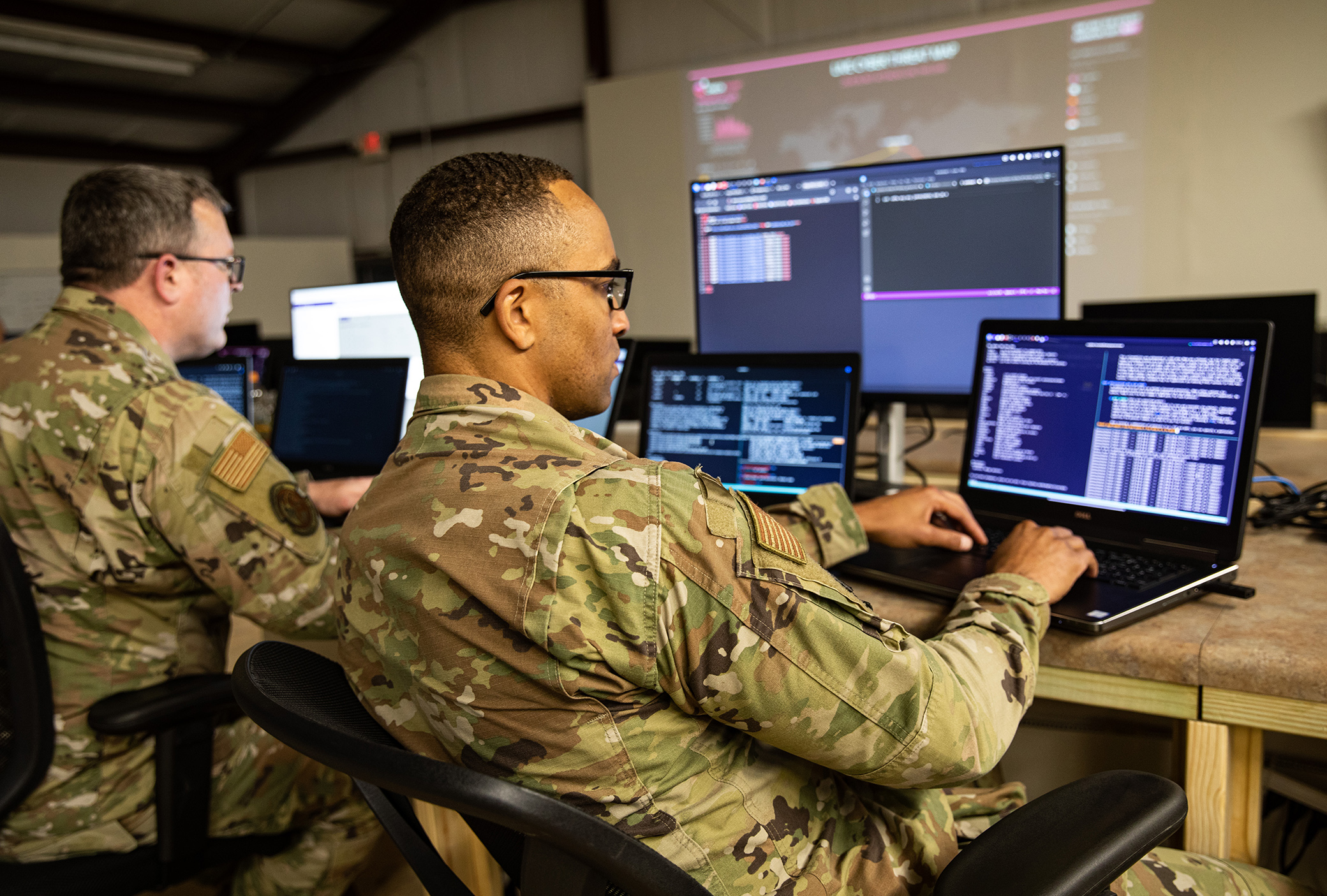
By integrating frontier AI into IL6 and IL7 environments, the War Department intends to streamline how the military synthesizes data and elevates situational understanding. The goal is to augment decision-making in complex operational environments, providing warfighters with what the department calls decision superiority across all domains of warfare
.
The deployment is not limited to a single provider. The eight participating companies will provide resources to deploy their capabilities across both the IL6 and IL7 environments. This multi-vendor approach is a deliberate strategic choice; the department stated it will build an architecture that prevents AI vendor lock
to ensure the Joint Force maintains long-term flexibility.
Scaling the AI-First Fighting Force
The push toward an AI-centric military is already manifesting in the deployment of GenAI.mil, the official AI platform of the War Department. According to official data, the platform has seen rapid adoption, with over 1.3 million Department personnel utilizing the system.
The scale of activity on the platform is high: in only five months, users have generated tens of millions of prompts and deployed hundreds of thousands of agents. Warfighters, contractors, and civilians are using these tools to execute practical tasks, with the department reporting that some processes previously taking months are now completed in days.
This acceleration is part of a broader AI Acceleration Strategy. The department is focusing these capabilities across three core pillars: warfighting, intelligence, and enterprise operations. By leveraging a resilient American technology stack
, the military aims to ensure that its tools are capable of meeting emerging threats while maintaining a domestic ecosystem of model developers.
The mandate for this expansion comes from the top. The War Department noted that these efforts are mandated by President Trump and Secretary Hegseth, with the objective of enveloping warfighters in advanced AI to strengthen the Arsenal of Freedom
.
The Anthropic Isolation
The inclusive list of eight partners stands in stark contrast to the position of Anthropic. Despite being recognized as one of the industry’s key players, Anthropic is not among the companies granted access to the IL6 and IL7 networks.
According to reporting from The Washington Post, Anthropic has become increasingly isolated as it engages in a legal battle with the Trump administration. The friction stems from the Pentagon branding the company as a national security risk.
This designation creates a significant barrier to entry for the company. While its competitors are integrating their models into the most sensitive layers of the U.S. defense infrastructure, Anthropic is fighting in court to overturn the label that excludes it from these strategic partnerships.
The exclusion of a major frontier model developer highlights the specific requirements for accessing classified military data. The War Department’s emphasis on a thriving domestic ecosystem
is coupled with the requirement that participating companies meet the administration’s security assessments.
Strategic Implications for Decision Superiority
The movement of frontier AI into classified networks represents a shift in how the U.S. views the relationship between private technology and national security. The War Department’s conviction is that American leadership in AI is indispensable to national security
, provided that the capabilities are deployed within a secure, controlled framework.
The ability to process classified data through frontier models could fundamentally change the speed of military intelligence. When data synthesis is streamlined and situational understanding is elevated via AI, the time between receiving information and taking action is reduced. This is the essence of decision superiority: the ability to make better decisions faster than an adversary.
However, the current landscape also reveals complexities in the American technology stack. The legal conflict with Anthropic demonstrates that the partnership between the state and the AI industry involves significant regulatory and security hurdles. The branding of a leading AI firm as a security risk indicates that political and security vetting are critical factors when determining who powers the future of warfare.
As the military continues to deploy hundreds of thousands of agents and millions of prompts through GenAI.mil, the military maintains a specific set of integrated partners. The reliance on these eight companies creates a new set of dependencies, even as the department attempts to avoid vendor lock. This creates a military infrastructure where corporate AI development is closely tied to national defense requirements.
