
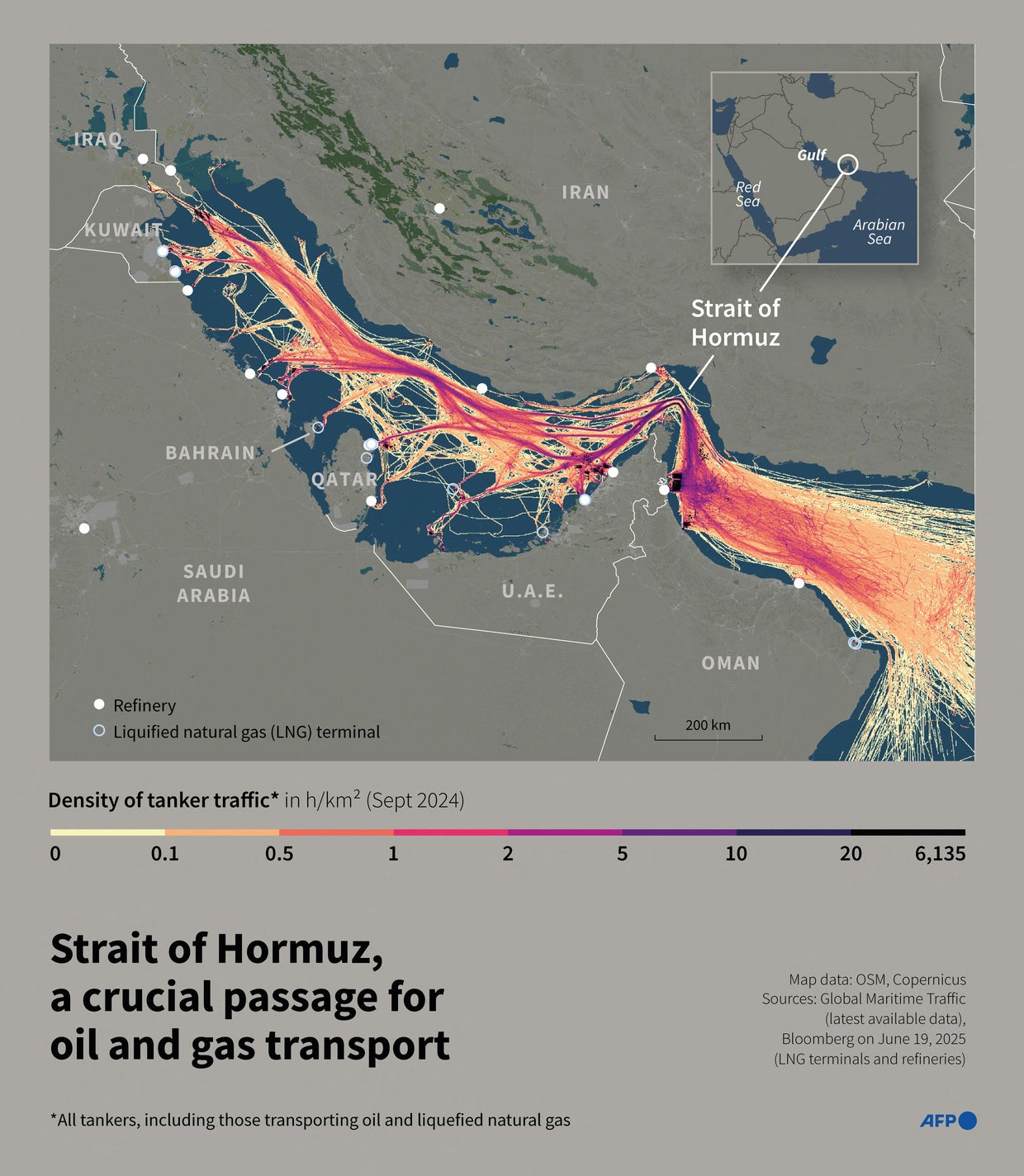
Five empty tankers arrived at Iranian ports in the Persian Gulf in recent days and began loading millions of barrels of oil, according to satellite imagery reviewed by The Washington Post and expert analysis, even as a U.S. Naval blockade seeks to choke off Tehran’s energy exports.
The movement marks a direct challenge to Washington’s effort to impose severe economic pressure on Iran by restricting its ability to load and ship crude from domestic terminals. Satellite tracking shows the vessels — identified as extremely large crude carriers — shifted from anchorage to berths at Kharg Island and other Gulf terminals before commencing loading operations.
Meanwhile, Iran continues to exploit a loophole in the blockade by drawing oil from floating storage vessels stationed in the Gulf of Oman, which were already positioned outside Iranian waters when the U.S. Enforcement began. TankerTrackers.com reports these ships have enabled the dispatch of approximately nine million barrels of crude to foreign buyers, valued at roughly $900 million at current market rates.
These floating reserve tankers are not formally subject to the blockade because they were beyond Iranian territorial limits at the outset of enforcement, allowing Tehran to sell prompt-deliverable barrels without technically violating the restrictions on port-based loading.
Adding to the complexity, two U.S.-sanctioned tankers operating in ballast condition were recently detected entering the Persian Gulf toward Iran, their Automatic Identification Systems active and apparently unimpeded by naval patrols. The U.S. Navy maintains its blockade remains airtight in both directions, claiming 13 Iranian tankers have been turned back since enforcement began.
Parallel to the maritime pressure, the Treasury Department has escalated financial warfare, sending warning letters to banks in China, Hong Kong, the UAE and Oman cautioning that facilitation of Iranian oil transactions could trigger secondary sanctions. Secretary Scott Bessent described the approach as the “financial equivalent” of kinetic action, signaling a shift from targeted restrictions to systemic disruption of Iran’s oil revenue infrastructure.
This hardline stance contrasts sharply with policy just weeks earlier, when the White House waived sanctions on Iranian oil already afloat at sea to alleviate global supply tightness — a rare suspension of the “maximum pressure” campaign that had defined years of U.S. Strategy toward Tehran’s energy sector.
The timing of the renewed crackdown coincides with ongoing diplomatic engagements between U.S. And Iranian officials, reportedly progressing toward a second direct meeting. Iranian negotiators have cited the Israel-Lebanon ceasefire — secured by the Trump administration for 10 days — as a prerequisite for talks, linking regional de-escalation to nuclear negotiations.
Despite the naval and financial pressure, Iran’s ability to blend domestic loading with floating reserve sales suggests the blockade has not yet achieved its intended comprehensiveness, revealing gaps in enforcement that Tehran continues to exploit through pre-positioned assets and sanctioned vessel rerouting.
How are Iranian tankers still loading oil despite the U.S. Blockade?
Satellite imagery confirms five empty tankers arrived at Iranian ports and began loading crude in recent days, indicating the blockade has not fully prevented port-based loading operations, even as the Navy claims to have turned back 13 other vessels.
Why is the U.S. Targeting banks in Asia and the Middle East with warning letters?
The Treasury Department is warning financial institutions in China, Hong Kong, the UAE and Oman that facilitating Iranian oil sales could expose them to secondary sanctions, aiming to disrupt the financial infrastructure supporting Tehran’s energy exports beyond maritime interdiction.
