
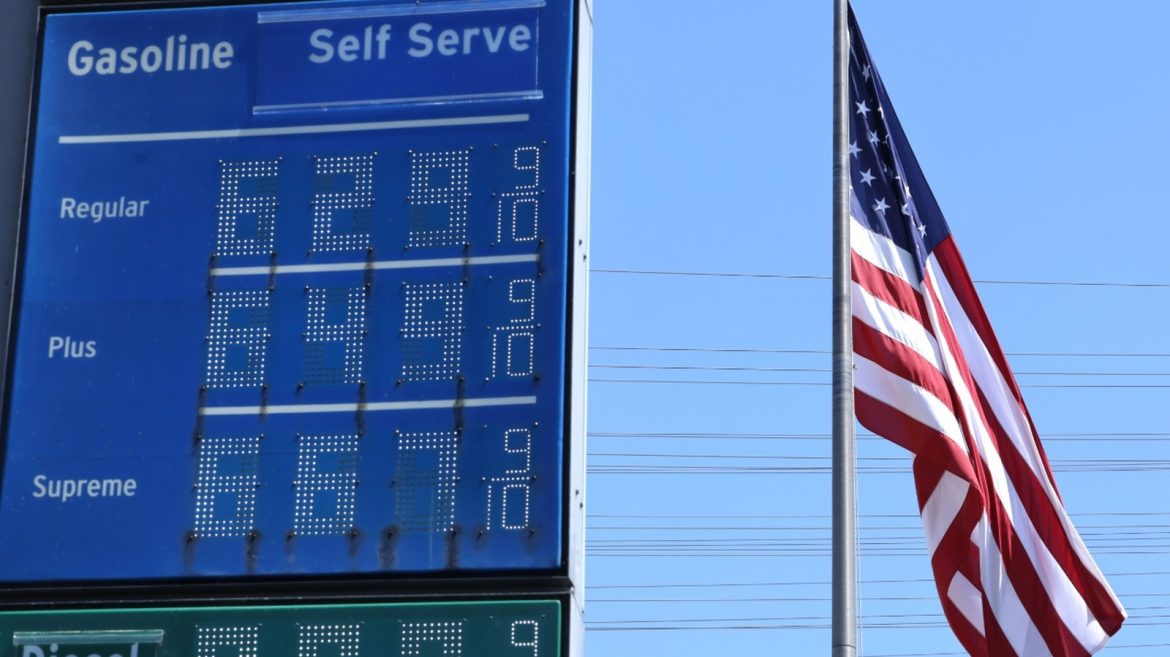
Gas prices are climbing despite the United States producing more oil than it consumes, revealing a gap between energy independence narratives and market reality.
According to the American Fuel & Petrochemical Manufacturers, 40% of the oil processed in U.S. Refineries comes from foreign sources, undermining the idea that domestic production shields the country from global price swings. This reliance persists because many American refineries were built to handle heavy crude oil imported from abroad, not the lighter crude dominant in domestic fields. Retrofitting these facilities would cost billions, making imported oil a cheaper, logistically simpler option in many regions — especially where transporting oil from Canada or Mexico is less expensive than moving it across the U.S.
The global nature of oil trading means that disruptions anywhere reverberate domestically. As noted in both reports, approximately 20% of the world’s oil passes through the Strait of Hormuz, a chokepoint currently experiencing slowed traffic due to regional tensions. When flow through this narrow waterway is impeded, prices spike globally — affecting not just oil from Saudi Arabia or Iraq, but also barrels drawn from Texas or North Dakota.
This dynamic was illustrated in real time by NPR’s The Indicator, which highlighted how Zimbabwe is rapidly depleting its fuel reserves amid soaring prices, although China maintains stable supplies and Recent Zealand adapts through conservation. The contrast underscores how access to financial reserves, refining capacity, and geographic positioning determine national resilience when global supply chains fracture.
For more on this story, see U.S. Stocks Surge as Iran Opens Strait of Hormuz, Oil Prices Drop Sharply.
Compounding the issue is the economic behavior known colloquially as “rockets and feathers” — where oil prices surge rapidly during crises but decline slowly afterward. Traders bid up crude prices in anticipation of profit during supply fears, and those increases are passed directly to consumers at the pump. Even when the immediate threat passes, the descent in prices lags, leaving consumers paying elevated rates long after the initial shock.
The situation reflects a broader contradiction: the U.S. Exports refined products like gasoline and diesel while still importing crude oil to feed its refineries. This nuance gets lost in broad claims of energy independence, which mask the country’s ongoing integration into a volatile global system where local production does not equal price control.
Why does the U.S. Continue to import oil if it produces more than it uses?
Many U.S. Refineries are configured for heavy crude oil, which is more commonly imported, while domestic production yields lighter crude that would require costly retrofits to process. In some regions, transporting oil from neighboring countries is also more economical than moving it across the country.
How does conflict in the Middle East affect gas prices in the U.S.?
Because oil is a globally traded commodity and about 20% of the world’s supply moves through the Strait of Hormuz, any disruption there — regardless of where the oil originates — can trigger price increases that are felt worldwide, including at U.S. Pumps.