Conflicting Reports on Yellow Alert Districts
Meteorological reports for the current period show significant discrepancies regarding which specific districts are under yellow alerts. Manorama Online identifies five districts—Pathanamthitta, Kottayam, Idukki, Ernakulam, and Kasaragod—as being under yellow alert today. However, News18 Malayalam reports that only four districts, specifically Pathanamthitta, Kottayam, Idukki, and Ernakulam, are under the warning.
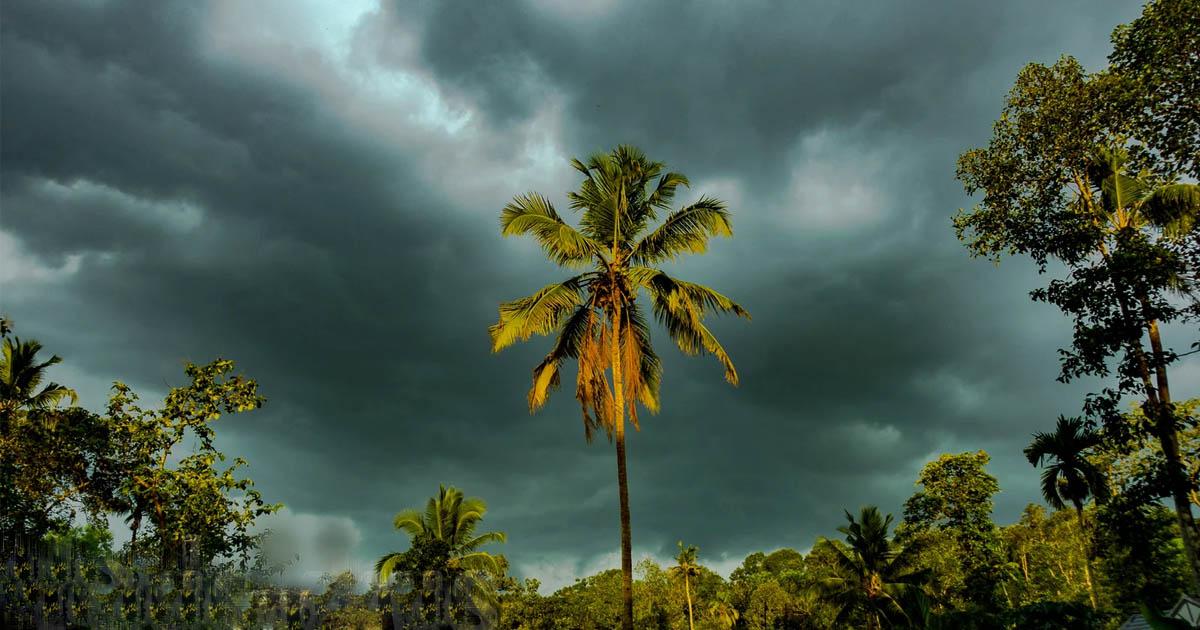
The situation in Ernakulam is particularly volatile. The agency has issued a localized orange alert for Ernakulam that is expected to last for only three hours, warning of moderate rain accompanied by wind speeds reaching 40 kilometers per hour.
Looking toward the immediate future, Indian Express reports that Kottayam and Ernakulam will face yellow alerts again tomorrow, June 16. Meanwhile, a different set of warnings has been issued for northern regions, with reports from manoramanews.com noting yellow alerts specifically for Kozhikode, Kannur, and Kasaragod.
El Niño and the Projected Decrease in Rainfall
The broader monsoon pattern is undergoing a shift due to atmospheric changes in the Pacific Ocean. The Central Meteorological Department indicates that the El Niño phenomenon is currently active in the equatorial regions of the Pacific, which is expected to weaken the monsoon’s overall strength across Kerala.
This phenomenon is characterized by the warming of sea surface temperatures in the central and eastern equatorial Pacific. Such warming can disrupt the Walker Circulation, a large-scale atmospheric movement that plays a critical role in global weather patterns. For the Indian subcontinent, this disruption can alter the pressure gradients that drive the monsoon, potentially reducing the moisture transport necessary for sustained rainfall.
This phenomenon has already begun to influence sea surface temperatures. In the months of April, May, and June, the average temperature deviation exceeded the El Niño threshold of 0.5 degrees Celsius. While this typically results in below-average seasonal rainfall, officials warn that the reduction in intensity does not eliminate the risk of danger.
The Monsoon Mission Coupled Forecast System suggests that the Indian Ocean Dipole is currently in a neutral state. This neutral condition is expected to persist until the end of the monsoon season. Despite the overall trend of declining rain, forecasters have issued a specific caution: the public must remain vigilant against sudden, extremely heavy rainfall episodes that can occur even as the season weakens.
Understanding the IMD Alert System
The India Meteorological Department utilizes a color-coded warning system to communicate weather risks to the public and local government agencies. This hierarchy is designed to provide scalable responses to varying levels of intensity. A “Yellow Alert” serves as a warning to be aware of potential weather hazards, indicating that weather conditions could become significant. An “Orange Alert” represents a higher level of caution, signaling that the weather may become severe and that residents should be prepared for potential disruptions. This tiered system allows disaster management authorities to mobilize resources and for citizens to take precautionary measures before extreme events occur.
Maritime Risks and Wind Speed Forecasts
Wind conditions and sea safety present a complex picture for coastal residents and fishermen. Wind speeds are expected to fluctuate between 30 and 40 kilometers per hour in various parts of the state, with higher gusts possible in specific corridors.

Weather models provide the following wind and rain projections:
- Heavy Rainfall Threshold: 64.5 mm to 115.5 mm within a 24-hour period.
- Somalian and Arabian Sea Winds: 45 to 55 km/h, potentially reaching 65 km/h.
- Tamil Nadu and Gulf of Mannar Winds: 40 to 50 km/h, with occasional gusts of 60 km/h.
For Kerala’s coastal communities, these meteorological shifts have direct economic and safety implications. The fishing industry relies heavily on accurate wind and sea-state forecasts to manage daily operations. When wind speeds reach the thresholds mentioned, such as the 45 to 65 km/h gusts predicted in the Somalian and Arabian Sea corridors, the risk of maritime accidents increases significantly. Consequently, fishing prohibitions are a standard safety measure used to protect lives at sea during periods of high-energy sea states.
There are also conflicting reports regarding maritime activity. While some updates suggest that fishing remains unobstructed along the Kerala, Karnataka, and Lakshadweep coasts today, other reports indicate that fishing has been strictly prohibited along the Kerala coast due to rough sea conditions.
Rainfall Thresholds and Localized Conditions
To clarify the meteorological terminology being used, officials define “heavy rain” in this context as precipitation falling between 64.5 millimeters and 115.5 millimeters over a 24-hour window. This threshold is the primary driver behind the current yellow alerts.
By distinguishing between “heavy” and “very heavy” rainfall using these specific millimeter thresholds, meteorological services provide a standardized metric for predicting potential flooding. In high-altitude or hilly regions, these specific precipitation levels are closely monitored because they can trigger rapid changes in soil stability and river levels.
Recent localized weather has already shown signs of volatility. Thiruvananthapuram, for instance, experienced continuous heavy rainfall throughout the previous night. While the immediate trend suggests a decrease in monsoon strength, meteorological experts suggest that precipitation levels may experience another surge by the end of next week.
Find more reporting in our News section.