
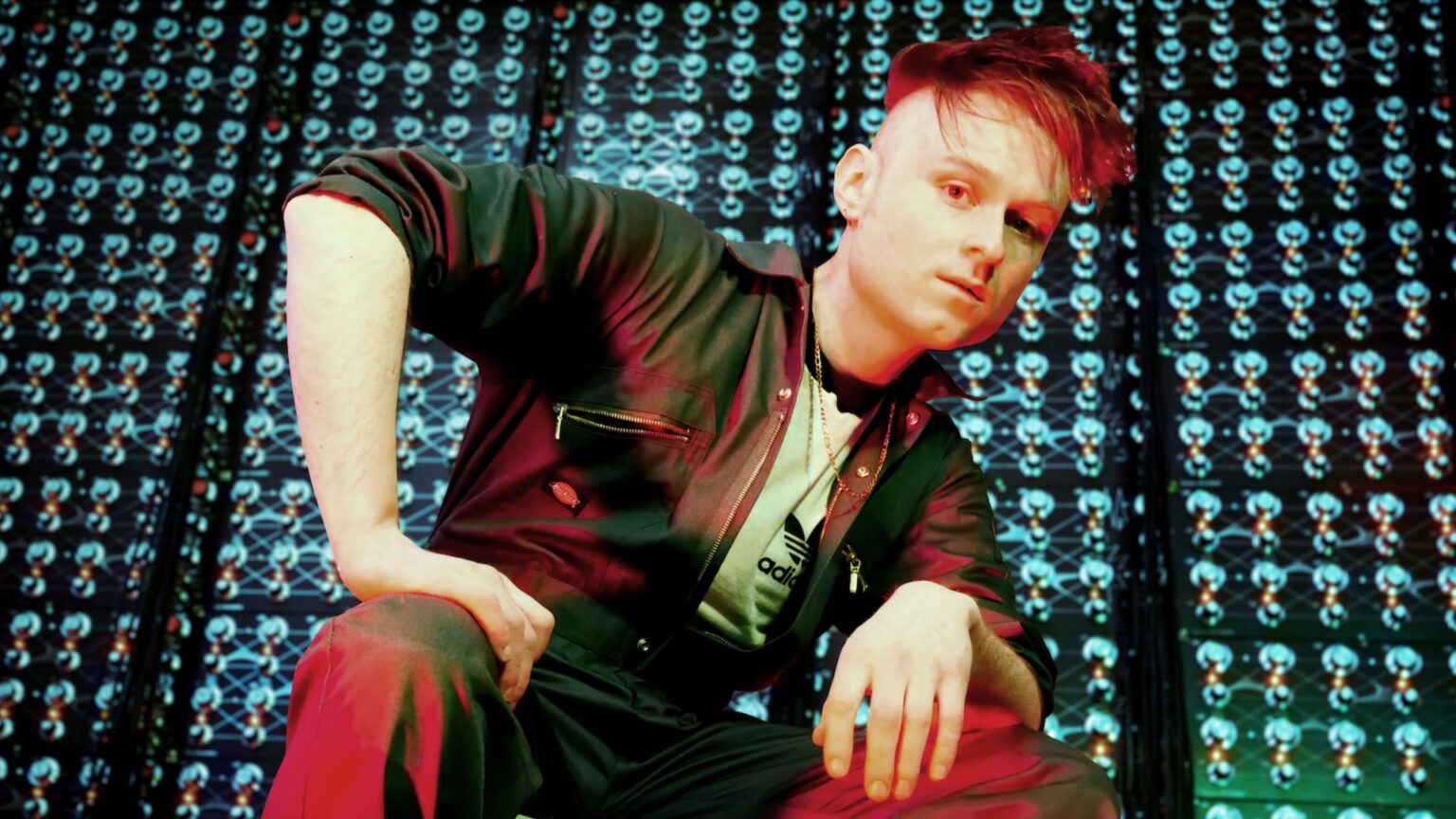
Musician Sam Battle, performing as Look Mum No Computer, finished in last place at the 2026 Eurovision Song Contest. His entry, “Eins, Zwei, Drei,” earned a single point, marking the third time the United Kingdom has bottomed the table since 2020. The BBC now faces critical questions regarding its selection strategy for 2027.
The United Kingdom’s 2026 Eurovision campaign ended in a statistical nadir, with the entry receiving one solitary point. The performance by Sam Battle, known professionally as Look Mum No Computer, saw the musician donning a bright pink boiler suit while performing a synth-pop track titled Eins, Zwei, Drei
. The lyrics detailed the act of quitting an office job to travel to Germany and count to three.
Sam Battle and the 2026 “Big Swing”
The 2026 entry represented a sharp departure from the traditional Eurovision formula often employed by the BBC. Rather than a polished pop ballad or a choreographed dance number, Battle delivered an eccentric performance characterized by distorted vocals and heavy synthesis. Graham Norton described the approach as a big swing
.
Despite the high energy and unconventional delivery, the result was a failure in the eyes of the voting juries and the public. The UK finished at the bottom of the table, continuing a trend of poor results that has plagued the broadcaster for several years. The 2026 flop follows a string of four consecutive years of failure, forcing a re-evaluation of how the UK selects its representatives.
Moving Away from Polished Electro-Pop
For years, the BBC’s approach to Eurovision was criticized for being too cautious, often favoring a cliché of polished electro-pop that failed to capture the attention of international voters. The selection of Sam Battle was an intentional attempt to break this cycle by embracing a uniquely British sense of eccentricity.
I have to applaud the BBC for the ambition. They took a risk on something that maybe people won’t like, but which some people might pick up the phone and vote for.
Adrian Bradley, Euro Trip podcast
This shift toward experimental production was noted by other contestants in the 2026 competition. Satoshi, who represented Moldova, commented on the technical aspects of the UK’s entry, specifically mentioning the distortion on the voice
and the synths that he uses
, calling the production very interesting
.
A Decade of Decline in the Eurovision Table
The failure of Eins, Zwei, Drei
is not an isolated incident but part of a broader systemic decline. The UK has struggled to maintain relevance in the contest for over a decade, having made the top 10 only once since 2010. The trend has accelerated in recent years, with the 2026 result marking the third time since 2020 that the UK has finished in last place.
The inconsistency of the UK’s results suggests a struggle to balance the desire for artistic ambition with the specific tastes of the Eurovision electorate. While the 2026 entry was praised by some for being engaging
and uniquely British
, the disconnect between the performance’s eccentric energy and the final score underscores the difficulty of the task.
Strategic Shifts for 2027
With the 2026 contest concluded, the BBC is under pressure to refine its approach before the 2027 competition. The contrast between the safe
entries of the past and the failed risk of 2026 leaves the broadcaster in a precarious position. The objective for the next cycle will be to find a middle ground that retains British identity without alienating the broader European voting bloc.
The 2026 contest was also marked by external tensions, including protests that disrupted the semi-final performance of Israel’s contestant, Noam Bettan. However, for the UK, the primary crisis remains internal and artistic. The BBC must now determine if the failure of Sam Battle was a result of the specific song choice or a fundamental misunderstanding of what constitutes a winning Eurovision act in the current era.
