
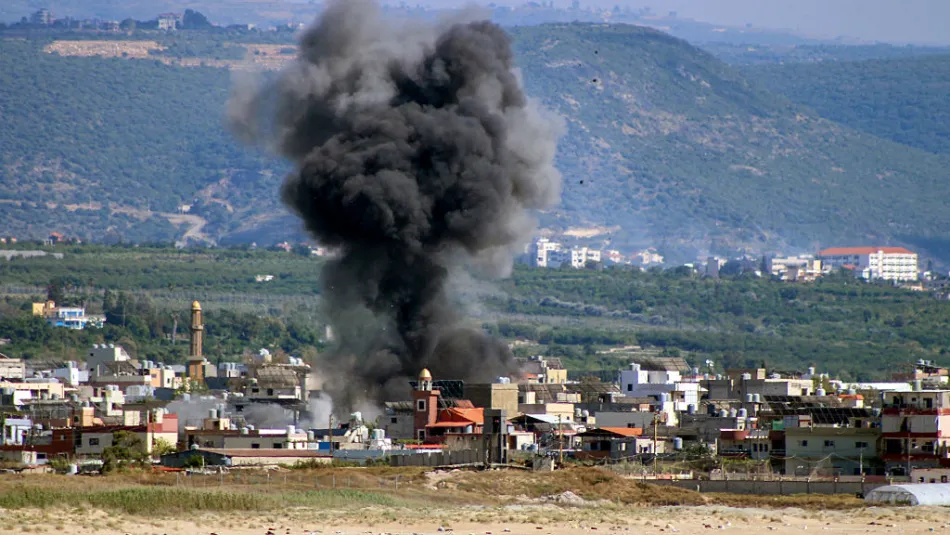
President Joseph Aoun has secured assurances from Washington to protect Beirut’s infrastructure and the southern suburbs from Israeli escalation, but the diplomatic buffer remains fragile. While the United States has pledged to keep the capital and its airport out of the conflict, the risk of military operations persists.
The fragile boundaries of Washington’s neutralization pledge

The diplomatic landscape in Beirut is shifting under the weight of intense military pressure. Following intensive communications led by President Joseph Aoun, Washington has reportedly reaffirmed its stance on keeping certain areas of Lebanon out of the direct line of fire. According to reporting from Al-Modon, the United States has committed to the neutralization of several critical Lebanese assets to prevent a wider regional conflagration.
The specific protections currently on the table include:
- The capital city of Beirut
- The southern suburbs of the capital
- National state infrastructure and facilities
- Beirut International Airport
The state infrastructure protections specifically encompass the national electricity grid and water distribution networks, which are classified as essential civilian services under international humanitarian standards. Diplomatic sources indicate that the preservation of these utilities is a central requirement for the Lebanese government to maintain domestic stability and prevent a humanitarian crisis during the negotiation period.
However, these assurances contain a significant caveat that leaves the Lebanese state in a precarious position. While Washington aims to protect civilian infrastructure, it has not signaled any objection to Israel conducting targeted assassinations of Hezbollah leadership. This distinction means that even if the city’s airports and power grids remain untouched, the heart of Beirut and its southern suburbs could still see high-stakes, surgical military strikes. This tactical distinction allows for the physical integrity of the city to remain intact while the political and military leadership within the capital remains vulnerable to high-precision operations. Military analysts suggest this approach seeks to minimize civilian casualties and infrastructure damage while still achieving strategic objectives.
Israel’s expanding target bank and the threat to the capital

The threat is not merely rhetorical. Recent Israeli communications suggest a significant shift in military intent, moving toward an expansion of what is termed the “target bank” within Lebanese territory. This escalation involves the potential inclusion of the southern suburbs and even central Beirut, signaling an attempt to redraw the rules of engagement through pre-emptive pressure.
This move serves a dual purpose: it heightens the stakes of the current negotiations and seeks to force greater concessions from the Lebanese government. The threat of expanding the scope of military operations creates a high-pressure environment for the negotiating teams, who must balance the need for sovereignty against the reality of mounting kinetic threats. This tension is a recurring theme in Lebanon news coverage as the conflict evolves. Regional security agencies have reported an increase in intelligence-gathering flights and drone activity over the capital’s periphery, signaling a heightened state of surveillance. This escalation in reconnaissance is viewed by analysts as a strategic move to test the boundaries of the neutralization pledge and increase pressure on the Lebanese delegation before the May 29 meetings.
The May 29 Pentagon mission and the Lebanese mandate
As the military tension rises, the Lebanese government is moving to consolidate its diplomatic and security responses. A critical milestone is approaching on May 29, when a Lebanese delegation is scheduled to hold meetings at the Pentagon. The delegation is expected to engage with high-ranking officials within the U.S. Department of Defense to establish technical protocols for distinguishing between civilian and military targets. These discussions will aim to codify the specific protections promised to Lebanon’s critical infrastructure.
The Lebanese negotiating team is operating under a strict mandate. Official instructions have remained unchanged despite the escalating rhetoric: the team is not authorized to make concessions that might lead to the imposition of even more difficult security realities in the south. There is a deep-seated official conviction that any retreat during this phase would only invite more aggressive military facts on the ground. This instruction specifically targets the prevention of any agreements that would result in the establishment of de facto security buffer zones in southern Lebanon. The government’s priority remains the preservation of full administrative and military sovereignty over all Lebanese territories.
Ambassador Simon Karam and the unified negotiation strategy

To ensure that political and security objectives do not diverge, the Lebanese state has appointed Ambassador Simon Karam to lead the delegation. His role is unique in its breadth, as he is tasked with heading both the diplomatic and military branches of the negotiating process.
This move is a clear attempt to present a unified front. By placing a single figure at the helm of both the political and security tracks, Lebanon aims to ensure that any agreement reached in Washington or at the Pentagon is synchronized with the realities of the military situation on the ground. The strategy, as outlined by Al-Modon, suggests that the Lebanese leadership believes only a synchronized political-military response can withstand the current level of Israeli pressure. This unified approach is designed to prevent a divergence between the political concessions discussed in Washington and the operational realities managed by the military command. By synchronizing these tracks, the state seeks to present a singular, cohesive position to both American and Israeli interlocutors.
The next few days will be decisive. If the May 29 meetings at the Pentagon fail to produce a credible deterrent against the expansion of Israeli targets, the “neutralization” of Beirut may prove to be little more than a hollow diplomatic gesture.
