
How the Cavs Turned Mitchell’s Defensive Shadow Into an Offensive Weapon
The Raptors’ approach in Game 7 centered on containing Donovan Mitchell, a strategy that had yielded results earlier in the series. By isolating Mitchell in the paint, Toronto sought to limit his scoring efficiency, which had been a key factor in Cleveland’s previous wins. However, Mitchell’s 6-of-16 shooting night—while disappointing—did not derail the Cavs because their offensive system had already adapted to Toronto’s defensive priorities.
Cleveland’s adjustments were deliberate. Rather than relying on Mitchell’s scoring, the Cavs used his presence to create mismatches elsewhere on the floor. By cutting into the lane, aggressively pursuing rebounds, and forcing Toronto’s bigs into defensive rotations, they exploited the defensive attention Mitchell drew. The result was a 114–102 win, with Cleveland out-rebounding Toronto 60–33 and Harden’s three fourth-quarter steals sparking multiple transition opportunities. These adjustments highlighted how Cleveland’s offensive scheme could thrive when Toronto committed resources to stopping Mitchell.
Key stat: Mitchell had averaged 31.0 points per game in the 2026 playoffs entering Game 7, but his reduced scoring output did not impact Cleveland’s ability to control the game. The Cavs’ success stemmed from their ability to exploit Toronto’s defensive structure, particularly in the paint, where their physical advantages became decisive.
Harden’s Steals: The Invisible Playmaker Who Stole the Game
James Harden’s defensive impact in Game 7 extended beyond traditional metrics. His three fourth-quarter steals were not just defensive plays but pivotal moments that shifted Cleveland’s momentum. Each steal forced Toronto into defensive rotations, creating space for Evan Mobley to drive, Collin Sexton to rise up for mid-range shots, and even Mitchell to find open looks on the move. Harden’s ability to disrupt Toronto’s offense while maintaining offensive efficiency—despite a 2-of-5 night from three—demonstrated his dual-threat role.
Harden’s ball-handling was a defining factor. With only two turnovers in the game—fewer than in any prior series contest—he maintained control of the tempo, a challenge the Cavs had faced in earlier matchups. When he drew a foul with 3:15 remaining in the fourth quarter, the subsequent free throws extended Cleveland’s lead to 106–91. While the play was significant, its impact was part of a broader trend: Harden’s defensive contributions directly fueled Cleveland’s offensive transitions.
Key play: Harden’s three fourth-quarter steals were not isolated highlights but the catalyst for Cleveland’s 38–19 third-quarter surge. Each disruption forced Toronto into defensive adjustments that exposed their lack of depth, particularly in the paint, where the Cavs’ physical advantages became evident. His ability to transition defense into offense became a defining tactical edge in the series.
Mobley’s Graduation Moment: The Frontcourt Dominance That Changed Everything
Evan Mobley’s performance in Game 7 marked a turning point in his playoff career. While Mitchell and Harden drew headlines, Mobley’s 13 points and seven rebounds were complemented by his aggressive playmaking. His role evolved from a secondary contributor to a key facilitator, particularly in the fourth quarter, where his four assists and two steals demonstrated his growing confidence as a playmaker. Unlike earlier games, where Mobley’s impact was more about defensive positioning, this game showcased his ability to control the flow of the offense.
Mobley’s development was evident in his ability to complement Jarrett Allen’s dominance on the boards (19 rebounds, eight offensive). While Allen anchored the frontcourt defensively, Mobley’s versatility allowed Cleveland to operate as a cohesive unit. His aggression in the paint—whether through drives, screens, or defensive pressure—forced Toronto into foul trouble and kept the Cavs’ offense running. This was not just a statistical improvement but a shift in how Mobley engaged in high-pressure moments.
Key stat: Mobley’s 13 points and seven rebounds in Game 7 were his highest playoff totals since Game 5, but his influence extended beyond the box score. His ability to dictate the pace, control the paint, and contribute to Cleveland’s defensive intensity solidified his role as a series-defining force rather than a rotational player.
The Raptors’ Collapse: What Their Late-Game Struggles Reveal
Toronto’s Game 7 collapse was the culmination of a series-long pattern: an inability to execute in critical moments. From RJ Barrett’s missed three in Game 6 to Scottie Barnes’ 24-point performance without a single three-pointer in Game 7, the Raptors’ offensive identity—built on perimeter shooting—faltered under pressure. Cleveland’s ability to control the paint, both offensively and defensively, exposed Toronto’s lack of depth in the frontcourt.
When Harden drew the foul with 3:15 left in the fourth quarter, it was not just a scoring opportunity but the final demonstration of Toronto’s defensive vulnerabilities. The Cavs’ 38–19 third-quarter dominance was not an anomaly but the direct result of Toronto’s inability to guard multiple positions simultaneously. By refusing to play into Cleveland’s preferred matchups—where Toronto isolated Mitchell while leaving the rim exposed—the series shifted irrevocably in Cleveland’s favor.
Key observation: The Raptors’ struggles in Game 7 were not an isolated incident but the inevitable consequence of a series where their offensive and defensive strategies became their own undoing. Toronto’s reliance on three-point shooting and Mitchell containment created openings that Cleveland exploited relentlessly.
What the Pistons Must Fear: The Cavs’ Next Challenge
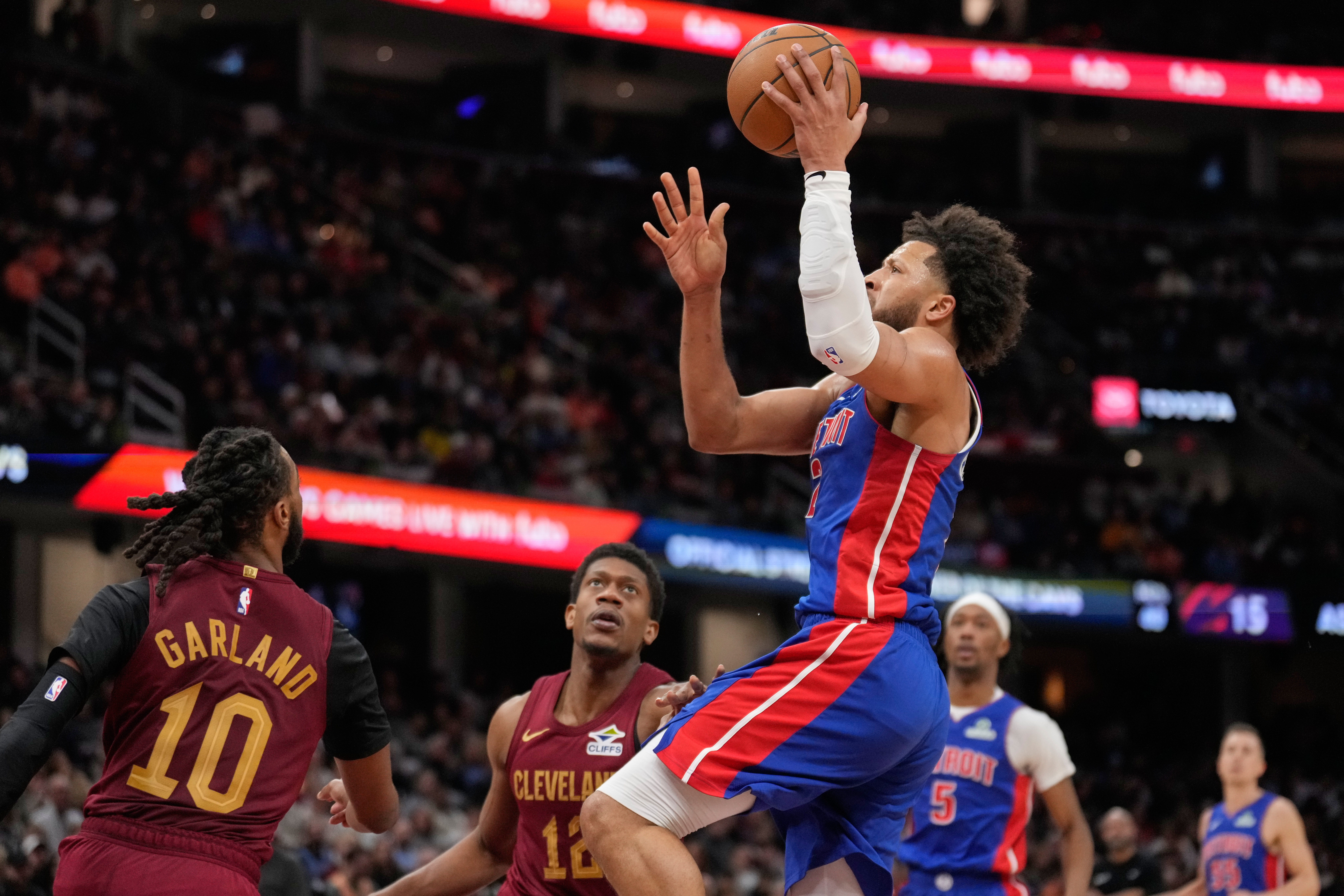
The Cavaliers’ Game 7 victory highlighted their ability to adapt tactically, but their next challenge—the Detroit Pistons—presents a different set of obstacles. While Cleveland’s control of the boards (60–33 in Game 7) and ability to force turnovers (Toronto’s 15 in the series) were decisive against Toronto, the Pistons’ physical frontcourt could test their defensive intensity. Detroit’s size and athleticism may force Cleveland to adjust its approach, particularly if the Cavs struggle to replicate the same level of defensive energy against a more physically imposing opponent.
If Cleveland cannot maintain its defensive focus, the series could become a battle of attrition, with Detroit’s frontcourt potentially overwhelming their perimeter defense. The Cavs’ tactical edge in Game 7—built on exploiting Toronto’s defensive structure—may not translate as effectively against a team that prioritizes physicality and interior dominance. Their success in the next round will depend on whether they can adapt to Detroit’s strengths while preserving the offensive and defensive adjustments that worked against the Raptors.
Key question: Can the Cavs sustain their defensive intensity against the Pistons’ frontcourt? If they can, they will have a strong chance to advance. If not, Detroit’s physical advantages could neutralize the tactical edge that defined their victory over Toronto.
One certainty remains: the Cavaliers’ Game 7 win was not just about outplaying Toronto but proving that strategic flexibility is as important as individual talent. Their next challenge will test whether that flexibility extends to a different style of play.
Full Game 7 box score | NBA.com box score | <a The Cavaliers’ ability to adapt will determine how far they go in the playoffs, with the Pistons’ physicality providing a stern test of Cleveland’s defensive resolve.
