GS. Soumitra Dutta, Dean of Saïd Business School at Oxford University (UK), member of the VinFuture Award Council, and chair of the discussion, is optimistic that the pace of technological innovation will transform the future. Green transportation becomes a reality within the next 5-10 years.
“The development of electric vehicles, lithium batteries and other alternative energy sources has enabled the creation of green mobility alternatives to fossil fuel vehicles and supported new transportation platforms by digital technology. Therefore, a future of innovation in means of transportation is very desirable,” the Oxford University professor predicted.
Under the chairmanship of Prof. Soumitra Dutta, the discussion on green energy and green transportation took place enthusiastically with the participation of speakers who are leading scientists in this field such as: Professor. Kostya S. Novoselov – member of the VinFuture Prize Council, Nobel Prize Winner in Physics 2010; GS. Daniel Kammen – member of the VinFuture Award Council, University of California, Berkeley (USA); Mr. Akihisa Kakimoto – member of the VinFuture Award Preliminary Council, former Technology Director at Mitsubishi Chemical Corporation (Japan); GS. Nguyen Thuc Quyen – Co-Chair of the VinFuture Award Preliminary Council, Director of the Center for Polymers and Organic Solids and Professor of Chemistry & Biochemistry at the University of California, Santa Barbara, USA.
Charging station development is the core of green transportation
Winner of the 2010 Nobel Prize in Physics – Professor. Sir Kostya S.Novoselov – emphasized the importance of charging stations for green transportation. GS. Novoselov predicts that the next 5 years will be a boom time for the materials science industry with many new energy materials being invented from electrolysis technology, membrane technology, lion biochemistry technology…
The materials boom will create abundant green energy, but also pose infrastructure problems.
GS. Kostya S. Novoselov – member of the VinFuture Prize Council, Winner of the Nobel Prize in Physics in 2010 emphasized the importance of charging stations for green transportation.
“Do charging stations keep up with the pace of technological development, can they meet new technology, is the battery capacity large enough, can a new type of battery be built that can be integrated with electric vehicles to drive? more than 100,000 miles or not… That’s why I think that in parallel with materials research and green energy production, we need to think about battery storage technology and charging stations.
We need to invest more in this transportation and energy connection infrastructure to create a completely green future,” Professor Novoselov said.
Regarding the charging station story, Professor. Daniel Kammen shares about a project his research team carried out in Shenzhen, China. Accordingly, this city aims to replace 33,000 gasoline-powered taxis with electric vehicles in one year. This goal is almost unimaginable as it requires complex infrastructure including energy supply, charging stations, and charging station operating systems for a huge number of vehicles.
However, the Shenzhen dream has come true when the research team has developed hydrogen energy storage technology that ensures large storage capacity and fast charging speed. At the same time, a planning software to optimally bring taxis to charging stations is designed and applied. This software allows taxis to search for charging stations and empty spaces in charging stations using an application on the phone, saving maximum time searching for charging places and charging time, contributing to a 20% increase in revenue.
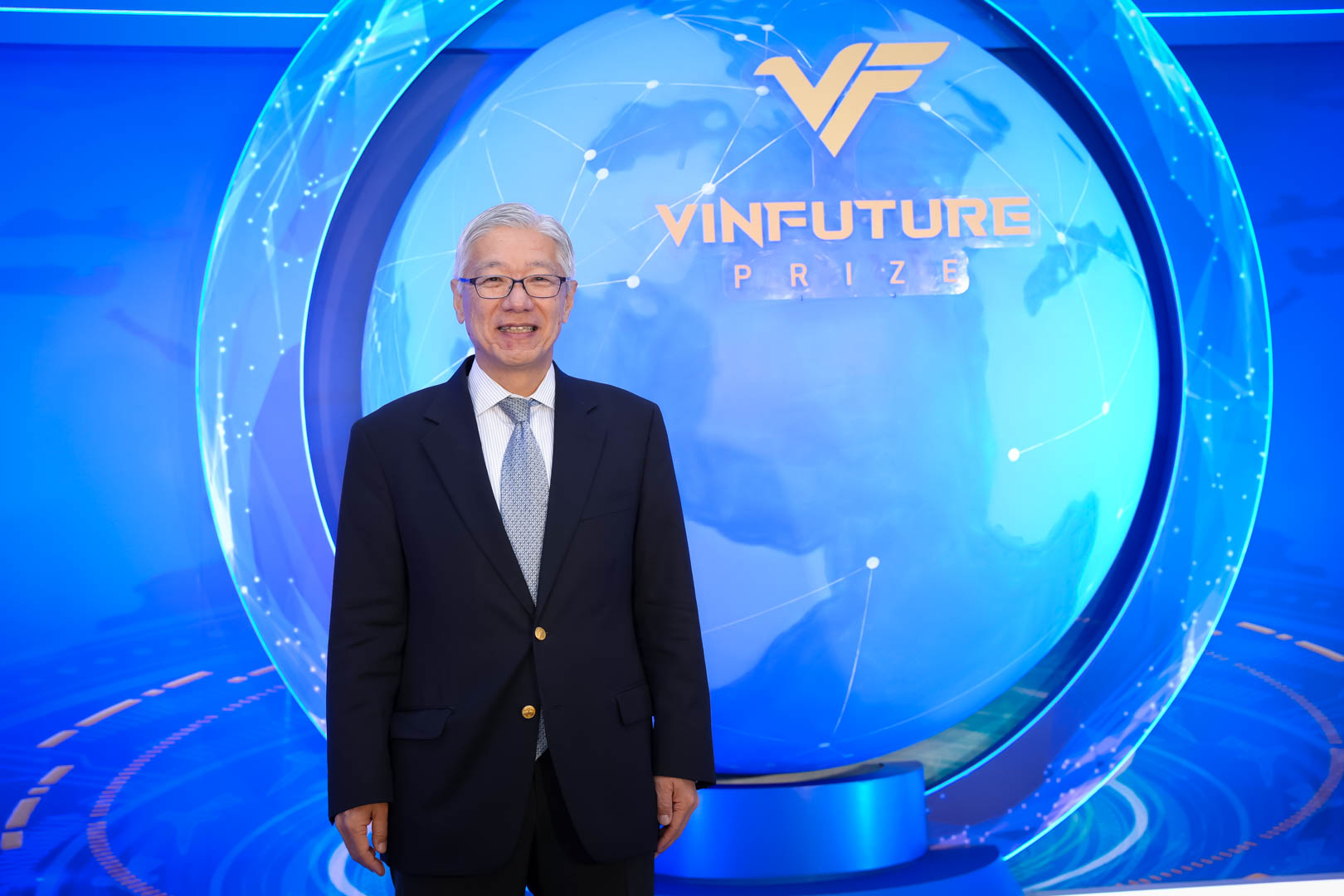
Mr. Akihisa Kakimoto – member of the VinFuture Award Preliminary Council, former Technology Director at Mitsubishi Chemical Corporation (Japan) before the Seminar.
Similarly, the research team of Prof. Daniel Kammen successfully tested a charging station model using solar panels on a test model, the VF6 car sponsored by VinFast. This model has the ability to store excess energy during off-peak hours and provide abundant energy during peak hours, serving a large low-income community in California at an affordable price.
GS. Kammen affirmed that to develop green transportation, countries like Vietnam can start from the above small-scale charging station model. “Think big on a small scale to succeed”, Professor. Kammen said.
According to Professor. Novoselov, the goal of sustainable development or zero emissions by 2050 depends not only on technology but also on infrastructure investment. How to develop a sufficient charging station system to meet user needs and at the same time have a charging station with all types of fuel compatible with different types of means of transport is a problem that needs to be researched and solved. decided.
Create opportunities for startups to promote green transportation
Mr. Akihisa Kakimoto – member of the VinFuture Award Preliminary Council, former Director of Technology at Mitsubishi Chemical Corporation (Japan) – said that it is necessary to look at the picture of green transportation from a macro perspective and along the value chain. to evaluate the whole cycle. “How to produce green energy, how to save energy, how vehicles should be designed to be compatible with energy sources, how waste will be recycled… And most importantly, Who pays for this entire process?”, Mr. Akihisa Kakimoto asked.
The green transportation problem is directly related to infrastructure and costs. This is a challenge for countries that want to develop green transportation.
In addition to promoting policies to create an open legal framework for green energy and green transportation, Mr. Akihisa Kakimoto said that there is a need for a synergistic ecosystem of private enterprises, which allows the next generation of entrepreneurs. Young people are deeply involved in this field.
“Young people today think more about sustainable environment. Let young people start businesses in this field. Big businesses should stand behind the investment, creating a diverse ecosystem of channels and favorable methods for business. Young entrepreneurs can unleash their creativity. This approach will completely change the picture of green technology,” Mr. Kakimoto affirmed.

GS. Soumitra Dutta – Principal of Saïd Business School at Oxford University (UK), member of the VinFuture Award Council, and chair of the panel discussion on green energy and green transportation.
Sharing the same opinion, Professor. Soumitra Dutta shared: “At our university, we regularly organize student forums on renewable energy and green energy. More conditions need to be created for breakthrough technology ideas from young people.” our”.
The discussion “Sustainable infrastructure and green transportation” is the third session in the series of talks “Science & Life”, towards the VinFuture 2023 Global Science and Technology Award Ceremony held at 8:10 p.m. on the 20th. /December 2023. This year’s award theme is “Global Together”, clearly reflecting the difference and comprehensive vision of VinFuture compared to other international awards when promoting the importance of global cooperation to make things happen. so breakthrough technologies have wide-ranging impacts.
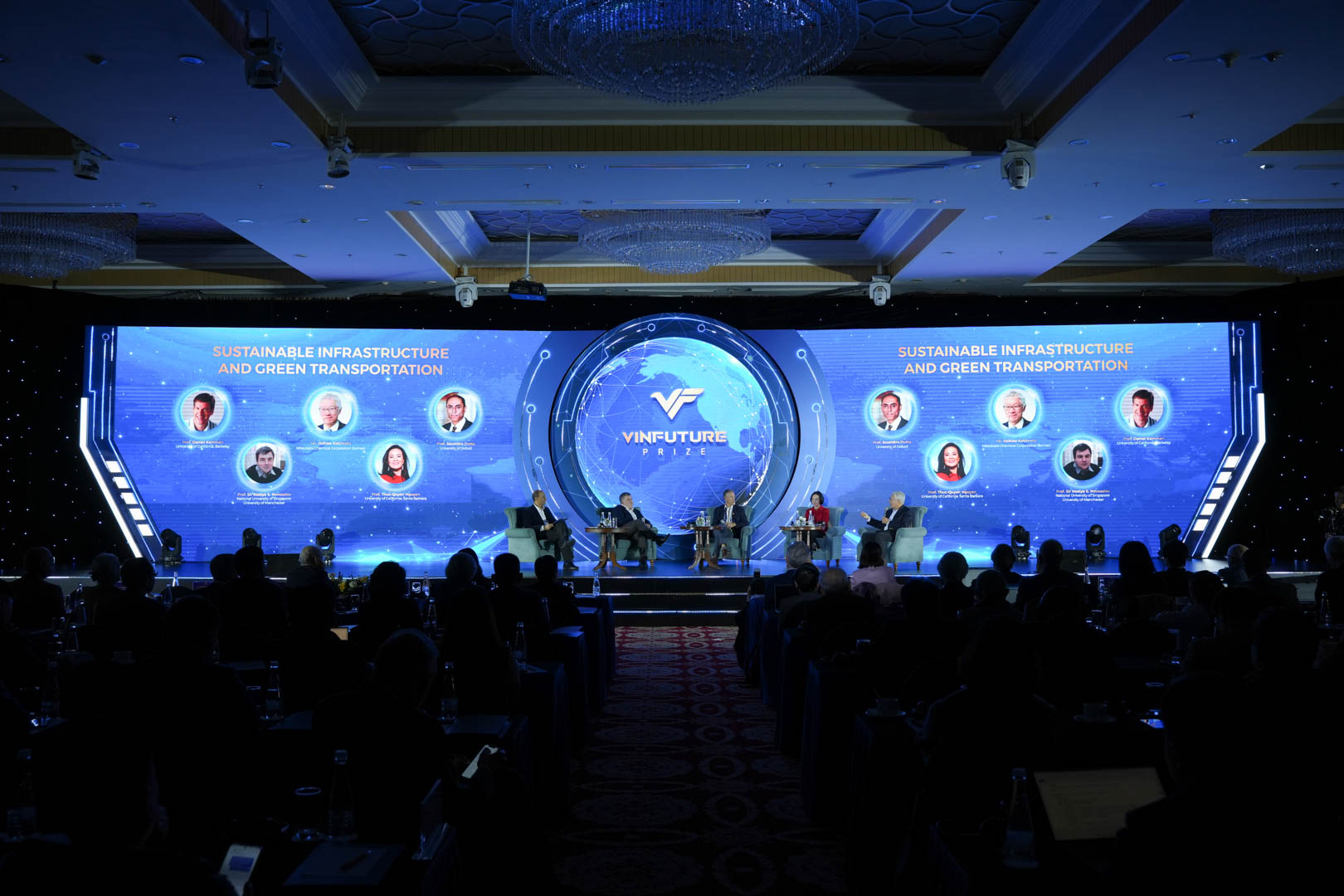
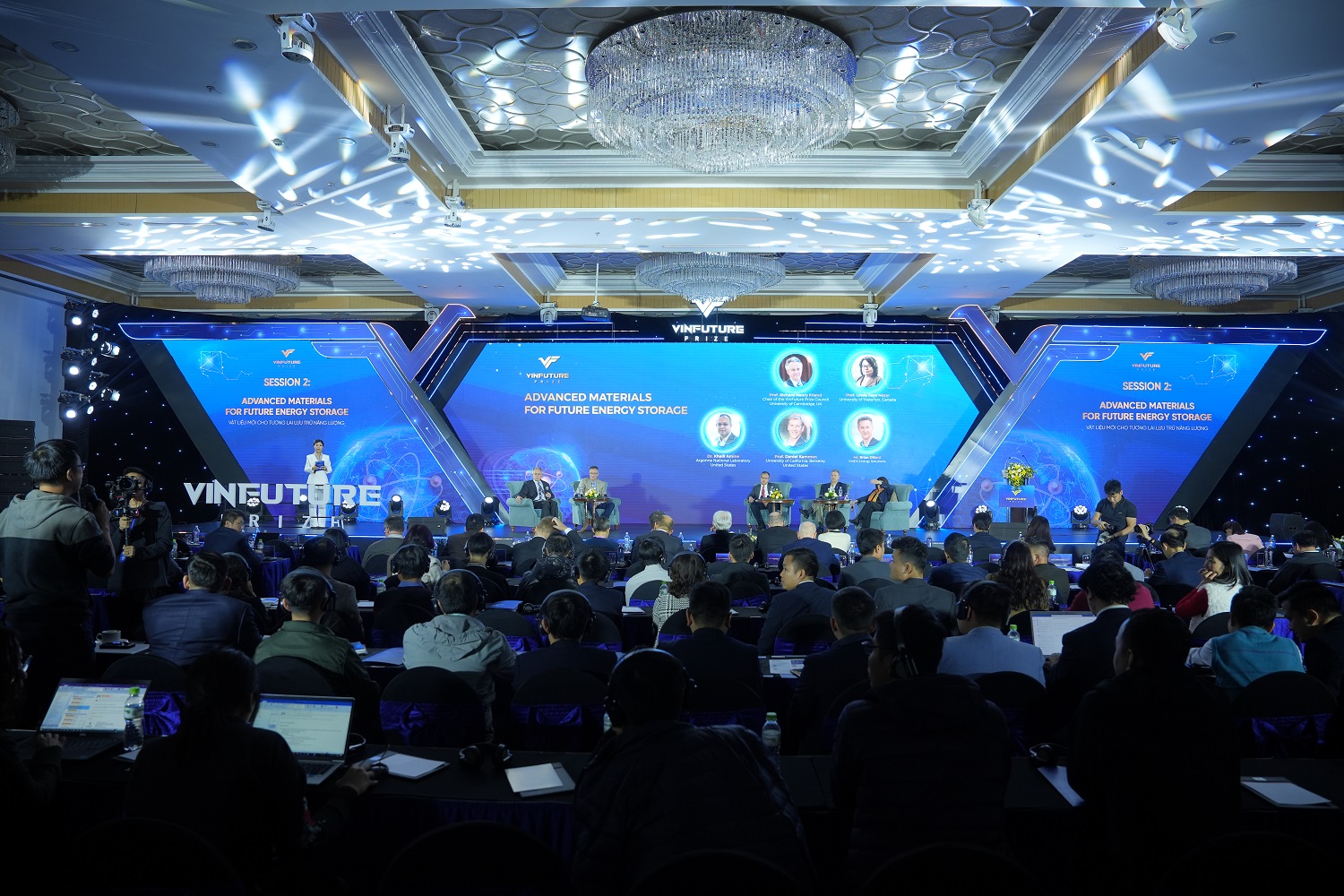
Speakers participated in the discussion session “Sustainable infrastructure and green transportation” on the morning of December 19.
This year, the VinFuture Awards attracted 1,389 nominations, an increase of 3 times compared to the first year (599 nominations for season 1 and 970 nominations for season 2), showing the prestige and stature of the Award as well as the attention of world scientists for this Award.
VinFuture Science and Technology Week and the “Science for Life” seminar series have become prestigious and classy forums for the global science and technology community. Activities in VinFuture Science and Technology Week bring together the world’s leading scientists, giving the Vietnamese scientific community the opportunity to exchange and discuss new research trends, New technologies are driving development and disruptive factors will change the world.