
Elon Musk’s net worth reached an estimated $834 billion by June 2026, according to Forbes. The businessman, who co-founded SpaceX and Tesla, recently integrated his artificial intelligence startup xAI as a subsidiary of SpaceX. He previously served as a Senior Advisor to President Donald Trump until May 30, 2025.
The Integration of xAI and SpaceX
Elon Musk has reorganized his business interests to link his ventures in artificial intelligence and aerospace. In 2026, the AI startup xAI became a subsidiary of SpaceX, according to Wikipedia. This move follows Musk’s departure from OpenAI, which he co-founded in 2015 but later left due to discontent with the organization’s leadership and direction.
The integration incorporates xAI’s Colossus supercluster, which utilizes 100,000 Nvidia H100 GPUs and was reported to have been brought online in late 2024. xAI previously secured $6 billion in Series B funding in May 2024, with participation from Andreessen Horowitz, Sequoia Capital, and Valor Equity Partners, valuing the company at $24 billion at that time. The technical synergy involves Grok-1.5, xAI’s large language model, which features enhanced reasoning capabilities and a 128k context window.
Musk’s financial standing remains tied to his leadership roles across multiple companies. In November 2025, Tesla approved a pay package worth $1 trillion for Musk, which is scheduled for distribution over 10 years provided he meets specific goals, Wikipedia reports. This follows the 2018 compensation plan, which was originally valued at approximately $56 billion and based on market capitalization milestones and operational targets, a package that faced legal challenges in the Delaware Court of Chancery before being re-ratified by shareholders.
His current wealth, estimated at $834 billion as of June 2026, maintains his position as the wealthiest person in the world.
A Record of Technical Predictions
The history of Musk’s ventures is marked by a pattern of ambitious technical claims that have often missed their projected timelines. Public records of his statements show a tendency to set specific dates for complex technological milestones that did not materialize as described.
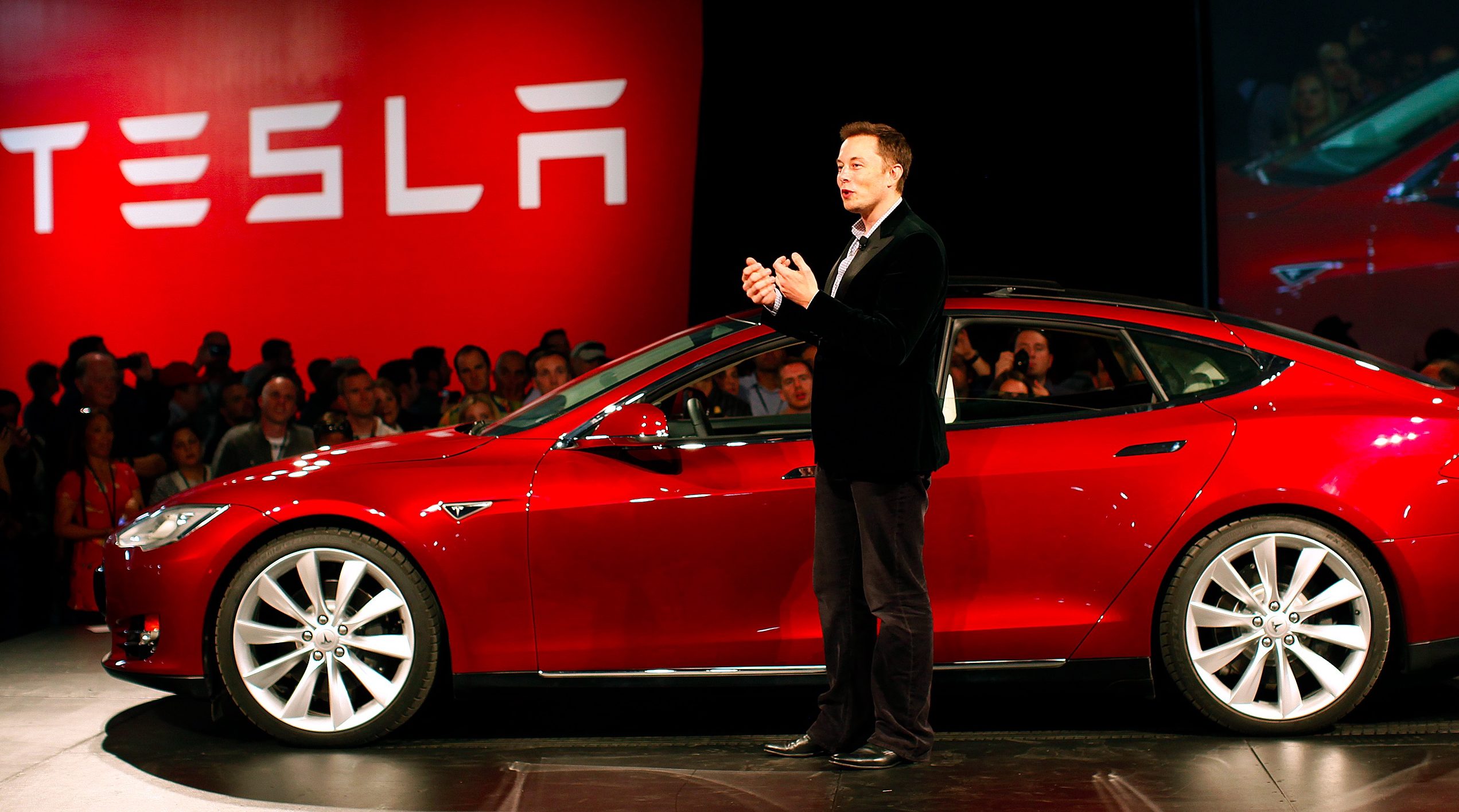
According to a collection of his claims, Musk previously asserted that the Model S would reach a 1000 km range by 2017. He also predicted that full self-driving technology, including the ability to summon a vehicle from anywhere in the country, would be ready by 2018. By 2024, Tesla transitioned to FSD v12, which replaced over 300,000 lines of C++ code with an end-to-end neural network architecture trained on millions of video clips.
Other missed targets include:
- The claim that Hyperloop One would transport passengers at 700 mph.
- The prediction that a million robotaxis would be on the road within 12 to 15 months.
- The assertion that the Falcon 9 would have a fully reusable second stage by the end of the following year.
Additionally, Musk’s projections for the Optimus humanoid robot, specifically the Gen 2 version featuring 11 degrees of freedom in the hands and tactile sensing, have faced scrutiny regarding the timeline for mass commercial deployment in Tesla factories.
Throughout these predictions, Musk frequently used a specific phrase to emphasize his confidence in the outcome.
“mark my words”
Elon Musk
Political Tenure and the Department of Government Efficiency
Musk transitioned from private business to public service following the 2024 U.S. presidential election, in which he was the largest donor supporting Donald Trump. After Trump’s inauguration, Musk served as a Senior Advisor to the President from January 20, 2025, to May 30, 2025.
During this period, Wikipedia reports that Musk acted as the de facto head of the Department of Government Efficiency, known as DOGE. In public statements leading up to this role in late 2024, Musk and Trump suggested a target of cutting $2 trillion from the federal budget. His time in the administration ended in May 2025 following a public feud with the president, at which point he returned to managing his corporate portfolio.
Expansion into Synthetic Medicine and Aviation
In a May 19, 2026, interview with Forbes, Musk outlined new directions for his technological efforts. He identified several industries he believes are ready for disruption, specifically mentioning electric aircraft and synthetic medicine.
Musk also discussed the intersection of AI and infrastructure, arguing that the future of AI computing power belongs in space. This perspective aligns with his ongoing work at SpaceX and the newly integrated xAI. SpaceX’s current infrastructure includes a constellation of over 6,000 Starlink satellites and the development of Direct-to-Cell capabilities in partnership with T-Mobile, utilizing LTE spectrum to connect unmodified smartphones.
In the same conversation, Musk addressed the ethics of converting non-profit organizations to for-profit entities, a topic stemming from a recent lawsuit against Altman’s OpenAI, which a jury rejected.
Musk’s current portfolio continues to span neurotechnology through Neuralink, tunneling via the Boring Company, and social media through X, the platform formerly known as Twitter. Neuralink’s “PRIME” study involved the first human implant in patient Noland Arbaugh, utilizing 64 threads across 1,024 electrodes to enable cursor control via thought. The Boring Company’s operations currently center on the Las Vegas Convention Center Loop, which utilizes Tesla vehicles in a dedicated tunnel system.
He remains the CEO and chief engineer of SpaceX and the CEO and product architect of Tesla.