
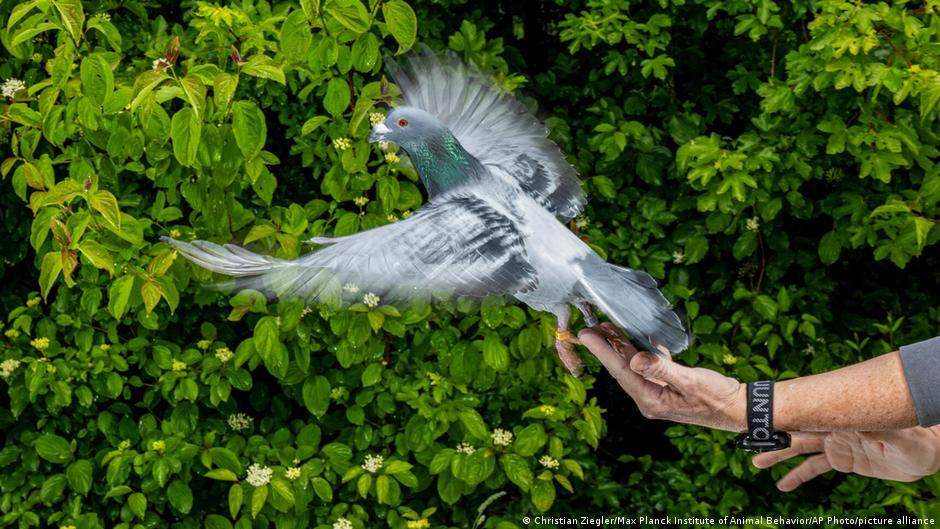
Researchers from the University of Bonn and the Max Planck Institute of Animal Behavior have discovered that homing pigeons use iron-rich immune cells in their livers to sense Earth’s magnetic field. Published in the journal Science, the study suggests these sensors provide critical orientation when visual cues, like the sun, are unavailable.
The Role of Superparamagnetic Macrophages
For over a century, the biological mechanism allowing birds to sense the Earth’s magnetic field has remained a mystery. While theories previously focused on the beak, eyes, or inner ear, a report from DW reveals that the secret may actually reside in the liver.
The discovery centers on superparamagnetic macrophages. These are specialized immune cells that act as the body’s disposal system, breaking down old red blood cells. During this process, the cells accumulate iron. While humans primarily store these metal-rich cells in the spleen, researchers found that the livers of homing pigeons are densely packed with them.
Christian Kurts, immunologist at the University Hospital Bonn
These iron-rich cells do more than clean the blood; they may act as biological compass needles. By using powerful magnetic fields to scan the birds’ organs, the team identified a strong signal in the liver, suggesting that these macrophages respond to the Earth’s invisible magnetic blanket.
The Overcast Test: Proving the Liver’s Necessity
To determine if these liver cells were actually functioning as sensors, the researchers conducted a controlled experiment with pigeons trained to find their way home from nearly 20 kilometers away. The team temporarily stripped the birds of these macrophages to see how it affected their directional capabilities.
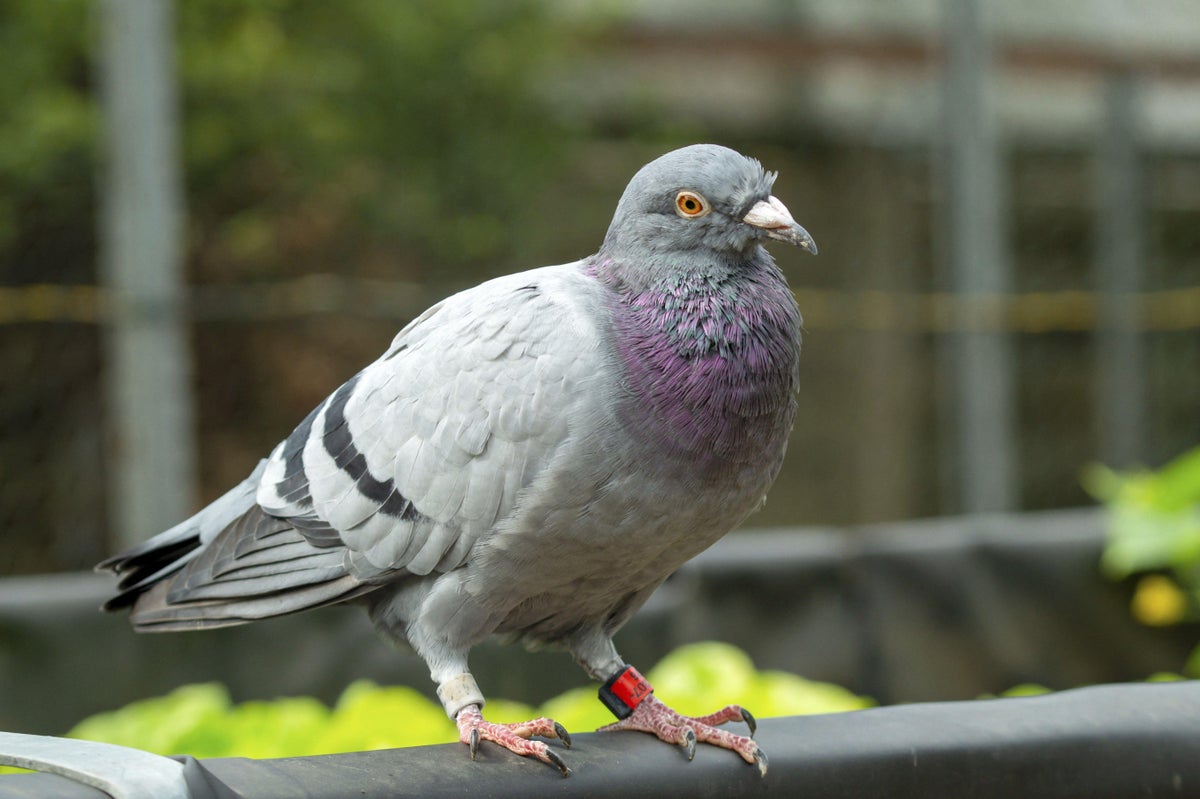
The results, as detailed by National Geographic, highlighted a multi-modal system of orientation. When the sun was visible, the pigeons remained capable of finding their way. However, when the sky was overcast and solar cues were removed, the birds without liver macrophages were effectively lost.
Researchers, via DW
This suggests the liver acts as a backup system. When the primary visual compass—the sun—is obscured, the bird switches to the magnetic sensors in its liver to maintain its course.
Connecting the Liver to the Brain
A sensor is only useful if the brain can read the data. According to AP News, the researchers discovered that these iron-rich immune cells are located immediately adjacent to nerve fibers in the liver.
This physical proximity provides a plausible pathway for magnetic data to be transmitted from the liver to the brain. The researchers postulate that this connection transforms a biological waste-management process into a high-precision GPS.
Martin Wikelski, a director at the Max Planck Institute of Animal Behavior, noted that “what looks like a ‘gut feeling’ in bird navigation may actually have a physical basis.”
Scientific Skepticism and the Review Process
Despite the optimism of the study’s authors, the theory has not been universally accepted. Some experts argue that the link between the liver’s magnetic signal and the bird’s actual behavior is not yet sufficiently proven.
Joe Kirschvink, a geobiologist at the California Institute of Technology, expressed significant doubt about the findings. As reported by Scientific American, Kirschvink stated, “I am not convinced,” and added that he was surprised the paper cleared the peer-review process for the journal Science.
The skepticism stems from the fact that similar iron-rich immune cells have been spotted in other areas, including the spleen and the beak. This raises the possibility that the magnetic puzzle does not have a single answer, but rather involves a distributed network of sensors across multiple organs.
Implications for Other Species
If the liver-compass theory holds, the implications extend far beyond the rock dove. The researchers believe this mechanism could be common across a wide array of animals, potentially including mice, bats, and other bird species.
The discovery challenges the long-held assumption that sensory organs must be located in the head. By identifying an immune cell—specifically a macrophage—as a sensory tool, the study reveals a previously unknown biological function for the immune system.
“We didn’t expect immune cells to act like sensors for magnetic fields at all.
Christian Kurts, Director at the Institute of Molecular Medicine and Experimental Immunology at the University Hospital Bonn
While the scientific community remains divided on whether the mystery is fully solved, the study provides a concrete, physical model for how animals might perceive the Earth’s magnetic field. The next phase of research will likely focus on exactly how those signals are processed by the brain to create a coherent map of the world.