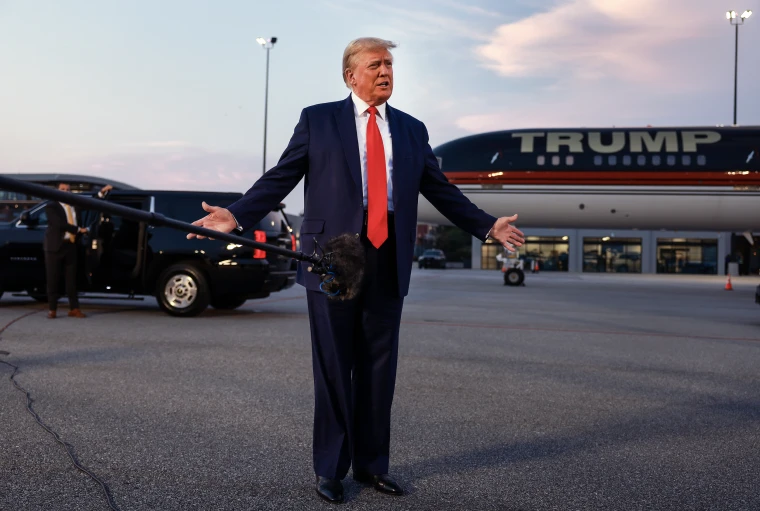
President Donald Trump issued an ultimatum to the European Union on May 7, 2026, demanding the implementation of a U.S. trade agreement by July 4. Failure to meet this deadline will result in increased tariffs, including a rise in duties on EU car imports from 15% to 25%.
The ultimatum arrives as the 47th president of the United States intensifies pressure on Brussels to ratify a trade deal agreed upon in Scotland in June 2025. Using the social media platform Truth Social, Trump signaled that his patience with the European Union has reached its limit, tying the future of transatlantic trade to a strict summer deadline.
The July 4 Trade Ultimatum
The current friction centers on a historic trade agreement that the European Union has yet to fully implement. Following a telephone conversation with European Commission President Ursula von der Leyen, Trump announced that the EU has until July 4 to begin executing the deal. If the deadline passes without action, the administration will raise tariffs to a considerably higher level
.
A specific target of this threat is the automotive sector. Under the existing trade agreement, tariffs on car imports from the EU are set at 15%. The Trump administration has threatened to increase this figure to 25% if the EU does not fulfill its obligations.
Donald Trump, President of the United States
In response to the threat, Ursula von der Leyen stated via social media that both parties remain fully committed to implementing the trade agreement
. Brussels has rejected the claim that it is failing to meet its obligations, asserting that the EU is implementing its commitments in accordance with standard legislative procedures. The European Parliament adopted its position on the legal basis for the agreement in late March, and negotiations with member states are currently ongoing.
Diplomatic Friction with Germany
The escalation in trade rhetoric is not occurring in a vacuum, as diplomatic relations between Washington and Berlin have soured over the conflict in the Middle East. American media reports indicate that Trump’s decision to threaten higher tariffs was influenced by comments made by German Chancellor Friedrich Merz.
Chancellor Merz reportedly angered the president by stating that the war with Iran humiliates the US
. This friction highlights the volatility of the current administration’s relationship with its European allies, where trade policy is frequently used as a tool for diplomatic leverage or as a response to perceived slights from foreign leaders.
Global Strategy and the Beijing Summit
The trade dispute with the EU coincides with a broader effort by the Trump administration to reshape global power dynamics. On May 13, 2026, President Trump arrived in Beijing to meet with Chinese President Xi Jinping. The summit took place during a critical juncture of the presidency, overshadowed by the ongoing war with Iran and persistent tensions over Taiwan.
While the summit concluded on a cordial note, it yielded no major breakthroughs. Trump stated that a lot of different problems
were settled during the talks, though the core issues of trade and regional security remain unresolved. The coordination of these high-level meetings suggests an administration attempting to manage multiple global crises—a war in the Middle East and trade disputes in Europe and Asia—simultaneously.
The Transactional New World Order
Analysts view these movements as part of a broader shift toward a transactional foreign policy. In January 2026, reporting identified the emergence of a Board of Peace
, a mechanism through which the president seeks to implement a new world order based on direct deals rather than traditional multilateral alliances.
This approach is evident in the president’s domestic economic claims. In December 2025, Trump asserted that he had secured a record-breaking $18 trillion dollars of investment into the United States
, which he linked to job creation, wage increases, and the opening of new factories.
The administration’s current trajectory suggests that the July 4 deadline for the EU is not merely about trade balances, but is a test of the EU’s willingness to operate within this transactional framework. The outcome will depend on whether the European Commission can accelerate its legislative process to satisfy the White House before the independence day deadline.