
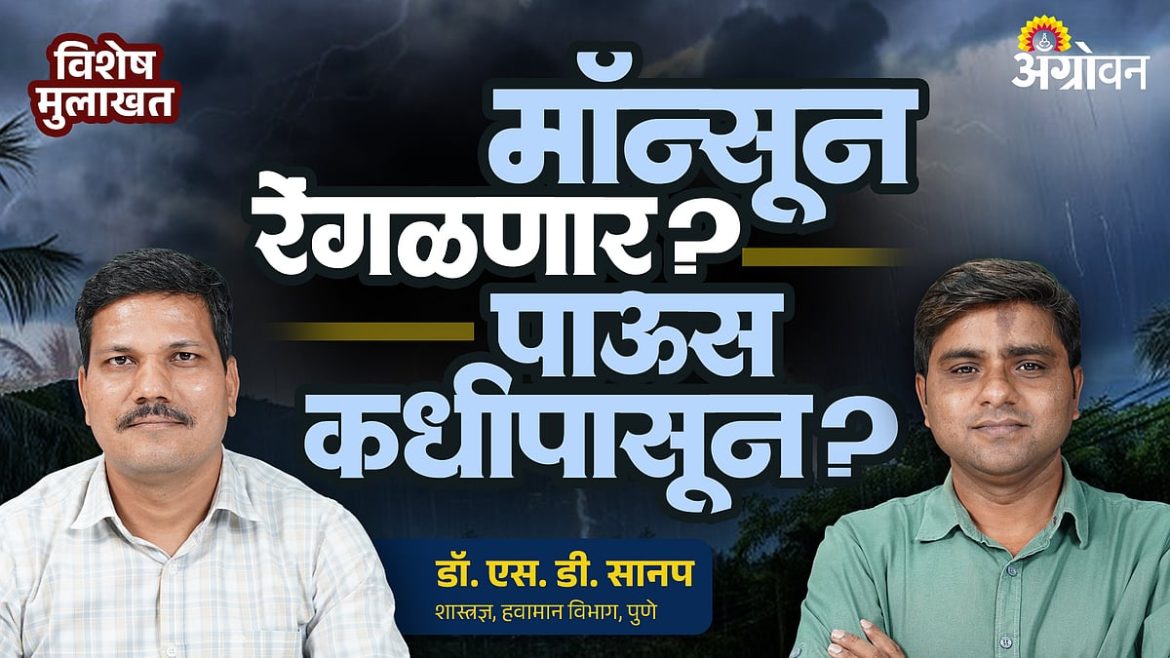
The India Meteorological Department announced the southwest monsoon arrived in South Konkan on June 6 and South Central Maharashtra on June 8, 2026. Despite these declarations, weather researchers are challenging the official arrival based on temperature and wind data, warning farmers that premature sowing could lead to significant crop losses.
Rainfall Totals in Sangli and Solapur
The transition into the monsoon season has been uneven across Maharashtra. While the IMD announced the arrival of the southwest monsoon in South Konkan and South Central Maharashtra, the actual precipitation varies wildly by district.
Recent records show a stark contrast in how the rain has distributed itself across the region:
- Sangli: 83 millimeters
- Dharashiv: 57 millimeters
- Solapur: 8 millimeters
These numbers suggest that while some areas are experiencing heavy bursts, others are barely seeing a drizzle. This inconsistency is the first red flag for analysts tracking the stability of the season’s start. Data from the IMD’s regional monitoring stations indicates that the moisture distribution is currently concentrated in isolated pockets rather than a broad, systemic front moving across the plateau.
The Disconnect Between IMD Criteria and Ground Reality
The official declaration of the monsoon’s arrival isn’t just about seeing rain on the ground. For a region to truly be under the influence of the southwest monsoon, specific atmospheric conditions must be met. Weather researchers are now questioning whether South Central Maharashtra actually meets these benchmarks.
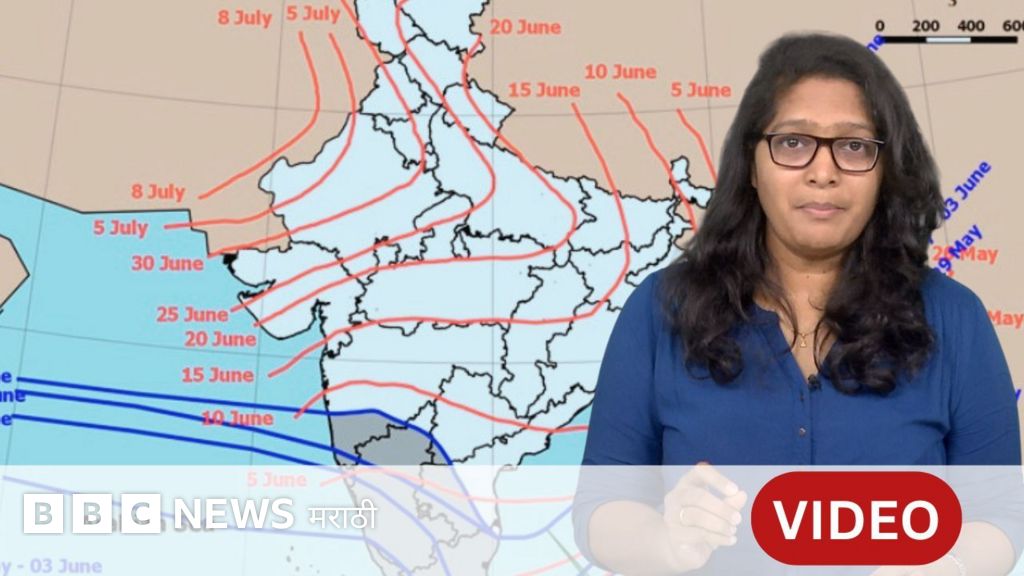
According to researchers, the current weather lacks the necessary structural markers of a true monsoon. These include the presence of monsoon winds reaching altitudes of approximately 3,000 meters originating from the Arabian Sea, consistent cloud cover, and rainfall that occurs steadily throughout both day and night. Analysts specifically point to the lack of a sustained southwesterly wind flow at the 850 hPa pressure level, which is a standard meteorological requirement for confirming the monsoon’s presence.
The most glaring evidence against the official arrival is the temperature. A true monsoon arrival typically triggers a noticeable drop in heat. Instead, temperatures have remained stubbornly high. In Solapur, the maximum temperature hit 38 degrees Celsius, while Sangli recorded 35.8 degrees Celsius. This heat suggests the atmospheric shift hasn’t fully taken hold. Local observers in the Marathwada region report that the humidity levels have not risen sufficiently to support the consistent precipitation patterns associated with the southwest monsoon.
For more on this story, see Monsoon in Maharashtra : मान्सूनची धमाकेदार एन्ट्री, कोकणात धडकला; तुमच्या जिल्ह्यात ‘रिमझिम’ कधी?.
Predictions of a Two-Week Slowdown
The IMD remains optimistic, suggesting that monsoon winds will advance further within two to three days. However, other experts offer a more cautious outlook. Reporting from Agrowon indicates that the progress of the monsoon may slow down over the next two weeks.
This potential stagnation creates a dangerous window for the agricultural sector. While the BBC reports that pre-monsoon thunderstorms have appeared in various parts of the state, these are distinct from the sustained rainfall required for successful crop cycles. These thunderstorms are characterized by short, intense bursts of rain followed by immediate clear skies, which do not provide the deep soil moisture necessary for seed germination.
If the monsoon’s pace decelerates as predicted, the state could see a period of rising temperatures and diminishing rain. For a farmer, this “false start” is a nightmare scenario. Agronomists warn that if soybean and cotton seeds are sown now and the rain stops for ten to fifteen days, the seedlings will wither, forcing farmers to repeat the entire sowing process at a higher cost.
Labor Shortages and the Shift to Turmeric
On the ground, farmers aren’t waiting for scientific consensus. Following news of the monsoon’s arrival in Kerala, agricultural activity has accelerated. There’s a visible rush at agricultural centers as farmers stock up on seeds and fertilizers.
One notable trend this year is the increase in turmeric sowing. In the Akola and Buldhana districts, agricultural cooperatives report a surge in demand for turmeric rhizomes. Many farmers are pivoting to turmeric because it offers more guaranteed prices and lower overall costs compared to other crops. Some are even planting expensive turmeric seeds based on available water reserves before the rains even arrive, utilizing drip irrigation to mitigate the risk of a delayed monsoon.
But the rush to plant is hitting a bottleneck: labor. There’s a critical shortage of workers for essential tasks like inter-cultivation, cotton picking, and the harvesting of urad, moong, and soybean. This shortage is particularly acute in the Vidarbha region, where the timing of the harvest for summer crops coincides exactly with the preparation for the monsoon cycle. To fill the gap, farmers are forced to bring in laborers from other villages, paying higher wages that eat into their already thin margins.
The stakes are now purely financial. Researchers warn that if farmers begin sowing based on the IMD’s arrival announcement, only to have the rain stop and temperatures climb, the resulting crop failure could be devastating. The coming days will determine whether the official timeline holds or if the researchers’ warnings about a slow, unstable start are the more accurate guide.