

How the fossil finally gave up its secret after 14 years in storage
Jennifer Botha, who led the field expedition that found the fossil, suspected it contained a hatchling almost immediately but lacked the tools to verify it. The specimen remained in storage while scientists waited for imaging technology capable of resolving microscopic bone structures without damaging the rock.
When the BM18 beamline at the ESRF in France came online, it delivered X-ray resolution down to 17 micrometers — fine enough to distinguish individual ribs and vertebral processes in the embryo. Vincent Fernandez, the beamline scientist who conducted the scans, said capturing such detail required precision; any misalignment would have blurred the fragile fossil features.
Why egg size mattered in a world recovering from apocalypse
Lystrosaurus eggs were unusually large relative to the animal’s body, meaning hatchlings emerged with substantial yolk reserves. This allowed them to feed and move independently right after hatching — critical in the harsh, post-extinction landscape where food was scarce and predators still lurked.
The large size also reduced the egg’s surface area to volume ratio, slowing water loss in the hot, dry conditions of Early Triassic Pangea. In an era when volcanic winters gave way to scorching temperatures, this resistance to desiccation may have been as vital as the nutritional boost for survival.
What this means for how we view early mammal evolution
For over 150 years, paleontologists in South Africa searched for definitive proof that therapsids — the lineage leading to mammals — laid eggs. This fossil confirms it, showing that reproductive strategies seen in modern reptiles and monotremes were already present in these ancient synapsids.
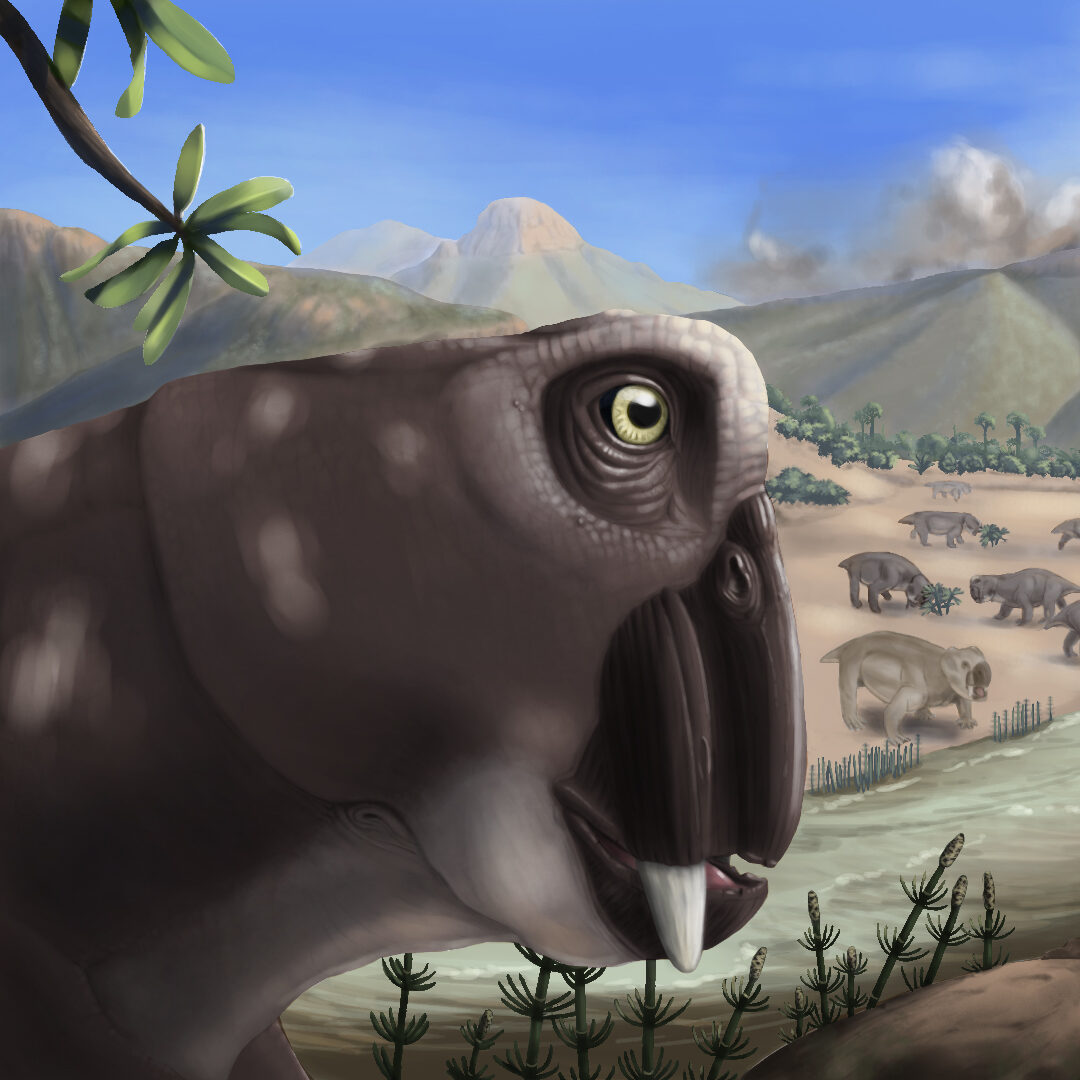
The absence of milk dependence, inferred from the self-sufficient hatchlings, suggests lactation evolved later in the mammalian line. Lystrosaurus represents a stage where offspring were equipped to survive on their own — a trait that may have contributed to its remarkable success across Pangaea in the millions of years after the Permian extinction.
Why soft shells kept this evidence hidden for so long
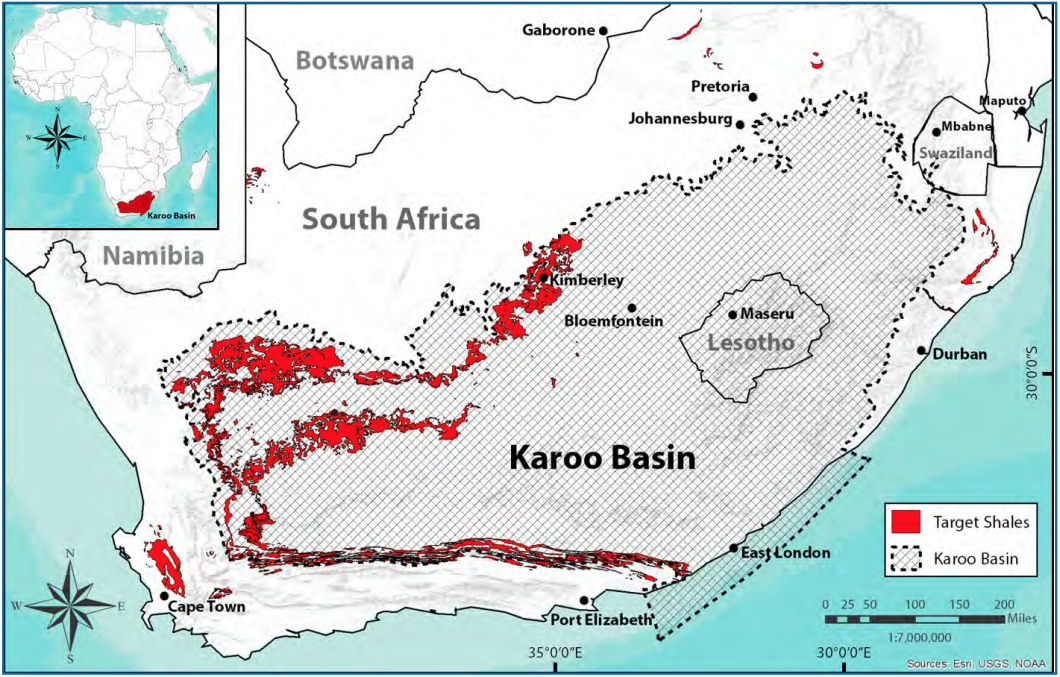
Researchers believe the eggs were soft-shelled, which explains why no such fossils had been found despite abundant adult Lystrosaurus remains. Unlike hard-shelled eggs that fossilize readily, soft membranes decay quickly — making this specimen a rare exception preserved under ideal conditions in the Karoo Basin.
What remains unknown about Lystrosaurus reproduction
While the fossil confirms egg-laying, it does not reveal how many eggs were laid per clutch, whether parents guarded nests, or if incubation relied on environmental heat. The three perinatal specimens studied show variation in development, suggesting possible differences in hatching timing, but sample size limits broader conclusions.
How did scientists know the fossil was inside an egg and not just a juvenile?
The embryo’s curled posture and lack of erupted tusks indicated it had not hatched; in juveniles, tusks are present even if small, and the jaw shows signs of wear from feeding.
Why is this discovery important for understanding mammalian evolution?
It confirms that egg-laying was ancestral to mammals, helping trace when key traits like live birth and lactation evolved later in the lineage — showing Lystrosaurus reproduced more like a reptile than a placental mammal.
The breakthrough came from a fossil unearthed in South Africa’s Karoo Basin in 2008, which sat unstudied for over a decade until the European Synchrotron Radiation Facility’s new high-resolution X-ray beamline became operational in 2022. Using this technology, researchers visualized a curled-up embryo inside the egg, its jawbones unfused and tusks absent — clear signs it had not yet hatched.
How the fossil finally gave up its secret after 14 years in storage
Jennifer Botha, who led the field expedition that found the fossil, suspected it contained a hatchling almost immediately but lacked the tools to verify it. The specimen remained in storage while scientists waited for imaging technology capable of resolving microscopic bone structures without damaging the rock.
When the BM18 beamline at the ESRF in France came online, it delivered X-ray resolution down to 17 micrometers — fine enough to distinguish individual ribs and vertebral processes in the embryo. Vincent Fernandez, the beamline scientist who conducted the scans, said capturing such detail required precision; any misalignment would have blurred the fragile fossil features.
Why egg size mattered in a world recovering from apocalypse
Lystrosaurus eggs were unusually large relative to the animal’s body, meaning hatchlings emerged with substantial yolk reserves. This allowed them to feed and move independently right after hatching — critical in the harsh, post-extinction landscape where food was scarce and predators still lurked.
The large size also reduced the egg’s surface area to volume ratio, slowing water loss in the hot, dry conditions of Early Triassic Pangea. In an era when volcanic winters gave way to scorching temperatures, this resistance to desiccation may have been as vital as the nutritional boost for survival.
What this means for how we view early mammal evolution
For over 150 years, paleontologists in South Africa searched for definitive proof that therapsids — the lineage leading to mammals — laid eggs. This fossil confirms it, showing that reproductive strategies seen in modern reptiles and monotremes were already present in these ancient synapsids.
The absence of milk dependence, inferred from the self-sufficient hatchlings, suggests lactation evolved later in the mammalian line. Lystrosaurus represents a stage where offspring were equipped to survive on their own — a trait that may have contributed to its remarkable success across Pangaea in the millions of years after the Permian extinction.
Why soft shells kept this evidence hidden for so long
Researchers believe the eggs were soft-shelled, which explains why no such fossils had been found despite abundant adult Lystrosaurus remains. Unlike hard-shelled eggs that fossilize readily, soft membranes decay quickly — making this specimen a rare exception preserved under ideal conditions in the Karoo Basin.
What remains unknown about Lystrosaurus reproduction
While the fossil confirms egg-laying, it does not reveal how many eggs were laid per clutch, whether parents guarded nests, or if incubation relied on environmental heat. The three perinatal specimens studied show variation in development, suggesting possible differences in hatching timing, but sample size limits broader conclusions.
How did scientists know the fossil was inside an egg and not just a juvenile?
The embryo’s curled posture and lack of erupted tusks indicated it had not hatched; in juveniles, tusks are present even if small, and the jaw shows signs of wear from feeding.
Why is this discovery important for understanding mammalian evolution?
It confirms that egg-laying was ancestral to mammals, helping trace when key traits like live birth and lactation evolved later in the lineage — showing Lystrosaurus reproduced more like a reptile than a placental mammal.
The breakthrough came from a fossil unearthed in South Africa’s Karoo Basin in 2008, which sat unstudied for over a decade until the European Synchrotron Radiation Facility’s new high-resolution X-ray beamline became operational in 2022. Using this technology, researchers visualized a curled-up embryo inside the egg, its jawbones unfused and tusks absent — clear signs it had not yet hatched.
How the fossil finally gave up its secret after 14 years in storage
Jennifer Botha, who led the field expedition that found the fossil, suspected it contained a hatchling almost immediately but lacked the tools to verify it. The specimen remained in storage while scientists waited for imaging technology capable of resolving microscopic bone structures without damaging the rock.
When the BM18 beamline at the ESRF in France came online, it delivered X-ray resolution down to 17 micrometers — fine enough to distinguish individual ribs and vertebral processes in the embryo. Vincent Fernandez, the beamline scientist who conducted the scans, said capturing such detail required precision; any misalignment would have blurred the fragile fossil features.
Why egg size mattered in a world recovering from apocalypse
Lystrosaurus eggs were unusually large relative to the animal’s body, meaning hatchlings emerged with substantial yolk reserves. This allowed them to feed and move independently right after hatching — critical in the harsh, post-extinction landscape where food was scarce and predators still lurked.
The large size also reduced the egg’s surface area to volume ratio, slowing water loss in the hot, dry conditions of Early Triassic Pangea. In an era when volcanic winters gave way to scorching temperatures, this resistance to desiccation may have been as vital as the nutritional boost for survival.
What this means for how we view early mammal evolution
For over 150 years, paleontologists in South Africa searched for definitive proof that therapsids — the lineage leading to mammals — laid eggs. This fossil confirms it, showing that reproductive strategies seen in modern reptiles and monotremes were already present in these ancient synapsids.
The absence of milk dependence, inferred from the self-sufficient hatchlings, suggests lactation evolved later in the mammalian line. Lystrosaurus represents a stage where offspring were equipped to survive on their own — a trait that may have contributed to its remarkable success across Pangaea in the millions of years after the Permian extinction.
Why soft shells kept this evidence hidden for so long
Researchers believe the eggs were soft-shelled, which explains why no such fossils had been found despite abundant adult Lystrosaurus remains. Unlike hard-shelled eggs that fossilize readily, soft membranes decay quickly — making this specimen a rare exception preserved under ideal conditions in the Karoo Basin.
What remains unknown about Lystrosaurus reproduction
While the fossil confirms egg-laying, it does not reveal how many eggs were laid per clutch, whether parents guarded nests, or if incubation relied on environmental heat. The three perinatal specimens studied show variation in development, suggesting possible differences in hatching timing, but sample size limits broader conclusions.
How did scientists know the fossil was inside an egg and not just a juvenile?
The embryo’s curled posture and lack of erupted tusks indicated it had not hatched; in juveniles, tusks are present even if small, and the jaw shows signs of wear from feeding.
Why is this discovery important for understanding mammalian evolution?
It confirms that egg-laying was ancestral to mammals, helping trace when key traits like live birth and lactation evolved later in the lineage — showing Lystrosaurus reproduced more like a reptile than a placental mammal.
The breakthrough came from a fossil unearthed in South Africa’s Karoo Basin in 2008, which sat unstudied for over a decade until the European Synchrotron Radiation Facility’s new high-resolution X-ray beamline became operational in 2022. Using this technology, researchers visualized a curled-up embryo inside the egg, its jawbones unfused and tusks absent — clear signs it had not yet hatched.
How the fossil finally gave up its secret after 14 years in storage
Jennifer Botha, who led the field expedition that found the fossil, suspected it contained a hatchling almost immediately but lacked the tools to verify it. The specimen remained in storage while scientists waited for imaging technology capable of resolving microscopic bone structures without damaging the rock.
When the BM18 beamline at the ESRF in France came online, it delivered X-ray resolution down to 17 micrometers — fine enough to distinguish individual ribs and vertebral processes in the embryo. Vincent Fernandez, the beamline scientist who conducted the scans, said capturing such detail required precision; any misalignment would have blurred the fragile fossil features.
Why egg size mattered in a world recovering from apocalypse
Lystrosaurus eggs were unusually large relative to the animal’s body, meaning hatchlings emerged with substantial yolk reserves. This allowed them to feed and move independently right after hatching — critical in the harsh, post-extinction landscape where food was scarce and predators still lurked.
The large size also reduced the egg’s surface area to volume ratio, slowing water loss in the hot, dry conditions of Early Triassic Pangea. In an era when volcanic winters gave way to scorching temperatures, this resistance to desiccation may have been as vital as the nutritional boost for survival.
What this means for how we view early mammal evolution
For over 150 years, paleontologists in South Africa searched for definitive proof that therapsids — the lineage leading to mammals — laid eggs. This fossil confirms it, showing that reproductive strategies seen in modern reptiles and monotremes were already present in these ancient synapsids.
The absence of milk dependence, inferred from the self-sufficient hatchlings, suggests lactation evolved later in the mammalian line. Lystrosaurus represents a stage where offspring were equipped to survive on their own — a trait that may have contributed to its remarkable success across Pangaea in the millions of years after the Permian extinction.
Why soft shells kept this evidence hidden for so long
Researchers believe the eggs were soft-shelled, which explains why no such fossils had been found despite abundant adult Lystrosaurus remains. Unlike hard-shelled eggs that fossilize readily, soft membranes decay quickly — making this specimen a rare exception preserved under ideal conditions in the Karoo Basin.
What remains unknown about Lystrosaurus reproduction
While the fossil confirms egg-laying, it does not reveal how many eggs were laid per clutch, whether parents guarded nests, or if incubation relied on environmental heat. The three perinatal specimens studied show variation in development, suggesting possible differences in hatching timing, but sample size limits broader conclusions.
How did scientists know the fossil was inside an egg and not just a juvenile?
The embryo’s curled posture and lack of erupted tusks indicated it had not hatched; in juveniles, tusks are present even if small, and the jaw shows signs of wear from feeding.
Why is this discovery important for understanding mammalian evolution?
It confirms that egg-laying was ancestral to mammals, helping trace when key traits like live birth and lactation evolved later in the lineage — showing Lystrosaurus reproduced more like a reptile than a placental mammal.
How the fossil finally gave up its secret after 14 years in storage
Jennifer Botha, who led the field expedition that found the fossil, suspected it contained a hatchling almost immediately but lacked the tools to verify it. The specimen remained in storage while scientists waited for imaging technology capable of resolving microscopic bone structures without damaging the rock.
When the BM18 beamline at the ESRF in France came online, it delivered X-ray resolution down to 17 micrometers — fine enough to distinguish individual ribs and vertebral processes in the embryo. Vincent Fernandez, the beamline scientist who conducted the scans, said capturing such detail required precision; any misalignment would have blurred the fragile fossil features.
Why egg size mattered in a world recovering from apocalypse
Lystrosaurus eggs were unusually large relative to the animal’s body, meaning hatchlings emerged with substantial yolk reserves. This allowed them to feed and move independently right after hatching — critical in the harsh, post-extinction landscape where food was scarce and predators still lurked.
The large size also reduced the egg’s surface area to volume ratio, slowing water loss in the hot, dry conditions of Early Triassic Pangea. In an era when volcanic winters gave way to scorching temperatures, this resistance to desiccation may have been as vital as the nutritional boost for survival.
What this means for how we view early mammal evolution
For over 150 years, paleontologists in South Africa searched for definitive proof that therapsids — the lineage leading to mammals — laid eggs. This fossil confirms it, showing that reproductive strategies seen in modern reptiles and monotremes were already present in these ancient synapsids.
The absence of milk dependence, inferred from the self-sufficient hatchlings, suggests lactation evolved later in the mammalian line. Lystrosaurus represents a stage where offspring were equipped to survive on their own — a trait that may have contributed to its remarkable success across Pangaea in the millions of years after the Permian extinction.
Why soft shells kept this evidence hidden for so long
Researchers believe the eggs were soft-shelled, which explains why no such fossils had been found despite abundant adult Lystrosaurus remains. Unlike hard-shelled eggs that fossilize readily, soft membranes decay quickly — making this specimen a rare exception preserved under ideal conditions in the Karoo Basin.
What remains unknown about Lystrosaurus reproduction
While the fossil confirms egg-laying, it does not reveal how many eggs were laid per clutch, whether parents guarded nests, or if incubation relied on environmental heat. The three perinatal specimens studied show variation in development, suggesting possible differences in hatching timing, but sample size limits broader conclusions.
How did scientists know the fossil was inside an egg and not just a juvenile?
The embryo’s curled posture and lack of erupted tusks indicated it had not hatched; in juveniles, tusks are present even if small, and the jaw shows signs of wear from feeding.
Why is this discovery important for understanding mammalian evolution?
It confirms that egg-laying was ancestral to mammals, helping trace when key traits like live birth and lactation evolved later in the lineage — showing Lystrosaurus reproduced more like a reptile than a placental mammal.
The breakthrough came from a fossil unearthed in South Africa’s Karoo Basin in 2008, which sat unstudied for over a decade until the European Synchrotron Radiation Facility’s new high-resolution X-ray beamline became operational in 2022. Using this technology, researchers visualized a curled-up embryo inside the egg, its jawbones unfused and tusks absent — clear signs it had not yet hatched.
How the fossil finally gave up its secret after 14 years in storage
Jennifer Botha, who led the field expedition that found the fossil, suspected it contained a hatchling almost immediately but lacked the tools to verify it. The specimen remained in storage while scientists waited for imaging technology capable of resolving microscopic bone structures without damaging the rock.
When the BM18 beamline at the ESRF in France came online, it delivered X-ray resolution down to 17 micrometers — fine enough to distinguish individual ribs and vertebral processes in the embryo. Vincent Fernandez, the beamline scientist who conducted the scans, said capturing such detail required precision; any misalignment would have blurred the fragile fossil features.
Why egg size mattered in a world recovering from apocalypse
Lystrosaurus eggs were unusually large relative to the animal’s body, meaning hatchlings emerged with substantial yolk reserves. This allowed them to feed and move independently right after hatching — critical in the harsh, post-extinction landscape where food was scarce and predators still lurked.
The large size also reduced the egg’s surface area to volume ratio, slowing water loss in the hot, dry conditions of Early Triassic Pangea. In an era when volcanic winters gave way to scorching temperatures, this resistance to desiccation may have been as vital as the nutritional boost for survival.
What this means for how we view early mammal evolution
For over 150 years, paleontologists in South Africa searched for definitive proof that therapsids — the lineage leading to mammals — laid eggs. This fossil confirms it, showing that reproductive strategies seen in modern reptiles and monotremes were already present in these ancient synapsids.
The absence of milk dependence, inferred from the self-sufficient hatchlings, suggests lactation evolved later in the mammalian line. Lystrosaurus represents a stage where offspring were equipped to survive on their own — a trait that may have contributed to its remarkable success across Pangaea in the millions of years after the Permian extinction.
Why soft shells kept this evidence hidden for so long
Researchers believe the eggs were soft-shelled, which explains why no such fossils had been found despite abundant adult Lystrosaurus remains. Unlike hard-shelled eggs that fossilize readily, soft membranes decay quickly — making this specimen a rare exception preserved under ideal conditions in the Karoo Basin.
What remains unknown about Lystrosaurus reproduction
While the fossil confirms egg-laying, it does not reveal how many eggs were laid per clutch, whether parents guarded nests, or if incubation relied on environmental heat. The three perinatal specimens studied show variation in development, suggesting possible differences in hatching timing, but sample size limits broader conclusions.
How did scientists know the fossil was inside an egg and not just a juvenile?
The embryo’s curled posture and lack of erupted tusks indicated it had not hatched; in juveniles, tusks are present even if small, and the jaw shows signs of wear from feeding.
Why is this discovery important for understanding mammalian evolution?
It confirms that egg-laying was ancestral to mammals, helping trace when key traits like live birth and lactation evolved later in the lineage — showing Lystrosaurus reproduced more like a reptile than a placental mammal.
The breakthrough came from a fossil unearthed in South Africa’s Karoo Basin in 2008, which sat unstudied for over a decade until the European Synchrotron Radiation Facility’s new high-resolution X-ray beamline became operational in 2022. Using this technology, researchers visualized a curled-up embryo inside the egg, its jawbones unfused and tusks absent — clear signs it had not yet hatched.
How the fossil finally gave up its secret after 14 years in storage
Jennifer Botha, who led the field expedition that found the fossil, suspected it contained a hatchling almost immediately but lacked the tools to verify it. The specimen remained in storage while scientists waited for imaging technology capable of resolving microscopic bone structures without damaging the rock.
When the BM18 beamline at the ESRF in France came online, it delivered X-ray resolution down to 17 micrometers — fine enough to distinguish individual ribs and vertebral processes in the embryo. Vincent Fernandez, the beamline scientist who conducted the scans, said capturing such detail required precision; any misalignment would have blurred the fragile fossil features.
Why egg size mattered in a world recovering from apocalypse
Lystrosaurus eggs were unusually large relative to the animal’s body, meaning hatchlings emerged with substantial yolk reserves. This allowed them to feed and move independently right after hatching — critical in the harsh, post-extinction landscape where food was scarce and predators still lurked.
The large size also reduced the egg’s surface area to volume ratio, slowing water loss in the hot, dry conditions of Early Triassic Pangea. In an era when volcanic winters gave way to scorching temperatures, this resistance to desiccation may have been as vital as the nutritional boost for survival.
What this means for how we view early mammal evolution
For over 150 years, paleontologists in South Africa searched for definitive proof that therapsids — the lineage leading to mammals — laid eggs. This fossil confirms it, showing that reproductive strategies seen in modern reptiles and monotremes were already present in these ancient synapsids.
The absence of milk dependence, inferred from the self-sufficient hatchlings, suggests lactation evolved later in the mammalian line. Lystrosaurus represents a stage where offspring were equipped to survive on their own — a trait that may have contributed to its remarkable success across Pangaea in the millions of years after the Permian extinction.
Why soft shells kept this evidence hidden for so long
Researchers believe the eggs were soft-shelled, which explains why no such fossils had been found despite abundant adult Lystrosaurus remains. Unlike hard-shelled eggs that fossilize readily, soft membranes decay quickly — making this specimen a rare exception preserved under ideal conditions in the Karoo Basin.
What remains unknown about Lystrosaurus reproduction
While the fossil confirms egg-laying, it does not reveal how many eggs were laid per clutch, whether parents guarded nests, or if incubation relied on environmental heat. The three perinatal specimens studied show variation in development, suggesting possible differences in hatching timing, but sample size limits broader conclusions.
How did scientists know the fossil was inside an egg and not just a juvenile?
The embryo’s curled posture and lack of erupted tusks indicated it had not hatched; in juveniles, tusks are present even if small, and the jaw shows signs of wear from feeding.
Why is this discovery important for understanding mammalian evolution?
It confirms that egg-laying was ancestral to mammals, helping trace when key traits like live birth and lactation evolved later in the lineage — showing Lystrosaurus reproduced more like a reptile than a placental mammal.
The breakthrough came from a fossil unearthed in South Africa’s Karoo Basin in 2008, which sat unstudied for over a decade until the European Synchrotron Radiation Facility’s new high-resolution X-ray beamline became operational in 2022. Using this technology, researchers visualized a curled-up embryo inside the egg, its jawbones unfused and tusks absent — clear signs it had not yet hatched.
How the fossil finally gave up its secret after 14 years in storage
Jennifer Botha, who led the field expedition that found the fossil, suspected it contained a hatchling almost immediately but lacked the tools to verify it. The specimen remained in storage while scientists waited for imaging technology capable of resolving microscopic bone structures without damaging the rock.
When the BM18 beamline at the ESRF in France came online, it delivered X-ray resolution down to 17 micrometers — fine enough to distinguish individual ribs and vertebral processes in the embryo. Vincent Fernandez, the beamline scientist who conducted the scans, said capturing such detail required precision; any misalignment would have blurred the fragile fossil features.
Why egg size mattered in a world recovering from apocalypse
Lystrosaurus eggs were unusually large relative to the animal’s body, meaning hatchlings emerged with substantial yolk reserves. This allowed them to feed and move independently right after hatching — critical in the harsh, post-extinction landscape where food was scarce and predators still lurked.
The large size also reduced the egg’s surface area to volume ratio, slowing water loss in the hot, dry conditions of Early Triassic Pangea. In an era when volcanic winters gave way to scorching temperatures, this resistance to desiccation may have been as vital as the nutritional boost for survival.
What this means for how we view early mammal evolution
For over 150 years, paleontologists in South Africa searched for definitive proof that therapsids — the lineage leading to mammals — laid eggs. This fossil confirms it, showing that reproductive strategies seen in modern reptiles and monotremes were already present in these ancient synapsids.
The absence of milk dependence, inferred from the self-sufficient hatchlings, suggests lactation evolved later in the mammalian line. Lystrosaurus represents a stage where offspring were equipped to survive on their own — a trait that may have contributed to its remarkable success across Pangaea in the millions of years after the Permian extinction.
Why soft shells kept this evidence hidden for so long
Researchers believe the eggs were soft-shelled, which explains why no such fossils had been found despite abundant adult Lystrosaurus remains. Unlike hard-shelled eggs that fossilize readily, soft membranes decay quickly — making this specimen a rare exception preserved under ideal conditions in the Karoo Basin.
What remains unknown about Lystrosaurus reproduction
While the fossil confirms egg-laying, it does not reveal how many eggs were laid per clutch, whether parents guarded nests, or if incubation relied on environmental heat. The three perinatal specimens studied show variation in development, suggesting possible differences in hatching timing, but sample size limits broader conclusions.
How did scientists know the fossil was inside an egg and not just a juvenile?
The embryo’s curled posture and lack of erupted tusks indicated it had not hatched; in juveniles, tusks are present even if small, and the jaw shows signs of wear from feeding.
Why is this discovery important for understanding mammalian evolution?
It confirms that egg-laying was ancestral to mammals, helping trace when key traits like live birth and lactation evolved later in the lineage — showing Lystrosaurus reproduced more like a reptile than a placental mammal.
How the fossil finally gave up its secret after 14 years in storage
Jennifer Botha, who led the field expedition that found the fossil, suspected it contained a hatchling almost immediately but lacked the tools to verify it. The specimen remained in storage while scientists waited for imaging technology capable of resolving microscopic bone structures without damaging the rock.
When the BM18 beamline at the ESRF in France came online, it delivered X-ray resolution down to 17 micrometers — fine enough to distinguish individual ribs and vertebral processes in the embryo. Vincent Fernandez, the beamline scientist who conducted the scans, said capturing such detail required precision; any misalignment would have blurred the fragile fossil features.
Why egg size mattered in a world recovering from apocalypse
Lystrosaurus eggs were unusually large relative to the animal’s body, meaning hatchlings emerged with substantial yolk reserves. This allowed them to feed and move independently right after hatching — critical in the harsh, post-extinction landscape where food was scarce and predators still lurked.
The large size also reduced the egg’s surface area to volume ratio, slowing water loss in the hot, dry conditions of Early Triassic Pangea. In an era when volcanic winters gave way to scorching temperatures, this resistance to desiccation may have been as vital as the nutritional boost for survival.
What this means for how we view early mammal evolution
For over 150 years, paleontologists in South Africa searched for definitive proof that therapsids — the lineage leading to mammals — laid eggs. This fossil confirms it, showing that reproductive strategies seen in modern reptiles and monotremes were already present in these ancient synapsids.
The absence of milk dependence, inferred from the self-sufficient hatchlings, suggests lactation evolved later in the mammalian line. Lystrosaurus represents a stage where offspring were equipped to survive on their own — a trait that may have contributed to its remarkable success across Pangaea in the millions of years after the Permian extinction.
Why soft shells kept this evidence hidden for so long
Researchers believe the eggs were soft-shelled, which explains why no such fossils had been found despite abundant adult Lystrosaurus remains. Unlike hard-shelled eggs that fossilize readily, soft membranes decay quickly — making this specimen a rare exception preserved under ideal conditions in the Karoo Basin.
What remains unknown about Lystrosaurus reproduction
While the fossil confirms egg-laying, it does not reveal how many eggs were laid per clutch, whether parents guarded nests, or if incubation relied on environmental heat. The three perinatal specimens studied show variation in development, suggesting possible differences in hatching timing, but sample size limits broader conclusions.
How did scientists know the fossil was inside an egg and not just a juvenile?
The embryo’s curled posture and lack of erupted tusks indicated it had not hatched; in juveniles, tusks are present even if small, and the jaw shows signs of wear from feeding.
Why is this discovery important for understanding mammalian evolution?
It confirms that egg-laying was ancestral to mammals, helping trace when key traits like live birth and lactation evolved later in the lineage — showing Lystrosaurus reproduced more like a reptile than a placental mammal.
The breakthrough came from a fossil unearthed in South Africa’s Karoo Basin in 2008, which sat unstudied for over a decade until the European Synchrotron Radiation Facility’s new high-resolution X-ray beamline became operational in 2022. Using this technology, researchers visualized a curled-up embryo inside the egg, its jawbones unfused and tusks absent — clear signs it had not yet hatched.
How the fossil finally gave up its secret after 14 years in storage
Jennifer Botha, who led the field expedition that found the fossil, suspected it contained a hatchling almost immediately but lacked the tools to verify it. The specimen remained in storage while scientists waited for imaging technology capable of resolving microscopic bone structures without damaging the rock.
When the BM18 beamline at the ESRF in France came online, it delivered X-ray resolution down to 17 micrometers — fine enough to distinguish individual ribs and vertebral processes in the embryo. Vincent Fernandez, the beamline scientist who conducted the scans, said capturing such detail required precision; any misalignment would have blurred the fragile fossil features.
Why egg size mattered in a world recovering from apocalypse
Lystrosaurus eggs were unusually large relative to the animal’s body, meaning hatchlings emerged with substantial yolk reserves. This allowed them to feed and move independently right after hatching — critical in the harsh, post-extinction landscape where food was scarce and predators still lurked.
The large size also reduced the egg’s surface area to volume ratio, slowing water loss in the hot, dry conditions of Early Triassic Pangea. In an era when volcanic winters gave way to scorching temperatures, this resistance to desiccation may have been as vital as the nutritional boost for survival.
What this means for how we view early mammal evolution
For over 150 years, paleontologists in South Africa searched for definitive proof that therapsids — the lineage leading to mammals — laid eggs. This fossil confirms it, showing that reproductive strategies seen in modern reptiles and monotremes were already present in these ancient synapsids.
The absence of milk dependence, inferred from the self-sufficient hatchlings, suggests lactation evolved later in the mammalian line. Lystrosaurus represents a stage where offspring were equipped to survive on their own — a trait that may have contributed to its remarkable success across Pangaea in the millions of years after the Permian extinction.
Why soft shells kept this evidence hidden for so long
Researchers believe the eggs were soft-shelled, which explains why no such fossils had been found despite abundant adult Lystrosaurus remains. Unlike hard-shelled eggs that fossilize readily, soft membranes decay quickly — making this specimen a rare exception preserved under ideal conditions in the Karoo Basin.
What remains unknown about Lystrosaurus reproduction
While the fossil confirms egg-laying, it does not reveal how many eggs were laid per clutch, whether parents guarded nests, or if incubation relied on environmental heat. The three perinatal specimens studied show variation in development, suggesting possible differences in hatching timing, but sample size limits broader conclusions.
How did scientists know the fossil was inside an egg and not just a juvenile?
The embryo’s curled posture and lack of erupted tusks indicated it had not hatched; in juveniles, tusks are present even if small, and the jaw shows signs of wear from feeding.
Why is this discovery important for understanding mammalian evolution?
It confirms that egg-laying was ancestral to mammals, helping trace when key traits like live birth and lactation evolved later in the lineage — showing Lystrosaurus reproduced more like a reptile than a placental mammal.
The breakthrough came from a fossil unearthed in South Africa’s Karoo Basin in 2008, which sat unstudied for over a decade until the European Synchrotron Radiation Facility’s new high-resolution X-ray beamline became operational in 2022. Using this technology, researchers visualized a curled-up embryo inside the egg, its jawbones unfused and tusks absent — clear signs it had not yet hatched.
How the fossil finally gave up its secret after 14 years in storage
Jennifer Botha, who led the field expedition that found the fossil, suspected it contained a hatchling almost immediately but lacked the tools to verify it. The specimen remained in storage while scientists waited for imaging technology capable of resolving microscopic bone structures without damaging the rock.
When the BM18 beamline at the ESRF in France came online, it delivered X-ray resolution down to 17 micrometers — fine enough to distinguish individual ribs and vertebral processes in the embryo. Vincent Fernandez, the beamline scientist who conducted the scans, said capturing such detail required precision; any misalignment would have blurred the fragile fossil features.
Why egg size mattered in a world recovering from apocalypse
Lystrosaurus eggs were unusually large relative to the animal’s body, meaning hatchlings emerged with substantial yolk reserves. This allowed them to feed and move independently right after hatching — critical in the harsh, post-extinction landscape where food was scarce and predators still lurked.
The large size also reduced the egg’s surface area to volume ratio, slowing water loss in the hot, dry conditions of Early Triassic Pangea. In an era when volcanic winters gave way to scorching temperatures, this resistance to desiccation may have been as vital as the nutritional boost for survival.
What this means for how we view early mammal evolution
For over 150 years, paleontologists in South Africa searched for definitive proof that therapsids — the lineage leading to mammals — laid eggs. This fossil confirms it, showing that reproductive strategies seen in modern reptiles and monotremes were already present in these ancient synapsids.
The absence of milk dependence, inferred from the self-sufficient hatchlings, suggests lactation evolved later in the mammalian line. Lystrosaurus represents a stage where offspring were equipped to survive on their own — a trait that may have contributed to its remarkable success across Pangaea in the millions of years after the Permian extinction.
Why soft shells kept this evidence hidden for so long
Researchers believe the eggs were soft-shelled, which explains why no such fossils had been found despite abundant adult Lystrosaurus remains. Unlike hard-shelled eggs that fossilize readily, soft membranes decay quickly — making this specimen a rare exception preserved under ideal conditions in the Karoo Basin.
What remains unknown about Lystrosaurus reproduction
While the fossil confirms egg-laying, it does not reveal how many eggs were laid per clutch, whether parents guarded nests, or if incubation relied on environmental heat. The three perinatal specimens studied show variation in development, suggesting possible differences in hatching timing, but sample size limits broader conclusions.
How did scientists know the fossil was inside an egg and not just a juvenile?
The embryo’s curled posture and lack of erupted tusks indicated it had not hatched; in juveniles, tusks are present even if small, and the jaw shows signs of wear from feeding.
Why is this discovery important for understanding mammalian evolution?
It confirms that egg-laying was ancestral to mammals, helping trace when key traits like live birth and lactation evolved later in the lineage — showing Lystrosaurus reproduced more like a reptile than a placental mammal.
The breakthrough came from a fossil unearthed in South Africa’s Karoo Basin in 2008, which sat unstudied for over a decade until the European Synchrotron Radiation Facility’s new high-resolution X-ray beamline became operational in 2022. Using this technology, researchers visualized a curled-up embryo inside the egg, its jawbones unfused and tusks absent — clear signs it had not yet hatched.
How the fossil finally gave up its secret after 14 years in storage
Jennifer Botha, who led the field expedition that found the fossil, suspected it contained a hatchling almost immediately but lacked the tools to verify it. The specimen remained in storage while scientists waited for imaging technology capable of resolving microscopic bone structures without damaging the rock.
When the BM18 beamline at the ESRF in France came online, it delivered X-ray resolution down to 17 micrometers — fine enough to distinguish individual ribs and vertebral processes in the embryo. Vincent Fernandez, the beamline scientist who conducted the scans, said capturing such detail required precision; any misalignment would have blurred the fragile fossil features.
Why egg size mattered in a world recovering from apocalypse
Lystrosaurus eggs were unusually large relative to the animal’s body, meaning hatchlings emerged with substantial yolk reserves. This allowed them to feed and move independently right after hatching — critical in the harsh, post-extinction landscape where food was scarce and predators still lurked.
The large size also reduced the egg’s surface area to volume ratio, slowing water loss in the hot, dry conditions of Early Triassic Pangea. In an era when volcanic winters gave way to scorching temperatures, this resistance to desiccation may have been as vital as the nutritional boost for survival.
What this means for how we view early mammal evolution
For over 150 years, paleontologists in South Africa searched for definitive proof that therapsids — the lineage leading to mammals — laid eggs. This fossil confirms it, showing that reproductive strategies seen in modern reptiles and monotremes were already present in these ancient synapsids.
The absence of milk dependence, inferred from the self-sufficient hatchlings, suggests lactation evolved later in the mammalian line. Lystrosaurus represents a stage where offspring were equipped to survive on their own — a trait that may have contributed to its remarkable success across Pangaea in the millions of years after the Permian extinction.
Why soft shells kept this evidence hidden for so long
Researchers believe the eggs were soft-shelled, which explains why no such fossils had been found despite abundant adult Lystrosaurus remains. Unlike hard-shelled eggs that fossilize readily, soft membranes decay quickly — making this specimen a rare exception preserved under ideal conditions in the Karoo Basin.
What remains unknown about Lystrosaurus reproduction
While the fossil confirms egg-laying, it does not reveal how many eggs were laid per clutch, whether parents guarded nests, or if incubation relied on environmental heat. The three perinatal specimens studied show variation in development, suggesting possible differences in hatching timing, but sample size limits broader conclusions.
How did scientists know the fossil was inside an egg and not just a juvenile?
The embryo’s curled posture and lack of erupted tusks indicated it had not hatched; in juveniles, tusks are present even if small, and the jaw shows signs of wear from feeding.
Why is this discovery important for understanding mammalian evolution?
It confirms that egg-laying was ancestral to mammals, helping trace when key traits like live birth and lactation evolved later in the lineage — showing Lystrosaurus reproduced more like a reptile than a placental mammal.
How the fossil finally gave up its secret after 14 years in storage
Jennifer Botha, who led the field expedition that found the fossil, suspected it contained a hatchling almost immediately but lacked the tools to verify it. The specimen remained in storage while scientists waited for imaging technology capable of resolving microscopic bone structures without damaging the rock.
When the BM18 beamline at the ESRF in France came online, it delivered X-ray resolution down to 17 micrometers — fine enough to distinguish individual ribs and vertebral processes in the embryo. Vincent Fernandez, the beamline scientist who conducted the scans, said capturing such detail required precision; any misalignment would have blurred the fragile fossil features.
Why egg size mattered in a world recovering from apocalypse
Lystrosaurus eggs were unusually large relative to the animal’s body, meaning hatchlings emerged with substantial yolk reserves. This allowed them to feed and move independently right after hatching — critical in the harsh, post-extinction landscape where food was scarce and predators still lurked.
The large size also reduced the egg’s surface area to volume ratio, slowing water loss in the hot, dry conditions of Early Triassic Pangea. In an era when volcanic winters gave way to scorching temperatures, this resistance to desiccation may have been as vital as the nutritional boost for survival.
What this means for how we view early mammal evolution
For over 150 years, paleontologists in South Africa searched for definitive proof that therapsids — the lineage leading to mammals — laid eggs. This fossil confirms it, showing that reproductive strategies seen in modern reptiles and monotremes were already present in these ancient synapsids.
The absence of milk dependence, inferred from the self-sufficient hatchlings, suggests lactation evolved later in the mammalian line. Lystrosaurus represents a stage where offspring were equipped to survive on their own — a trait that may have contributed to its remarkable success across Pangaea in the millions of years after the Permian extinction.
Why soft shells kept this evidence hidden for so long
Researchers believe the eggs were soft-shelled, which explains why no such fossils had been found despite abundant adult Lystrosaurus remains. Unlike hard-shelled eggs that fossilize readily, soft membranes decay quickly — making this specimen a rare exception preserved under ideal conditions in the Karoo Basin.
What remains unknown about Lystrosaurus reproduction
While the fossil confirms egg-laying, it does not reveal how many eggs were laid per clutch, whether parents guarded nests, or if incubation relied on environmental heat. The three perinatal specimens studied show variation in development, suggesting possible differences in hatching timing, but sample size limits broader conclusions.
How did scientists know the fossil was inside an egg and not just a juvenile?
The embryo’s curled posture and lack of erupted tusks indicated it had not hatched; in juveniles, tusks are present even if small, and the jaw shows signs of wear from feeding.
Why is this discovery important for understanding mammalian evolution?
It confirms that egg-laying was ancestral to mammals, helping trace when key traits like live birth and lactation evolved later in the lineage — showing Lystrosaurus reproduced more like a reptile than a placental mammal.
The breakthrough came from a fossil unearthed in South Africa’s Karoo Basin in 2008, which sat unstudied for over a decade until the European Synchrotron Radiation Facility’s new high-resolution X-ray beamline became operational in 2022. Using this technology, researchers visualized a curled-up embryo inside the egg, its jawbones unfused and tusks absent — clear signs it had not yet hatched.
How the fossil finally gave up its secret after 14 years in storage
Jennifer Botha, who led the field expedition that found the fossil, suspected it contained a hatchling almost immediately but lacked the tools to verify it. The specimen remained in storage while scientists waited for imaging technology capable of resolving microscopic bone structures without damaging the rock.
When the BM18 beamline at the ESRF in France came online, it delivered X-ray resolution down to 17 micrometers — fine enough to distinguish individual ribs and vertebral processes in the embryo. Vincent Fernandez, the beamline scientist who conducted the scans, said capturing such detail required precision; any misalignment would have blurred the fragile fossil features.
Why egg size mattered in a world recovering from apocalypse
Lystrosaurus eggs were unusually large relative to the animal’s body, meaning hatchlings emerged with substantial yolk reserves. This allowed them to feed and move independently right after hatching — critical in the harsh, post-extinction landscape where food was scarce and predators still lurked.
The large size also reduced the egg’s surface area to volume ratio, slowing water loss in the hot, dry conditions of Early Triassic Pangea. In an era when volcanic winters gave way to scorching temperatures, this resistance to desiccation may have been as vital as the nutritional boost for survival.
What this means for how we view early mammal evolution
For over 150 years, paleontologists in South Africa searched for definitive proof that therapsids — the lineage leading to mammals — laid eggs. This fossil confirms it, showing that reproductive strategies seen in modern reptiles and monotremes were already present in these ancient synapsids.
The absence of milk dependence, inferred from the self-sufficient hatchlings, suggests lactation evolved later in the mammalian line. Lystrosaurus represents a stage where offspring were equipped to survive on their own — a trait that may have contributed to its remarkable success across Pangaea in the millions of years after the Permian extinction.
Why soft shells kept this evidence hidden for so long
Researchers believe the eggs were soft-shelled, which explains why no such fossils had been found despite abundant adult Lystrosaurus remains. Unlike hard-shelled eggs that fossilize readily, soft membranes decay quickly — making this specimen a rare exception preserved under ideal conditions in the Karoo Basin.
What remains unknown about Lystrosaurus reproduction
While the fossil confirms egg-laying, it does not reveal how many eggs were laid per clutch, whether parents guarded nests, or if incubation relied on environmental heat. The three perinatal specimens studied show variation in development, suggesting possible differences in hatching timing, but sample size limits broader conclusions.
How did scientists know the fossil was inside an egg and not just a juvenile?
The embryo’s curled posture and lack of erupted tusks indicated it had not hatched; in juveniles, tusks are present even if small, and the jaw shows signs of wear from feeding.
Why is this discovery important for understanding mammalian evolution?
It confirms that egg-laying was ancestral to mammals, helping trace when key traits like live birth and lactation evolved later in the lineage — showing Lystrosaurus reproduced more like a reptile than a placental mammal.
The breakthrough came from a fossil unearthed in South Africa’s Karoo Basin in 2008, which sat unstudied for over a decade until the European Synchrotron Radiation Facility’s new high-resolution X-ray beamline became operational in 2022. Using this technology, researchers visualized a curled-up embryo inside the egg, its jawbones unfused and tusks absent — clear signs it had not yet hatched.
How the fossil finally gave up its secret after 14 years in storage
Jennifer Botha, who led the field expedition that found the fossil, suspected it contained a hatchling almost immediately but lacked the tools to verify it. The specimen remained in storage while scientists waited for imaging technology capable of resolving microscopic bone structures without damaging the rock.
When the BM18 beamline at the ESRF in France came online, it delivered X-ray resolution down to 17 micrometers — fine enough to distinguish individual ribs and vertebral processes in the embryo. Vincent Fernandez, the beamline scientist who conducted the scans, said capturing such detail required precision; any misalignment would have blurred the fragile fossil features.
Why egg size mattered in a world recovering from apocalypse
Lystrosaurus eggs were unusually large relative to the animal’s body, meaning hatchlings emerged with substantial yolk reserves. This allowed them to feed and move independently right after hatching — critical in the harsh, post-extinction landscape where food was scarce and predators still lurked.
The large size also reduced the egg’s surface area to volume ratio, slowing water loss in the hot, dry conditions of Early Triassic Pangea. In an era when volcanic winters gave way to scorching temperatures, this resistance to desiccation may have been as vital as the nutritional boost for survival.
What this means for how we view early mammal evolution
For over 150 years, paleontologists in South Africa searched for definitive proof that therapsids — the lineage leading to mammals — laid eggs. This fossil confirms it, showing that reproductive strategies seen in modern reptiles and monotremes were already present in these ancient synapsids.
The absence of milk dependence, inferred from the self-sufficient hatchlings, suggests lactation evolved later in the mammalian line. Lystrosaurus represents a stage where offspring were equipped to survive on their own — a trait that may have contributed to its remarkable success across Pangaea in the millions of years after the Permian extinction.
Why soft shells kept this evidence hidden for so long
Researchers believe the eggs were soft-shelled, which explains why no such fossils had been found despite abundant adult Lystrosaurus remains. Unlike hard-shelled eggs that fossilize readily, soft membranes decay quickly — making this specimen a rare exception preserved under ideal conditions in the Karoo Basin.
What remains unknown about Lystrosaurus reproduction
While the fossil confirms egg-laying, it does not reveal how many eggs were laid per clutch, whether parents guarded nests, or if incubation relied on environmental heat. The three perinatal specimens studied show variation in development, suggesting possible differences in hatching timing, but sample size limits broader conclusions.
How did scientists know the fossil was inside an egg and not just a juvenile?
The embryo’s curled posture and lack of erupted tusks indicated it had not hatched; in juveniles, tusks are present even if small, and the jaw shows signs of wear from feeding.
Why is this discovery important for understanding mammalian evolution?
It confirms that egg-laying was ancestral to mammals, helping trace when key traits like live birth and lactation evolved later in the lineage — showing Lystrosaurus reproduced more like a reptile than a placental mammal.
The breakthrough came from a fossil unearthed in South Africa’s Karoo Basin in 2008, which sat unstudied for over a decade until the European Synchrotron Radiation Facility’s new high-resolution X-ray beamline became operational in 2022. Using this technology, researchers visualized a curled-up embryo inside the egg, its jawbones unfused and tusks absent — clear signs it had not yet hatched.
How the fossil finally gave up its secret after 14 years in storage
Jennifer Botha, who led the field expedition that found the fossil, suspected it contained a hatchling almost immediately but lacked the tools to verify it. The specimen remained in storage while scientists waited for imaging technology capable of resolving microscopic bone structures without damaging the rock.
When the BM18 beamline at the ESRF in France came online, it delivered X-ray resolution down to 17 micrometers — fine enough to distinguish individual ribs and vertebral processes in the embryo. Vincent Fernandez, the beamline scientist who conducted the scans, said capturing such detail required precision; any misalignment would have blurred the fragile fossil features.
Why egg size mattered in a world recovering from apocalypse
Lystrosaurus eggs were unusually large relative to the animal’s body, meaning hatchlings emerged with substantial yolk reserves. This allowed them to feed and move independently right after hatching — critical in the harsh, post-extinction landscape where food was scarce and predators still lurked.
The large size also reduced the egg’s surface area to volume ratio, slowing water loss in the hot, dry conditions of Early Triassic Pangea. In an era when volcanic winters gave way to scorching temperatures, this resistance to desiccation may have been as vital as the nutritional boost for survival.
What this means for how we view early mammal evolution
For over 150 years, paleontologists in South Africa searched for definitive proof that therapsids — the lineage leading to mammals — laid eggs. This fossil confirms it, showing that reproductive strategies seen in modern reptiles and monotremes were already present in these ancient synapsids.
The absence of milk dependence, inferred from the self-sufficient hatchlings, suggests lactation evolved later in the mammalian line. Lystrosaurus represents a stage where offspring were equipped to survive on their own — a trait that may have contributed to its remarkable success across Pangaea in the millions of years after the Permian extinction.
Why soft shells kept this evidence hidden for so long
Researchers believe the eggs were soft-shelled, which explains why no such fossils had been found despite abundant adult Lystrosaurus remains. Unlike hard-shelled eggs that fossilize readily, soft membranes decay quickly — making this specimen a rare exception preserved under ideal conditions in the Karoo Basin.
What remains unknown about Lystrosaurus reproduction
While the fossil confirms egg-laying, it does not reveal how many eggs were laid per clutch, whether parents guarded nests, or if incubation relied on environmental heat. The three perinatal specimens studied show variation in development, suggesting possible differences in hatching timing, but sample size limits broader conclusions.
How did scientists know the fossil was inside an egg and not just a juvenile?
The embryo’s curled posture and lack of erupted tusks indicated it had not hatched; in juveniles, tusks are present even if small, and the jaw shows signs of wear from feeding.
Why is this discovery important for understanding mammalian evolution?
It confirms that egg-laying was ancestral to mammals, helping trace when key traits like live birth and lactation evolved later in the lineage — showing Lystrosaurus reproduced more like a reptile than a placental mammal.
How the fossil finally gave up its secret after 14 years in storage
Jennifer Botha, who led the field expedition that found the fossil, suspected it contained a hatchling almost immediately but lacked the tools to verify it. The specimen remained in storage while scientists waited for imaging technology capable of resolving microscopic bone structures without damaging the rock.
When the BM18 beamline at the ESRF in France came online, it delivered X-ray resolution down to 17 micrometers — fine enough to distinguish individual ribs and vertebral processes in the embryo. Vincent Fernandez, the beamline scientist who conducted the scans, said capturing such detail required precision; any misalignment would have blurred the fragile fossil features.
Why egg size mattered in a world recovering from apocalypse
Lystrosaurus eggs were unusually large relative to the animal’s body, meaning hatchlings emerged with substantial yolk reserves. This allowed them to feed and move independently right after hatching — critical in the harsh, post-extinction landscape where food was scarce and predators still lurked.
The large size also reduced the egg’s surface area to volume ratio, slowing water loss in the hot, dry conditions of Early Triassic Pangea. In an era when volcanic winters gave way to scorching temperatures, this resistance to desiccation may have been as vital as the nutritional boost for survival.
What this means for how we view early mammal evolution
For over 150 years, paleontologists in South Africa searched for definitive proof that therapsids — the lineage leading to mammals — laid eggs. This fossil confirms it, showing that reproductive strategies seen in modern reptiles and monotremes were already present in these ancient synapsids.
The absence of milk dependence, inferred from the self-sufficient hatchlings, suggests lactation evolved later in the mammalian line. Lystrosaurus represents a stage where offspring were equipped to survive on their own — a trait that may have contributed to its remarkable success across Pangaea in the millions of years after the Permian extinction.
Why soft shells kept this evidence hidden for so long
Researchers believe the eggs were soft-shelled, which explains why no such fossils had been found despite abundant adult Lystrosaurus remains. Unlike hard-shelled eggs that fossilize readily, soft membranes decay quickly — making this specimen a rare exception preserved under ideal conditions in the Karoo Basin.
What remains unknown about Lystrosaurus reproduction
While the fossil confirms egg-laying, it does not reveal how many eggs were laid per clutch, whether parents guarded nests, or if incubation relied on environmental heat. The three perinatal specimens studied show variation in development, suggesting possible differences in hatching timing, but sample size limits broader conclusions.
How did scientists know the fossil was inside an egg and not just a juvenile?
The embryo’s curled posture and lack of erupted tusks indicated it had not hatched; in juveniles, tusks are present even if small, and the jaw shows signs of wear from feeding.
Why is this discovery important for understanding mammalian evolution?
It confirms that egg-laying was ancestral to mammals, helping trace when key traits like live birth and lactation evolved later in the lineage — showing Lystrosaurus reproduced more like a reptile than a placental mammal.
The breakthrough came from a fossil unearthed in South Africa’s Karoo Basin in 2008, which sat unstudied for over a decade until the European Synchrotron Radiation Facility’s new high-resolution X-ray beamline became operational in 2022. Using this technology, researchers visualized a curled-up embryo inside the egg, its jawbones unfused and tusks absent — clear signs it had not yet hatched.
How the fossil finally gave up its secret after 14 years in storage
Jennifer Botha, who led the field expedition that found the fossil, suspected it contained a hatchling almost immediately but lacked the tools to verify it. The specimen remained in storage while scientists waited for imaging technology capable of resolving microscopic bone structures without damaging the rock.
When the BM18 beamline at the ESRF in France came online, it delivered X-ray resolution down to 17 micrometers — fine enough to distinguish individual ribs and vertebral processes in the embryo. Vincent Fernandez, the beamline scientist who conducted the scans, said capturing such detail required precision; any misalignment would have blurred the fragile fossil features.
Why egg size mattered in a world recovering from apocalypse
Lystrosaurus eggs were unusually large relative to the animal’s body, meaning hatchlings emerged with substantial yolk reserves. This allowed them to feed and move independently right after hatching — critical in the harsh, post-extinction landscape where food was scarce and predators still lurked.
The large size also reduced the egg’s surface area to volume ratio, slowing water loss in the hot, dry conditions of Early Triassic Pangea. In an era when volcanic winters gave way to scorching temperatures, this resistance to desiccation may have been as vital as the nutritional boost for survival.
What this means for how we view early mammal evolution
For over 150 years, paleontologists in South Africa searched for definitive proof that therapsids — the lineage leading to mammals — laid eggs. This fossil confirms it, showing that reproductive strategies seen in modern reptiles and monotremes were already present in these ancient synapsids.
The absence of milk dependence, inferred from the self-sufficient hatchlings, suggests lactation evolved later in the mammalian line. Lystrosaurus represents a stage where offspring were equipped to survive on their own — a trait that may have contributed to its remarkable success across Pangaea in the millions of years after the Permian extinction.
Why soft shells kept this evidence hidden for so long
Researchers believe the eggs were soft-shelled, which explains why no such fossils had been found despite abundant adult Lystrosaurus remains. Unlike hard-shelled eggs that fossilize readily, soft membranes decay quickly — making this specimen a rare exception preserved under ideal conditions in the Karoo Basin.
What remains unknown about Lystrosaurus reproduction
While the fossil confirms egg-laying, it does not reveal how many eggs were laid per clutch, whether parents guarded nests, or if incubation relied on environmental heat. The three perinatal specimens studied show variation in development, suggesting possible differences in hatching timing, but sample size limits broader conclusions.
How did scientists know the fossil was inside an egg and not just a juvenile?
The embryo’s curled posture and lack of erupted tusks indicated it had not hatched; in juveniles, tusks are present even if small, and the jaw shows signs of wear from feeding.
Why is this discovery important for understanding mammalian evolution?
It confirms that egg-laying was ancestral to mammals, helping trace when key traits like live birth and lactation evolved later in the lineage — showing Lystrosaurus reproduced more like a reptile than a placental mammal.
The breakthrough came from a fossil unearthed in South Africa’s Karoo Basin in 2008, which sat unstudied for over a decade until the European Synchrotron Radiation Facility’s new high-resolution X-ray beamline became operational in 2022. Using this technology, researchers visualized a curled-up embryo inside the egg, its jawbones unfused and tusks absent — clear signs it had not yet hatched.
How the fossil finally gave up its secret after 14 years in storage
Jennifer Botha, who led the field expedition that found the fossil, suspected it contained a hatchling almost immediately but lacked the tools to verify it. The specimen remained in storage while scientists waited for imaging technology capable of resolving microscopic bone structures without damaging the rock.
When the BM18 beamline at the ESRF in France came online, it delivered X-ray resolution down to 17 micrometers — fine enough to distinguish individual ribs and vertebral processes in the embryo. Vincent Fernandez, the beamline scientist who conducted the scans, said capturing such detail required precision; any misalignment would have blurred the fragile fossil features.
Why egg size mattered in a world recovering from apocalypse
Lystrosaurus eggs were unusually large relative to the animal’s body, meaning hatchlings emerged with substantial yolk reserves. This allowed them to feed and move independently right after hatching — critical in the harsh, post-extinction landscape where food was scarce and predators still lurked.
The large size also reduced the egg’s surface area to volume ratio, slowing water loss in the hot, dry conditions of Early Triassic Pangea. In an era when volcanic winters gave way to scorching temperatures, this resistance to desiccation may have been as vital as the nutritional boost for survival.
What this means for how we view early mammal evolution
For over 150 years, paleontologists in South Africa searched for definitive proof that therapsids — the lineage leading to mammals — laid eggs. This fossil confirms it, showing that reproductive strategies seen in modern reptiles and monotremes were already present in these ancient synapsids.
The absence of milk dependence, inferred from the self-sufficient hatchlings, suggests lactation evolved later in the mammalian line. Lystrosaurus represents a stage where offspring were equipped to survive on their own — a trait that may have contributed to its remarkable success across Pangaea in the millions of years after the Permian extinction.
Why soft shells kept this evidence hidden for so long
Researchers believe the eggs were soft-shelled, which explains why no such fossils had been found despite abundant adult Lystrosaurus remains. Unlike hard-shelled eggs that fossilize readily, soft membranes decay quickly — making this specimen a rare exception preserved under ideal conditions in the Karoo Basin.
What remains unknown about Lystrosaurus reproduction
While the fossil confirms egg-laying, it does not reveal how many eggs were laid per clutch, whether parents guarded nests, or if incubation relied on environmental heat. The three perinatal specimens studied show variation in development, suggesting possible differences in hatching timing, but sample size limits broader conclusions.
How did scientists know the fossil was inside an egg and not just a juvenile?
The embryo’s curled posture and lack of erupted tusks indicated it had not hatched; in juveniles, tusks are present even if small, and the jaw shows signs of wear from feeding.
Why is this discovery important for understanding mammalian evolution?
It confirms that egg-laying was ancestral to mammals, helping trace when key traits like live birth and lactation evolved later in the lineage — showing Lystrosaurus reproduced more like a reptile than a placental mammal.
The breakthrough came from a fossil unearthed in South Africa’s Karoo Basin in 2008, which sat unstudied for over a decade until the European Synchrotron Radiation Facility’s new high-resolution X-ray beamline became operational in 2022. Using this technology, researchers visualized a curled-up embryo inside the egg, its jawbones unfused and tusks absent — clear signs it had not yet hatched.
How the fossil finally gave up its secret after 14 years in storage
Jennifer Botha, who led the field expedition that found the fossil, suspected it contained a hatchling almost immediately but lacked the tools to verify it. The specimen remained in storage while scientists waited for imaging technology capable of resolving microscopic bone structures without damaging the rock.
When the BM18 beamline at the ESRF in France came online, it delivered X-ray resolution down to 17 micrometers — fine enough to distinguish individual ribs and vertebral processes in the embryo. Vincent Fernandez, the beamline scientist who conducted the scans, said capturing such detail required precision; any misalignment would have blurred the fragile fossil features.
Why egg size mattered in a world recovering from apocalypse
Lystrosaurus eggs were unusually large relative to the animal’s body, meaning hatchlings emerged with substantial yolk reserves. This allowed them to feed and move independently right after hatching — critical in the harsh, post-extinction landscape where food was scarce and predators still lurked.
The large size also reduced the egg’s surface area to volume ratio, slowing water loss in the hot, dry conditions of Early Triassic Pangea. In an era when volcanic winters gave way to scorching temperatures, this resistance to desiccation may have been as vital as the nutritional boost for survival.
What this means for how we view early mammal evolution
For over 150 years, paleontologists in South Africa searched for definitive proof that therapsids — the lineage leading to mammals — laid eggs. This fossil confirms it, showing that reproductive strategies seen in modern reptiles and monotremes were already present in these ancient synapsids.
The absence of milk dependence, inferred from the self-sufficient hatchlings, suggests lactation evolved later in the mammalian line. Lystrosaurus represents a stage where offspring were equipped to survive on their own — a trait that may have contributed to its remarkable success across Pangaea in the millions of years after the Permian extinction.
Why soft shells kept this evidence hidden for so long
Researchers believe the eggs were soft-shelled, which explains why no such fossils had been found despite abundant adult Lystrosaurus remains. Unlike hard-shelled eggs that fossilize readily, soft membranes decay quickly — making this specimen a rare exception preserved under ideal conditions in the Karoo Basin.
What remains unknown about Lystrosaurus reproduction
While the fossil confirms egg-laying, it does not reveal how many eggs were laid per clutch, whether parents guarded nests, or if incubation relied on environmental heat. The three perinatal specimens studied show variation in development, suggesting possible differences in hatching timing, but sample size limits broader conclusions.
How did scientists know the fossil was inside an egg and not just a juvenile?
The embryo’s curled posture and lack of erupted tusks indicated it had not hatched; in juveniles, tusks are present even if small, and the jaw shows signs of wear from feeding.
Why is this discovery important for understanding mammalian evolution?
It confirms that egg-laying was ancestral to mammals, helping trace when key traits like live birth and lactation evolved later in the lineage — showing Lystrosaurus reproduced more like a reptile than a placental mammal.
Scientists have confirmed that Lystrosaurus, a distant ancestor of mammals that thrived after Earth’s worst extinction, laid large, soft-shelled eggs — a reproductive trait long suspected but never proven in early mammal relatives.
The breakthrough came from a fossil unearthed in South Africa’s Karoo Basin in 2008, which sat unstudied for over a decade until the European Synchrotron Radiation Facility’s new high-resolution X-ray beamline became operational in 2022. Using this technology, researchers visualized a curled-up embryo inside the egg, its jawbones unfused and tusks absent — clear signs it had not yet hatched.
How the fossil finally gave up its secret after 14 years in storage
Jennifer Botha, who led the field expedition that found the fossil, suspected it contained a hatchling almost immediately but lacked the tools to verify it. The specimen remained in storage while scientists waited for imaging technology capable of resolving microscopic bone structures without damaging the rock.
When the BM18 beamline at the ESRF in France came online, it delivered X-ray resolution down to 17 micrometers — fine enough to distinguish individual ribs and vertebral processes in the embryo. Vincent Fernandez, the beamline scientist who conducted the scans, said capturing such detail required precision; any misalignment would have blurred the fragile fossil features.
Why egg size mattered in a world recovering from apocalypse
Lystrosaurus eggs were unusually large relative to the animal’s body, meaning hatchlings emerged with substantial yolk reserves. This allowed them to feed and move independently right after hatching — critical in the harsh, post-extinction landscape where food was scarce and predators still lurked.
The large size also reduced the egg’s surface area to volume ratio, slowing water loss in the hot, dry conditions of Early Triassic Pangea. In an era when volcanic winters gave way to scorching temperatures, this resistance to desiccation may have been as vital as the nutritional boost for survival.
What this means for how we view early mammal evolution
For over 150 years, paleontologists in South Africa searched for definitive proof that therapsids — the lineage leading to mammals — laid eggs. This fossil confirms it, showing that reproductive strategies seen in modern reptiles and monotremes were already present in these ancient synapsids.
The absence of milk dependence, inferred from the self-sufficient hatchlings, suggests lactation evolved later in the mammalian line. Lystrosaurus represents a stage where offspring were equipped to survive on their own — a trait that may have contributed to its remarkable success across Pangaea in the millions of years after the Permian extinction.
Why soft shells kept this evidence hidden for so long
Researchers believe the eggs were soft-shelled, which explains why no such fossils had been found despite abundant adult Lystrosaurus remains. Unlike hard-shelled eggs that fossilize readily, soft membranes decay quickly — making this specimen a rare exception preserved under ideal conditions in the Karoo Basin.
What remains unknown about Lystrosaurus reproduction
While the fossil confirms egg-laying, it does not reveal how many eggs were laid per clutch, whether parents guarded nests, or if incubation relied on environmental heat. The three perinatal specimens studied show variation in development, suggesting possible differences in hatching timing, but sample size limits broader conclusions.
How did scientists know the fossil was inside an egg and not just a juvenile?
The embryo’s curled posture and lack of erupted tusks indicated it had not hatched; in juveniles, tusks are present even if small, and the jaw shows signs of wear from feeding.
Why is this discovery important for understanding mammalian evolution?
It confirms that egg-laying was ancestral to mammals, helping trace when key traits like live birth and lactation evolved later in the lineage — showing Lystrosaurus reproduced more like a reptile than a placental mammal.
How the fossil finally gave up its secret after 14 years in storage
Jennifer Botha, who led the field expedition that found the fossil, suspected it contained a hatchling almost immediately but lacked the tools to verify it. The specimen remained in storage while scientists waited for imaging technology capable of resolving microscopic bone structures without damaging the rock.
When the BM18 beamline at the ESRF in France came online, it delivered X-ray resolution down to 17 micrometers — fine enough to distinguish individual ribs and vertebral processes in the embryo. Vincent Fernandez, the beamline scientist who conducted the scans, said capturing such detail required precision; any misalignment would have blurred the fragile fossil features.
Why egg size mattered in a world recovering from apocalypse
Lystrosaurus eggs were unusually large relative to the animal’s body, meaning hatchlings emerged with substantial yolk reserves. This allowed them to feed and move independently right after hatching — critical in the harsh, post-extinction landscape where food was scarce and predators still lurked.
The large size also reduced the egg’s surface area to volume ratio, slowing water loss in the hot, dry conditions of Early Triassic Pangea. In an era when volcanic winters gave way to scorching temperatures, this resistance to desiccation may have been as vital as the nutritional boost for survival.
What this means for how we view early mammal evolution
For over 150 years, paleontologists in South Africa searched for definitive proof that therapsids — the lineage leading to mammals — laid eggs. This fossil confirms it, showing that reproductive strategies seen in modern reptiles and monotremes were already present in these ancient synapsids.
The absence of milk dependence, inferred from the self-sufficient hatchlings, suggests lactation evolved later in the mammalian line. Lystrosaurus represents a stage where offspring were equipped to survive on their own — a trait that may have contributed to its remarkable success across Pangaea in the millions of years after the Permian extinction.
Why soft shells kept this evidence hidden for so long
Researchers believe the eggs were soft-shelled, which explains why no such fossils had been found despite abundant adult Lystrosaurus remains. Unlike hard-shelled eggs that fossilize readily, soft membranes decay quickly — making this specimen a rare exception preserved under ideal conditions in the Karoo Basin.
What remains unknown about Lystrosaurus reproduction
While the fossil confirms egg-laying, it does not reveal how many eggs were laid per clutch, whether parents guarded nests, or if incubation relied on environmental heat. The three perinatal specimens studied show variation in development, suggesting possible differences in hatching timing, but sample size limits broader conclusions.
How did scientists know the fossil was inside an egg and not just a juvenile?
The embryo’s curled posture and lack of erupted tusks indicated it had not hatched; in juveniles, tusks are present even if small, and the jaw shows signs of wear from feeding.
Why is this discovery important for understanding mammalian evolution?
It confirms that egg-laying was ancestral to mammals, helping trace when key traits like live birth and lactation evolved later in the lineage — showing Lystrosaurus reproduced more like a reptile than a placental mammal.
The breakthrough came from a fossil unearthed in South Africa’s Karoo Basin in 2008, which sat unstudied for over a decade until the European Synchrotron Radiation Facility’s new high-resolution X-ray beamline became operational in 2022. Using this technology, researchers visualized a curled-up embryo inside the egg, its jawbones unfused and tusks absent — clear signs it had not yet hatched.
How the fossil finally gave up its secret after 14 years in storage
Jennifer Botha, who led the field expedition that found the fossil, suspected it contained a hatchling almost immediately but lacked the tools to verify it. The specimen remained in storage while scientists waited for imaging technology capable of resolving microscopic bone structures without damaging the rock.
When the BM18 beamline at the ESRF in France came online, it delivered X-ray resolution down to 17 micrometers — fine enough to distinguish individual ribs and vertebral processes in the embryo. Vincent Fernandez, the beamline scientist who conducted the scans, said capturing such detail required precision; any misalignment would have blurred the fragile fossil features.
Why egg size mattered in a world recovering from apocalypse
Lystrosaurus eggs were unusually large relative to the animal’s body, meaning hatchlings emerged with substantial yolk reserves. This allowed them to feed and move independently right after hatching — critical in the harsh, post-extinction landscape where food was scarce and predators still lurked.
The large size also reduced the egg’s surface area to volume ratio, slowing water loss in the hot, dry conditions of Early Triassic Pangea. In an era when volcanic winters gave way to scorching temperatures, this resistance to desiccation may have been as vital as the nutritional boost for survival.
What this means for how we view early mammal evolution
For over 150 years, paleontologists in South Africa searched for definitive proof that therapsids — the lineage leading to mammals — laid eggs. This fossil confirms it, showing that reproductive strategies seen in modern reptiles and monotremes were already present in these ancient synapsids.
The absence of milk dependence, inferred from the self-sufficient hatchlings, suggests lactation evolved later in the mammalian line. Lystrosaurus represents a stage where offspring were equipped to survive on their own — a trait that may have contributed to its remarkable success across Pangaea in the millions of years after the Permian extinction.
Why soft shells kept this evidence hidden for so long
Researchers believe the eggs were soft-shelled, which explains why no such fossils had been found despite abundant adult Lystrosaurus remains. Unlike hard-shelled eggs that fossilize readily, soft membranes decay quickly — making this specimen a rare exception preserved under ideal conditions in the Karoo Basin.
What remains unknown about Lystrosaurus reproduction
While the fossil confirms egg-laying, it does not reveal how many eggs were laid per clutch, whether parents guarded nests, or if incubation relied on environmental heat. The three perinatal specimens studied show variation in development, suggesting possible differences in hatching timing, but sample size limits broader conclusions.
How did scientists know the fossil was inside an egg and not just a juvenile?
The embryo’s curled posture and lack of erupted tusks indicated it had not hatched; in juveniles, tusks are present even if small, and the jaw shows signs of wear from feeding.
Why is this discovery important for understanding mammalian evolution?
It confirms that egg-laying was ancestral to mammals, helping trace when key traits like live birth and lactation evolved later in the lineage — showing Lystrosaurus reproduced more like a reptile than a placental mammal.
The breakthrough came from a fossil unearthed in South Africa’s Karoo Basin in 2008, which sat unstudied for over a decade until the European Synchrotron Radiation Facility’s new high-resolution X-ray beamline became operational in 2022. Using this technology, researchers visualized a curled-up embryo inside the egg, its jawbones unfused and tusks absent — clear signs it had not yet hatched.
How the fossil finally gave up its secret after 14 years in storage
Jennifer Botha, who led the field expedition that found the fossil, suspected it contained a hatchling almost immediately but lacked the tools to verify it. The specimen remained in storage while scientists waited for imaging technology capable of resolving microscopic bone structures without damaging the rock.
When the BM18 beamline at the ESRF in France came online, it delivered X-ray resolution down to 17 micrometers — fine enough to distinguish individual ribs and vertebral processes in the embryo. Vincent Fernandez, the beamline scientist who conducted the scans, said capturing such detail required precision; any misalignment would have blurred the fragile fossil features.
Why egg size mattered in a world recovering from apocalypse
Lystrosaurus eggs were unusually large relative to the animal’s body, meaning hatchlings emerged with substantial yolk reserves. This allowed them to feed and move independently right after hatching — critical in the harsh, post-extinction landscape where food was scarce and predators still lurked.
The large size also reduced the egg’s surface area to volume ratio, slowing water loss in the hot, dry conditions of Early Triassic Pangea. In an era when volcanic winters gave way to scorching temperatures, this resistance to desiccation may have been as vital as the nutritional boost for survival.
What this means for how we view early mammal evolution
For over 150 years, paleontologists in South Africa searched for definitive proof that therapsids — the lineage leading to mammals — laid eggs. This fossil confirms it, showing that reproductive strategies seen in modern reptiles and monotremes were already present in these ancient synapsids.
The absence of milk dependence, inferred from the self-sufficient hatchlings, suggests lactation evolved later in the mammalian line. Lystrosaurus represents a stage where offspring were equipped to survive on their own — a trait that may have contributed to its remarkable success across Pangaea in the millions of years after the Permian extinction.
Why soft shells kept this evidence hidden for so long
Researchers believe the eggs were soft-shelled, which explains why no such fossils had been found despite abundant adult Lystrosaurus remains. Unlike hard-shelled eggs that fossilize readily, soft membranes decay quickly — making this specimen a rare exception preserved under ideal conditions in the Karoo Basin.
What remains unknown about Lystrosaurus reproduction
While the fossil confirms egg-laying, it does not reveal how many eggs were laid per clutch, whether parents guarded nests, or if incubation relied on environmental heat. The three perinatal specimens studied show variation in development, suggesting possible differences in hatching timing, but sample size limits broader conclusions.
How did scientists know the fossil was inside an egg and not just a juvenile?
The embryo’s curled posture and lack of erupted tusks indicated it had not hatched; in juveniles, tusks are present even if small, and the jaw shows signs of wear from feeding.
Why is this discovery important for understanding mammalian evolution?
It confirms that egg-laying was ancestral to mammals, helping trace when key traits like live birth and lactation evolved later in the lineage — showing Lystrosaurus reproduced more like a reptile than a placental mammal.
The breakthrough came from a fossil unearthed in South Africa’s Karoo Basin in 2008, which sat unstudied for over a decade until the European Synchrotron Radiation Facility’s new high-resolution X-ray beamline became operational in 2022. Using this technology, researchers visualized a curled-up embryo inside the egg, its jawbones unfused and tusks absent — clear signs it had not yet hatched.
How the fossil finally gave up its secret after 14 years in storage
Jennifer Botha, who led the field expedition that found the fossil, suspected it contained a hatchling almost immediately but lacked the tools to verify it. The specimen remained in storage while scientists waited for imaging technology capable of resolving microscopic bone structures without damaging the rock.
When the BM18 beamline at the ESRF in France came online, it delivered X-ray resolution down to 17 micrometers — fine enough to distinguish individual ribs and vertebral processes in the embryo. Vincent Fernandez, the beamline scientist who conducted the scans, said capturing such detail required precision; any misalignment would have blurred the fragile fossil features.
Why egg size mattered in a world recovering from apocalypse
Lystrosaurus eggs were unusually large relative to the animal’s body, meaning hatchlings emerged with substantial yolk reserves. This allowed them to feed and move independently right after hatching — critical in the harsh, post-extinction landscape where food was scarce and predators still lurked.
The large size also reduced the egg’s surface area to volume ratio, slowing water loss in the hot, dry conditions of Early Triassic Pangea. In an era when volcanic winters gave way to scorching temperatures, this resistance to desiccation may have been as vital as the nutritional boost for survival.
What this means for how we view early mammal evolution
For over 150 years, paleontologists in South Africa searched for definitive proof that therapsids — the lineage leading to mammals — laid eggs. This fossil confirms it, showing that reproductive strategies seen in modern reptiles and monotremes were already present in these ancient synapsids.
The absence of milk dependence, inferred from the self-sufficient hatchlings, suggests lactation evolved later in the mammalian line. Lystrosaurus represents a stage where offspring were equipped to survive on their own — a trait that may have contributed to its remarkable success across Pangaea in the millions of years after the Permian extinction.
Why soft shells kept this evidence hidden for so long
Researchers believe the eggs were soft-shelled, which explains why no such fossils had been found despite abundant adult Lystrosaurus remains. Unlike hard-shelled eggs that fossilize readily, soft membranes decay quickly — making this specimen a rare exception preserved under ideal conditions in the Karoo Basin.
What remains unknown about Lystrosaurus reproduction
While the fossil confirms egg-laying, it does not reveal how many eggs were laid per clutch, whether parents guarded nests, or if incubation relied on environmental heat. The three perinatal specimens studied show variation in development, suggesting possible differences in hatching timing, but sample size limits broader conclusions.
How did scientists know the fossil was inside an egg and not just a juvenile?
The embryo’s curled posture and lack of erupted tusks indicated it had not hatched; in juveniles, tusks are present even if small, and the jaw shows signs of wear from feeding.
Why is this discovery important for understanding mammalian evolution?
It confirms that egg-laying was ancestral to mammals, helping trace when key traits like live birth and lactation evolved later in the lineage — showing Lystrosaurus reproduced more like a reptile than a placental mammal.
How the fossil finally gave up its secret after 14 years in storage
Jennifer Botha, who led the field expedition that found the fossil, suspected it contained a hatchling almost immediately but lacked the tools to verify it. The specimen remained in storage while scientists waited for imaging technology capable of resolving microscopic bone structures without damaging the rock.
When the BM18 beamline at the ESRF in France came online, it delivered X-ray resolution down to 17 micrometers — fine enough to distinguish individual ribs and vertebral processes in the embryo. Vincent Fernandez, the beamline scientist who conducted the scans, said capturing such detail required precision; any misalignment would have blurred the fragile fossil features.
Why egg size mattered in a world recovering from apocalypse
Lystrosaurus eggs were unusually large relative to the animal’s body, meaning hatchlings emerged with substantial yolk reserves. This allowed them to feed and move independently right after hatching — critical in the harsh, post-extinction landscape where food was scarce and predators still lurked.
The large size also reduced the egg’s surface area to volume ratio, slowing water loss in the hot, dry conditions of Early Triassic Pangea. In an era when volcanic winters gave way to scorching temperatures, this resistance to desiccation may have been as vital as the nutritional boost for survival.
What this means for how we view early mammal evolution
For over 150 years, paleontologists in South Africa searched for definitive proof that therapsids — the lineage leading to mammals — laid eggs. This fossil confirms it, showing that reproductive strategies seen in modern reptiles and monotremes were already present in these ancient synapsids.
The absence of milk dependence, inferred from the self-sufficient hatchlings, suggests lactation evolved later in the mammalian line. Lystrosaurus represents a stage where offspring were equipped to survive on their own — a trait that may have contributed to its remarkable success across Pangaea in the millions of years after the Permian extinction.
Why soft shells kept this evidence hidden for so long
Researchers believe the eggs were soft-shelled, which explains why no such fossils had been found despite abundant adult Lystrosaurus remains. Unlike hard-shelled eggs that fossilize readily, soft membranes decay quickly — making this specimen a rare exception preserved under ideal conditions in the Karoo Basin.
What remains unknown about Lystrosaurus reproduction
While the fossil confirms egg-laying, it does not reveal how many eggs were laid per clutch, whether parents guarded nests, or if incubation relied on environmental heat. The three perinatal specimens studied show variation in development, suggesting possible differences in hatching timing, but sample size limits broader conclusions.
How did scientists know the fossil was inside an egg and not just a juvenile?
The embryo’s curled posture and lack of erupted tusks indicated it had not hatched; in juveniles, tusks are present even if small, and the jaw shows signs of wear from feeding.
Why is this discovery important for understanding mammalian evolution?
It confirms that egg-laying was ancestral to mammals, helping trace when key traits like live birth and lactation evolved later in the lineage — showing Lystrosaurus reproduced more like a reptile than a placental mammal.
The breakthrough came from a fossil unearthed in South Africa’s Karoo Basin in 2008, which sat unstudied for over a decade until the European Synchrotron Radiation Facility’s new high-resolution X-ray beamline became operational in 2022. Using this technology, researchers visualized a curled-up embryo inside the egg, its jawbones unfused and tusks absent — clear signs it had not yet hatched.
How the fossil finally gave up its secret after 14 years in storage
Jennifer Botha, who led the field expedition that found the fossil, suspected it contained a hatchling almost immediately but lacked the tools to verify it. The specimen remained in storage while scientists waited for imaging technology capable of resolving microscopic bone structures without damaging the rock.
When the BM18 beamline at the ESRF in France came online, it delivered X-ray resolution down to 17 micrometers — fine enough to distinguish individual ribs and vertebral processes in the embryo. Vincent Fernandez, the beamline scientist who conducted the scans, said capturing such detail required precision; any misalignment would have blurred the fragile fossil features.
Why egg size mattered in a world recovering from apocalypse
Lystrosaurus eggs were unusually large relative to the animal’s body, meaning hatchlings emerged with substantial yolk reserves. This allowed them to feed and move independently right after hatching — critical in the harsh, post-extinction landscape where food was scarce and predators still lurked.
The large size also reduced the egg’s surface area to volume ratio, slowing water loss in the hot, dry conditions of Early Triassic Pangea. In an era when volcanic winters gave way to scorching temperatures, this resistance to desiccation may have been as vital as the nutritional boost for survival.
What this means for how we view early mammal evolution
For over 150 years, paleontologists in South Africa searched for definitive proof that therapsids — the lineage leading to mammals — laid eggs. This fossil confirms it, showing that reproductive strategies seen in modern reptiles and monotremes were already present in these ancient synapsids.
The absence of milk dependence, inferred from the self-sufficient hatchlings, suggests lactation evolved later in the mammalian line. Lystrosaurus represents a stage where offspring were equipped to survive on their own — a trait that may have contributed to its remarkable success across Pangaea in the millions of years after the Permian extinction.
Why soft shells kept this evidence hidden for so long
Researchers believe the eggs were soft-shelled, which explains why no such fossils had been found despite abundant adult Lystrosaurus remains. Unlike hard-shelled eggs that fossilize readily, soft membranes decay quickly — making this specimen a rare exception preserved under ideal conditions in the Karoo Basin.
What remains unknown about Lystrosaurus reproduction
While the fossil confirms egg-laying, it does not reveal how many eggs were laid per clutch, whether parents guarded nests, or if incubation relied on environmental heat. The three perinatal specimens studied show variation in development, suggesting possible differences in hatching timing, but sample size limits broader conclusions.
How did scientists know the fossil was inside an egg and not just a juvenile?
The embryo’s curled posture and lack of erupted tusks indicated it had not hatched; in juveniles, tusks are present even if small, and the jaw shows signs of wear from feeding.
Why is this discovery important for understanding mammalian evolution?
It confirms that egg-laying was ancestral to mammals, helping trace when key traits like live birth and lactation evolved later in the lineage — showing Lystrosaurus reproduced more like a reptile than a placental mammal.
The breakthrough came from a fossil unearthed in South Africa’s Karoo Basin in 2008, which sat unstudied for over a decade until the European Synchrotron Radiation Facility’s new high-resolution X-ray beamline became operational in 2022. Using this technology, researchers visualized a curled-up embryo inside the egg, its jawbones unfused and tusks absent — clear signs it had not yet hatched.
How the fossil finally gave up its secret after 14 years in storage
Jennifer Botha, who led the field expedition that found the fossil, suspected it contained a hatchling almost immediately but lacked the tools to verify it. The specimen remained in storage while scientists waited for imaging technology capable of resolving microscopic bone structures without damaging the rock.
When the BM18 beamline at the ESRF in France came online, it delivered X-ray resolution down to 17 micrometers — fine enough to distinguish individual ribs and vertebral processes in the embryo. Vincent Fernandez, the beamline scientist who conducted the scans, said capturing such detail required precision; any misalignment would have blurred the fragile fossil features.
Why egg size mattered in a world recovering from apocalypse
Lystrosaurus eggs were unusually large relative to the animal’s body, meaning hatchlings emerged with substantial yolk reserves. This allowed them to feed and move independently right after hatching — critical in the harsh, post-extinction landscape where food was scarce and predators still lurked.
The large size also reduced the egg’s surface area to volume ratio, slowing water loss in the hot, dry conditions of Early Triassic Pangea. In an era when volcanic winters gave way to scorching temperatures, this resistance to desiccation may have been as vital as the nutritional boost for survival.
What this means for how we view early mammal evolution
For over 150 years, paleontologists in South Africa searched for definitive proof that therapsids — the lineage leading to mammals — laid eggs. This fossil confirms it, showing that reproductive strategies seen in modern reptiles and monotremes were already present in these ancient synapsids.
The absence of milk dependence, inferred from the self-sufficient hatchlings, suggests lactation evolved later in the mammalian line. Lystrosaurus represents a stage where offspring were equipped to survive on their own — a trait that may have contributed to its remarkable success across Pangaea in the millions of years after the Permian extinction.
Why soft shells kept this evidence hidden for so long
Researchers believe the eggs were soft-shelled, which explains why no such fossils had been found despite abundant adult Lystrosaurus remains. Unlike hard-shelled eggs that fossilize readily, soft membranes decay quickly — making this specimen a rare exception preserved under ideal conditions in the Karoo Basin.
What remains unknown about Lystrosaurus reproduction
While the fossil confirms egg-laying, it does not reveal how many eggs were laid per clutch, whether parents guarded nests, or if incubation relied on environmental heat. The three perinatal specimens studied show variation in development, suggesting possible differences in hatching timing, but sample size limits broader conclusions.
How did scientists know the fossil was inside an egg and not just a juvenile?
The embryo’s curled posture and lack of erupted tusks indicated it had not hatched; in juveniles, tusks are present even if small, and the jaw shows signs of wear from feeding.
Why is this discovery important for understanding mammalian evolution?
It confirms that egg-laying was ancestral to mammals, helping trace when key traits like live birth and lactation evolved later in the lineage — showing Lystrosaurus reproduced more like a reptile than a placental mammal.
The breakthrough came from a fossil unearthed in South Africa’s Karoo Basin in 2008, which sat unstudied for over a decade until the European Synchrotron Radiation Facility’s new high-resolution X-ray beamline became operational in 2022. Using this technology, researchers visualized a curled-up embryo inside the egg, its jawbones unfused and tusks absent — clear signs it had not yet hatched.
How the fossil finally gave up its secret after 14 years in storage
Jennifer Botha, who led the field expedition that found the fossil, suspected it contained a hatchling almost immediately but lacked the tools to verify it. The specimen remained in storage while scientists waited for imaging technology capable of resolving microscopic bone structures without damaging the rock.
When the BM18 beamline at the ESRF in France came online, it delivered X-ray resolution down to 17 micrometers — fine enough to distinguish individual ribs and vertebral processes in the embryo. Vincent Fernandez, the beamline scientist who conducted the scans, said capturing such detail required precision; any misalignment would have blurred the fragile fossil features.
Why egg size mattered in a world recovering from apocalypse
Lystrosaurus eggs were unusually large relative to the animal’s body, meaning hatchlings emerged with substantial yolk reserves. This allowed them to feed and move independently right after hatching — critical in the harsh, post-extinction landscape where food was scarce and predators still lurked.
The large size also reduced the egg’s surface area to volume ratio, slowing water loss in the hot, dry conditions of Early Triassic Pangea. In an era when volcanic winters gave way to scorching temperatures, this resistance to desiccation may have been as vital as the nutritional boost for survival.
What this means for how we view early mammal evolution
For over 150 years, paleontologists in South Africa searched for definitive proof that therapsids — the lineage leading to mammals — laid eggs. This fossil confirms it, showing that reproductive strategies seen in modern reptiles and monotremes were already present in these ancient synapsids.
The absence of milk dependence, inferred from the self-sufficient hatchlings, suggests lactation evolved later in the mammalian line. Lystrosaurus represents a stage where offspring were equipped to survive on their own — a trait that may have contributed to its remarkable success across Pangaea in the millions of years after the Permian extinction.
Why soft shells kept this evidence hidden for so long
Researchers believe the eggs were soft-shelled, which explains why no such fossils had been found despite abundant adult Lystrosaurus remains. Unlike hard-shelled eggs that fossilize readily, soft membranes decay quickly — making this specimen a rare exception preserved under ideal conditions in the Karoo Basin.
What remains unknown about Lystrosaurus reproduction
While the fossil confirms egg-laying, it does not reveal how many eggs were laid per clutch, whether parents guarded nests, or if incubation relied on environmental heat. The three perinatal specimens studied show variation in development, suggesting possible differences in hatching timing, but sample size limits broader conclusions.
How did scientists know the fossil was inside an egg and not just a juvenile?
The embryo’s curled posture and lack of erupted tusks indicated it had not hatched; in juveniles, tusks are present even if small, and the jaw shows signs of wear from feeding.
Why is this discovery important for understanding mammalian evolution?
It confirms that egg-laying was ancestral to mammals, helping trace when key traits like live birth and lactation evolved later in the lineage — showing Lystrosaurus reproduced more like a reptile than a placental mammal.
Scientists have confirmed that Lystrosaurus, a distant ancestor of mammals that thrived after Earth’s worst extinction, laid large, soft-shelled eggs — a reproductive trait long suspected but never proven in early mammal relatives.
The breakthrough came from a fossil unearthed in South Africa’s Karoo Basin in 2008, which sat unstudied for over a decade until the European Synchrotron Radiation Facility’s new high-resolution X-ray beamline became operational in 2022. Using this technology, researchers visualized a curled-up embryo inside the egg, its jawbones unfused and tusks absent — clear signs it had not yet hatched.
How the fossil finally gave up its secret after 14 years in storage
Jennifer Botha, who led the field expedition that found the fossil, suspected it contained a hatchling almost immediately but lacked the tools to verify it. The specimen remained in storage while scientists waited for imaging technology capable of resolving microscopic bone structures without damaging the rock.
When the BM18 beamline at the ESRF in France came online, it delivered X-ray resolution down to 17 micrometers — fine enough to distinguish individual ribs and vertebral processes in the embryo. Vincent Fernandez, the beamline scientist who conducted the scans, said capturing such detail required precision; any misalignment would have blurred the fragile fossil features.
Why egg size mattered in a world recovering from apocalypse
Lystrosaurus eggs were unusually large relative to the animal’s body, meaning hatchlings emerged with substantial yolk reserves. This allowed them to feed and move independently right after hatching — critical in the harsh, post-extinction landscape where food was scarce and predators still lurked.
The large size also reduced the egg’s surface area to volume ratio, slowing water loss in the hot, dry conditions of Early Triassic Pangea. In an era when volcanic winters gave way to scorching temperatures, this resistance to desiccation may have been as vital as the nutritional boost for survival.
What this means for how we view early mammal evolution
For over 150 years, paleontologists in South Africa searched for definitive proof that therapsids — the lineage leading to mammals — laid eggs. This fossil confirms it, showing that reproductive strategies seen in modern reptiles and monotremes were already present in these ancient synapsids.
The absence of milk dependence, inferred from the self-sufficient hatchlings, suggests lactation evolved later in the mammalian line. Lystrosaurus represents a stage where offspring were equipped to survive on their own — a trait that may have contributed to its remarkable success across Pangaea in the millions of years after the Permian extinction.
Why soft shells kept this evidence hidden for so long
Researchers believe the eggs were soft-shelled, which explains why no such fossils had been found despite abundant adult Lystrosaurus remains. Unlike hard-shelled eggs that fossilize readily, soft membranes decay quickly — making this specimen a rare exception preserved under ideal conditions in the Karoo Basin.
What remains unknown about Lystrosaurus reproduction
While the fossil confirms egg-laying, it does not reveal how many eggs were laid per clutch, whether parents guarded nests, or if incubation relied on environmental heat. The three perinatal specimens studied show variation in development, suggesting possible differences in hatching timing, but sample size limits broader conclusions.
How did scientists know the fossil was inside an egg and not just a juvenile?
The embryo’s curled posture and lack of erupted tusks indicated it had not hatched; in juveniles, tusks are present even if small, and the jaw shows signs of wear from feeding.
Why is this discovery important for understanding mammalian evolution?
It confirms that egg-laying was ancestral to mammals, helping trace when key traits like live birth and lactation evolved later in the lineage — showing Lystrosaurus reproduced more like a reptile than a placental mammal.
How the fossil finally gave up its secret after 14 years in storage
Jennifer Botha, who led the field expedition that found the fossil, suspected it contained a hatchling almost immediately but lacked the tools to verify it. The specimen remained in storage while scientists waited for imaging technology capable of resolving microscopic bone structures without damaging the rock.
When the BM18 beamline at the ESRF in France came online, it delivered X-ray resolution down to 17 micrometers — fine enough to distinguish individual ribs and vertebral processes in the embryo. Vincent Fernandez, the beamline scientist who conducted the scans, said capturing such detail required precision; any misalignment would have blurred the fragile fossil features.
Why egg size mattered in a world recovering from apocalypse
Lystrosaurus eggs were unusually large relative to the animal’s body, meaning hatchlings emerged with substantial yolk reserves. This allowed them to feed and move independently right after hatching — critical in the harsh, post-extinction landscape where food was scarce and predators still lurked.
The large size also reduced the egg’s surface area to volume ratio, slowing water loss in the hot, dry conditions of Early Triassic Pangea. In an era when volcanic winters gave way to scorching temperatures, this resistance to desiccation may have been as vital as the nutritional boost for survival.
What this means for how we view early mammal evolution
For over 150 years, paleontologists in South Africa searched for definitive proof that therapsids — the lineage leading to mammals — laid eggs. This fossil confirms it, showing that reproductive strategies seen in modern reptiles and monotremes were already present in these ancient synapsids.
The absence of milk dependence, inferred from the self-sufficient hatchlings, suggests lactation evolved later in the mammalian line. Lystrosaurus represents a stage where offspring were equipped to survive on their own — a trait that may have contributed to its remarkable success across Pangaea in the millions of years after the Permian extinction.
Why soft shells kept this evidence hidden for so long
Researchers believe the eggs were soft-shelled, which explains why no such fossils had been found despite abundant adult Lystrosaurus remains. Unlike hard-shelled eggs that fossilize readily, soft membranes decay quickly — making this specimen a rare exception preserved under ideal conditions in the Karoo Basin.
What remains unknown about Lystrosaurus reproduction
While the fossil confirms egg-laying, it does not reveal how many eggs were laid per clutch, whether parents guarded nests, or if incubation relied on environmental heat. The three perinatal specimens studied show variation in development, suggesting possible differences in hatching timing, but sample size limits broader conclusions.
How did scientists know the fossil was inside an egg and not just a juvenile?
The embryo’s curled posture and lack of erupted tusks indicated it had not hatched; in juveniles, tusks are present even if small, and the jaw shows signs of wear from feeding.
Why is this discovery important for understanding mammalian evolution?
It confirms that egg-laying was ancestral to mammals, helping trace when key traits like live birth and lactation evolved later in the lineage — showing Lystrosaurus reproduced more like a reptile than a placental mammal.
The breakthrough came from a fossil unearthed in South Africa’s Karoo Basin in 2008, which sat unstudied for over a decade until the European Synchrotron Radiation Facility’s new high-resolution X-ray beamline became operational in 2022. Using this technology, researchers visualized a curled-up embryo inside the egg, its jawbones unfused and tusks absent — clear signs it had not yet hatched.
How the fossil finally gave up its secret after 14 years in storage
Jennifer Botha, who led the field expedition that found the fossil, suspected it contained a hatchling almost immediately but lacked the tools to verify it. The specimen remained in storage while scientists waited for imaging technology capable of resolving microscopic bone structures without damaging the rock.
When the BM18 beamline at the ESRF in France came online, it delivered X-ray resolution down to 17 micrometers — fine enough to distinguish individual ribs and vertebral processes in the embryo. Vincent Fernandez, the beamline scientist who conducted the scans, said capturing such detail required precision; any misalignment would have blurred the fragile fossil features.
Why egg size mattered in a world recovering from apocalypse
Lystrosaurus eggs were unusually large relative to the animal’s body, meaning hatchlings emerged with substantial yolk reserves. This allowed them to feed and move independently right after hatching — critical in the harsh, post-extinction landscape where food was scarce and predators still lurked.
The large size also reduced the egg’s surface area to volume ratio, slowing water loss in the hot, dry conditions of Early Triassic Pangea. In an era when volcanic winters gave way to scorching temperatures, this resistance to desiccation may have been as vital as the nutritional boost for survival.
What this means for how we view early mammal evolution
For over 150 years, paleontologists in South Africa searched for definitive proof that therapsids — the lineage leading to mammals — laid eggs. This fossil confirms it, showing that reproductive strategies seen in modern reptiles and monotremes were already present in these ancient synapsids.
The absence of milk dependence, inferred from the self-sufficient hatchlings, suggests lactation evolved later in the mammalian line. Lystrosaurus represents a stage where offspring were equipped to survive on their own — a trait that may have contributed to its remarkable success across Pangaea in the millions of years after the Permian extinction.
Why soft shells kept this evidence hidden for so long
Researchers believe the eggs were soft-shelled, which explains why no such fossils had been found despite abundant adult Lystrosaurus remains. Unlike hard-shelled eggs that fossilize readily, soft membranes decay quickly — making this specimen a rare exception preserved under ideal conditions in the Karoo Basin.
What remains unknown about Lystrosaurus reproduction
While the fossil confirms egg-laying, it does not reveal how many eggs were laid per clutch, whether parents guarded nests, or if incubation relied on environmental heat. The three perinatal specimens studied show variation in development, suggesting possible differences in hatching timing, but sample size limits broader conclusions.
How did scientists know the fossil was inside an egg and not just a juvenile?
The embryo’s curled posture and lack of erupted tusks indicated it had not hatched; in juveniles, tusks are present even if small, and the jaw shows signs of wear from feeding.
Why is this discovery important for understanding mammalian evolution?
It confirms that egg-laying was ancestral to mammals, helping trace when key traits like live birth and lactation evolved later in the lineage — showing Lystrosaurus reproduced more like a reptile than a placental mammal.
The breakthrough came from a fossil unearthed in South Africa’s Karoo Basin in 2008, which sat unstudied for over a decade until the European Synchrotron Radiation Facility’s new high-resolution X-ray beamline became operational in 2022. Using this technology, researchers visualized a curled-up embryo inside the egg, its jawbones unfused and tusks absent — clear signs it had not yet hatched.
How the fossil finally gave up its secret after 14 years in storage
Jennifer Botha, who led the field expedition that found the fossil, suspected it contained a hatchling almost immediately but lacked the tools to verify it. The specimen remained in storage while scientists waited for imaging technology capable of resolving microscopic bone structures without damaging the rock.
When the BM18 beamline at the ESRF in France came online, it delivered X-ray resolution down to 17 micrometers — fine enough to distinguish individual ribs and vertebral processes in the embryo. Vincent Fernandez, the beamline scientist who conducted the scans, said capturing such detail required precision; any misalignment would have blurred the fragile fossil features.
Why egg size mattered in a world recovering from apocalypse
Lystrosaurus eggs were unusually large relative to the animal’s body, meaning hatchlings emerged with substantial yolk reserves. This allowed them to feed and move independently right after hatching — critical in the harsh, post-extinction landscape where food was scarce and predators still lurked.
The large size also reduced the egg’s surface area to volume ratio, slowing water loss in the hot, dry conditions of Early Triassic Pangea. In an era when volcanic winters gave way to scorching temperatures, this resistance to desiccation may have been as vital as the nutritional boost for survival.
What this means for how we view early mammal evolution
For over 150 years, paleontologists in South Africa searched for definitive proof that therapsids — the lineage leading to mammals — laid eggs. This fossil confirms it, showing that reproductive strategies seen in modern reptiles and monotremes were already present in these ancient synapsids.
The absence of milk dependence, inferred from the self-sufficient hatchlings, suggests lactation evolved later in the mammalian line. Lystrosaurus represents a stage where offspring were equipped to survive on their own — a trait that may have contributed to its remarkable success across Pangaea in the millions of years after the Permian extinction.
Why soft shells kept this evidence hidden for so long
Researchers believe the eggs were soft-shelled, which explains why no such fossils had been found despite abundant adult Lystrosaurus remains. Unlike hard-shelled eggs that fossilize readily, soft membranes decay quickly — making this specimen a rare exception preserved under ideal conditions in the Karoo Basin.
What remains unknown about Lystrosaurus reproduction
While the fossil confirms egg-laying, it does not reveal how many eggs were laid per clutch, whether parents guarded nests, or if incubation relied on environmental heat. The three perinatal specimens studied show variation in development, suggesting possible differences in hatching timing, but sample size limits broader conclusions.
How did scientists know the fossil was inside an egg and not just a juvenile?
The embryo’s curled posture and lack of erupted tusks indicated it had not hatched; in juveniles, tusks are present even if small, and the jaw shows signs of wear from feeding.
Why is this discovery important for understanding mammalian evolution?
It confirms that egg-laying was ancestral to mammals, helping trace when key traits like live birth and lactation evolved later in the lineage — showing Lystrosaurus reproduced more like a reptile than a placental mammal.
The breakthrough came from a fossil unearthed in South Africa’s Karoo Basin in 2008, which sat unstudied for over a decade until the European Synchrotron Radiation Facility’s new high-resolution X-ray beamline became operational in 2022. Using this technology, researchers visualized a curled-up embryo inside the egg, its jawbones unfused and tusks absent — clear signs it had not yet hatched.
How the fossil finally gave up its secret after 14 years in storage
Jennifer Botha, who led the field expedition that found the fossil, suspected it contained a hatchling almost immediately but lacked the tools to verify it. The specimen remained in storage while scientists waited for imaging technology capable of resolving microscopic bone structures without damaging the rock.
When the BM18 beamline at the ESRF in France came online, it delivered X-ray resolution down to 17 micrometers — fine enough to distinguish individual ribs and vertebral processes in the embryo. Vincent Fernandez, the beamline scientist who conducted the scans, said capturing such detail required precision; any misalignment would have blurred the fragile fossil features.
Why egg size mattered in a world recovering from apocalypse
Lystrosaurus eggs were unusually large relative to the animal’s body, meaning hatchlings emerged with substantial yolk reserves. This allowed them to feed and move independently right after hatching — critical in the harsh, post-extinction landscape where food was scarce and predators still lurked.
The large size also reduced the egg’s surface area to volume ratio, slowing water loss in the hot, dry conditions of Early Triassic Pangea. In an era when volcanic winters gave way to scorching temperatures, this resistance to desiccation may have been as vital as the nutritional boost for survival.
What this means for how we view early mammal evolution
For over 150 years, paleontologists in South Africa searched for definitive proof that therapsids — the lineage leading to mammals — laid eggs. This fossil confirms it, showing that reproductive strategies seen in modern reptiles and monotremes were already present in these ancient synapsids.
The absence of milk dependence, inferred from the self-sufficient hatchlings, suggests lactation evolved later in the mammalian line. Lystrosaurus represents a stage where offspring were equipped to survive on their own — a trait that may have contributed to its remarkable success across Pangaea in the millions of years after the Permian extinction.
Why soft shells kept this evidence hidden for so long
Researchers believe the eggs were soft-shelled, which explains why no such fossils had been found despite abundant adult Lystrosaurus remains. Unlike hard-shelled eggs that fossilize readily, soft membranes decay quickly — making this specimen a rare exception preserved under ideal conditions in the Karoo Basin.
What remains unknown about Lystrosaurus reproduction
While the fossil confirms egg-laying, it does not reveal how many eggs were laid per clutch, whether parents guarded nests, or if incubation relied on environmental heat. The three perinatal specimens studied show variation in development, suggesting possible differences in hatching timing, but sample size limits broader conclusions.
How did scientists know the fossil was inside an egg and not just a juvenile?
The embryo’s curled posture and lack of erupted tusks indicated it had not hatched; in juveniles, tusks are present even if small, and the jaw shows signs of wear from feeding.
Why is this discovery important for understanding mammalian evolution?
It confirms that egg-laying was ancestral to mammals, helping trace when key traits like live birth and lactation evolved later in the lineage — showing Lystrosaurus reproduced more like a reptile than a placental mammal.