
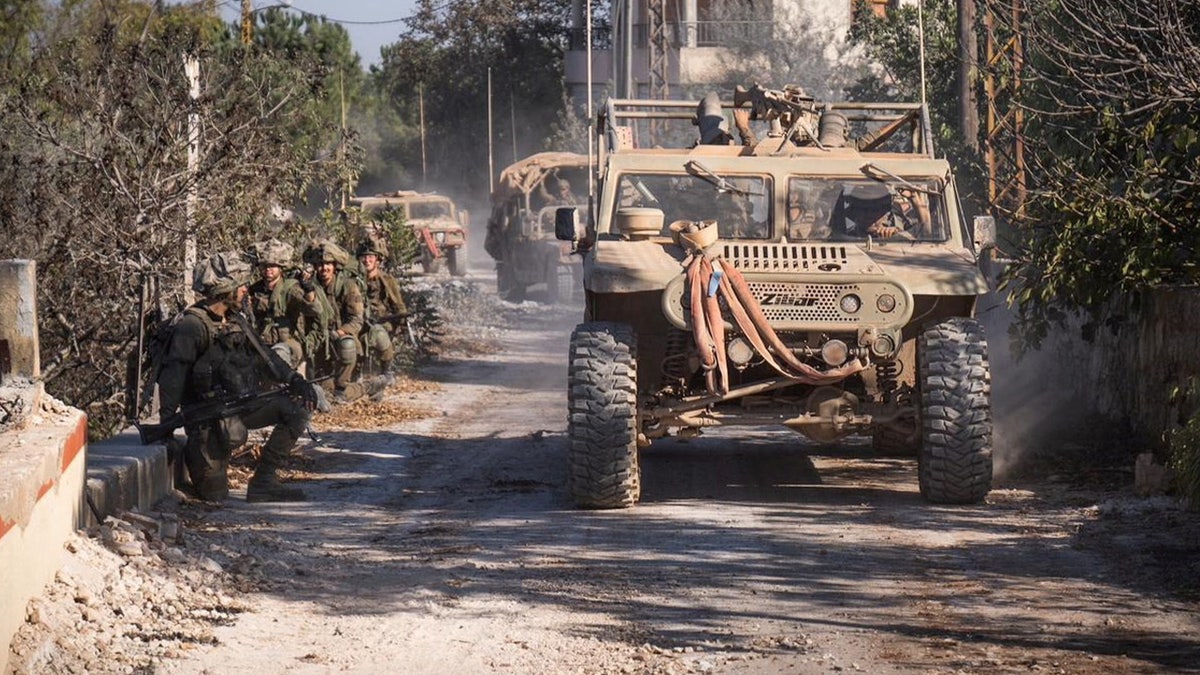
Israeli forces killed two Hezbollah operatives in southern Lebanon even as ceasefire talks between Israel and Lebanon resumed at the White House, according to military reports released on April 24, 2026.
The strikes came as U.S. President Donald Trump told reporters that Iran may have replenished some of its weaponry during a two-week lull in hostilities, but insisted the U.S. Military could neutralize any such buildup within a day. Trump reiterated his opposition to using nuclear weapons against Iran, stating that conventional forces had already degraded the country’s military capabilities to the point where such extreme measures were unnecessary.
According to Israeli military officials, the two individuals killed were involved in planning attacks against Israeli aircraft, with intelligence indicating they were preparing to launch missiles from Lebanese territory. The Israeli Air Force confirmed it conducted the strikes but emphasized it was not targeting Iranian positions directly, despite reports of heightened air defense activity around Tehran.
Meanwhile, Lebanese Prime Minister Najib Mikati accused Israel of committing war crimes in its operations along the border, a claim echoed by Hezbollah officials who denounced the strikes as violations of Lebanese sovereignty. The Lebanese government has called for international intervention to halt what it describes as disproportionate Israeli military actions.
Israeli officials, still, maintain that their operations are strictly defensive and aimed at dismantling Hezbollah’s operational infrastructure in southern Lebanon. They point to the recent arrest of a member of Hezbollah’s elite Radwan Force as evidence of ongoing efforts to disrupt militant networks embedded in civilian areas.
In a separate development, Israeli defense authorities announced that two technicians from the Israeli Air Force had been charged with espionage for allegedly passing sensitive information to Iranian intelligence services. The individuals were detained following an internal investigation, though no further details about the nature of the alleged leaks have been released.
For more on this story, see Israeli forces kill four Lebanese medics in southern Lebanon strikes.
The timing of these events coincides with renewed diplomatic engagement between Israel and Lebanon, facilitated by U.S. Mediators. Talks at the White House are focused on establishing a durable ceasefire in southern Lebanon, where cross-border exchanges have intensified over the past month.
Trump, speaking from the Oval Office, framed the current phase of the conflict as a transition from active combat to diplomatic negotiation, asserting that the initial military objectives had been met within the first four weeks. He warned that if diplomatic efforts fail, he would not hesitate to resume military action to achieve a lasting resolution.
When pressed on the possibility of nuclear escalation, Trump reacted with visible irritation, dismissing the idea as both unnecessary and irresponsible. He argued that the United States had already achieved its strategic goals through conventional means and that introducing nuclear weapons would serve no purpose other than to provoke unnecessary global alarm.
Analysts note that this stance echoes previous administrations’ reluctance to cross the nuclear threshold, even during periods of heightened tension. The last time U.S. Leaders publicly ruled out nuclear use in a regional conflict was during the 2020 Gulf tensions, when similar assurances were made amid fears of escalation with Iran.
This follows our earlier report, Israeli forces kill four medics in Lebanon ambulance strike dubbed ‘quadruple tap’.
Despite the diplomatic overtures, violence continues on the ground. Hezbollah launched multiple rockets into northern Israel earlier in the week, prompting Israeli intercepts and retaliatory strikes. The group has framed its actions as a response to Israeli incursions and a means of deterring further aggression.
U.S. Officials have acknowledged the fragility of the current situation, noting that while diplomatic channels remain open, the risk of miscalculation remains high. The administration has indicated it may extend a waiver on maritime trade restrictions to help stabilize global oil markets, which have been sensitive to any signs of widening conflict in the region.
As of April 24, no formal agreement has been reached between the parties, and both sides appear to be positioning themselves for a potential escalation should negotiations stall. The coming days will likely determine whether the current diplomatic push can hold or whether the region is headed toward another cycle of violence.
Why did Israel conduct strikes in Lebanon while talks were ongoing?
Israel stated the strikes targeted individuals actively preparing to launch missiles at Israeli aircraft, arguing that military action continues alongside diplomacy to prevent imminent threats.
What did Trump say about the possibility of using nuclear weapons against Iran?
Trump rejected the idea outright, saying the U.S. Had already degraded Iran’s military through conventional means and that nuclear weapons were unnecessary and should never be used by any nation.