
An international team of physicists has resolved a decades-long discrepancy between experimental measurements and theoretical predictions of the muon’s magnetic moment, delivering the most precise calculation to date of a key component underpinning this property.
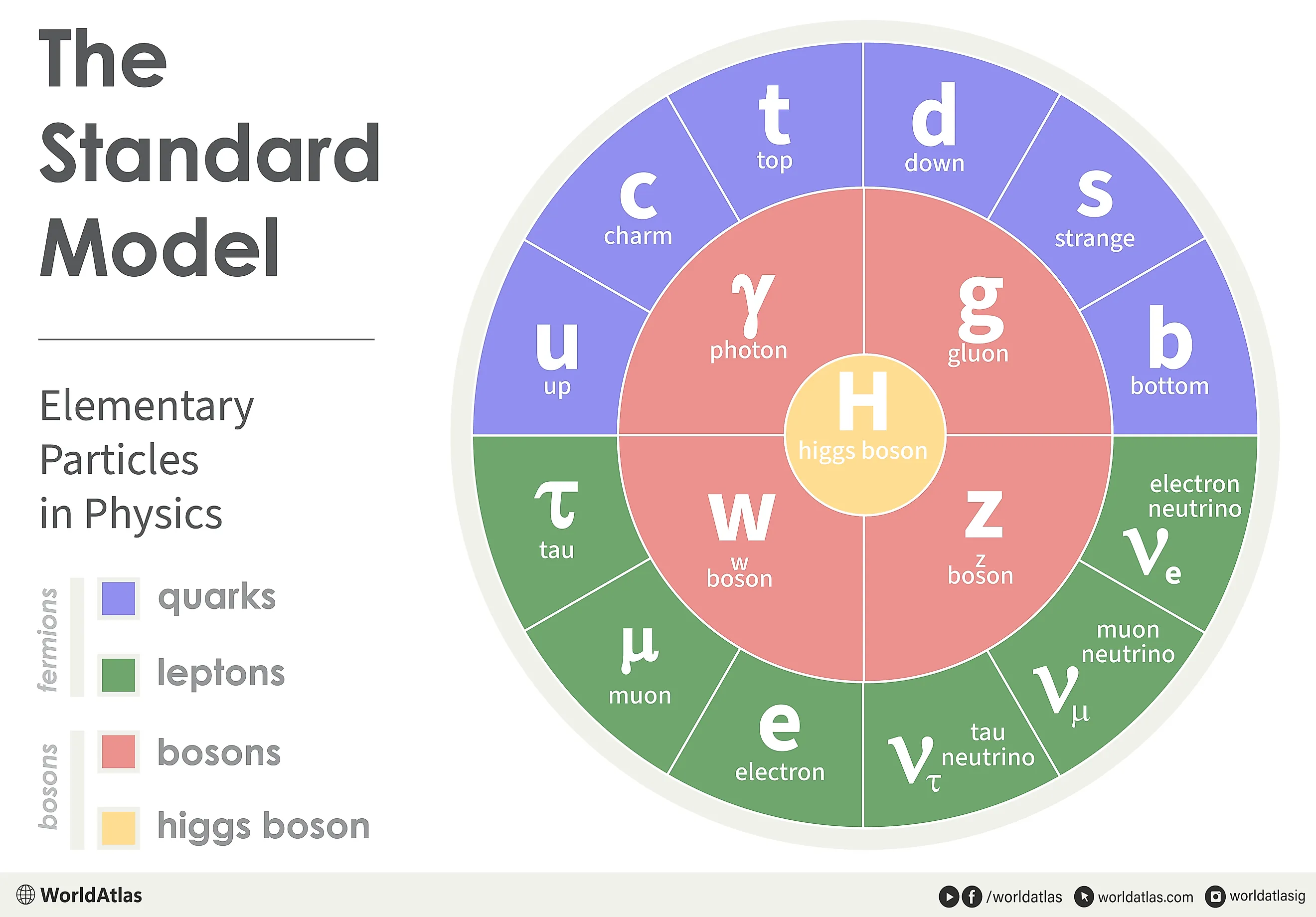
The study, published in Nature on April 22, 2026, focuses on the hadronic vacuum polarization contribution, which arises from the complex interactions of quarks and gluons governed by quantum chromodynamics (QCD). This component has long been the largest source of uncertainty in predicting the muon’s magnetic moment, a value that serves as a sensitive test of the Standard Model of particle physics.
Using a hybrid approach combining large-scale supercomputer simulations with experimental data, the researchers employed lattice QCD to divide space-time into a fine grid and solve the equations of the Standard Model within that framework. The calculations, which took a decade to complete, were performed on some of the world’s most powerful supercomputers and achieved unprecedented resolution.
The result is a determination of the hadronic vacuum polarization contribution with significantly reduced uncertainty — nearly twice as precise as the previous worldwide consensus. This updated prediction for the muon’s magnetic moment agrees with the latest experimental measurements to within just 0.5 standard deviations.
Expressed another way, the agreement between theory and experiment now holds to 11 decimal places, corresponding to an accuracy of parts per billion. This represents the most precise test of the Standard Model achieved to date.
Whereas the findings do not entirely rule out the existence of recent physics beyond the Standard Model — such as a hypothetical fifth force — they substantially narrow the window in which such phenomena could reside. The discrepancy that once fueled speculation about undiscovered particles or forces has largely evaporated under the weight of this refined calculation.
Dr Finn Stokes, an award-winning physicist from Adelaide University involved in the collaboration, noted the emotional complexity of the result. “When we started to calculate this quantity, we thought we were going to have a fine and trustworthy calculation for a new fifth force,” he said. “Instead, we found there is no fifth force.”
Lead researcher Zoltan Fodor, reflecting on the outcome, added a note of candid resignation: “People ask me how it feels to make this discovery and, to be honest, I feel somewhat sad.”
The study underscores the power of combining theoretical innovation with experimental rigor. By reducing uncertainties in one of the most stubborn corners of particle physics, the work reinforces confidence in the Standard Model while demonstrating the maturity of lattice QCD as a tool for precision science.
What the hybrid calculation method actually involved
The researchers did not rely solely on experimental data or theoretical models alone. Instead, they built a four-dimensional lattice representing space-time, discretized it into extremely minor cells, and numerically solved the equations of quantum chromodynamics within that framework. This lattice QCD approach allowed them to compute the contribution of quark-gluon interactions to the muon’s magnetism from first principles, minimizing reliance on external inputs and reducing systematic errors.
Why this matters for the future of particle physics
With the muon g-2 anomaly now largely resolved, experimental efforts at facilities like Fermilab can shift focus from chasing deviations to making even more precise measurements that might reveal subtler effects. The tightened constraints on possible new physics mean that any future discovery would need to emerge in increasingly narrow parameter spaces, raising the bar for claims beyond the Standard Model.
How the scientific community is responding
Reactions among physicists reflect a mix of satisfaction and wistfulness. While many welcome the removal of a long-standing tension between theory and experiment, others acknowledge the bittersweet nature of closing a door that once promised a glimpse into deeper layers of reality. The result is celebrated as a triumph of computational physics, even as it tempers expectations for imminent breakthroughs in new particle detection.
What is the muon’s magnetic moment and why does it matter?
The muon’s magnetic moment quantifies how strongly it behaves as a tiny magnet when exposed to an external magnetic field. Because this value can be calculated with extreme precision within the Standard Model and measured with equal precision in experiments, even small discrepancies can signal the influence of unknown particles or forces.
Does this mean there is no new physics beyond the Standard Model?
Not definitively. The results constrain the scale and nature of possible new physics but do not eliminate the possibility entirely. Any new contributions would now need to be smaller and more subtle than previously allowed by the earlier discrepancy.