It sounds like the opening sequence of a disaster movie, but for the life sciences arm of Google’s parent company, this is a calculated biological intervention. The goal is simple: use the insects’ own mating instincts to stop them from reproducing.
The Mechanics of the Wolbachia Sterility Cycle
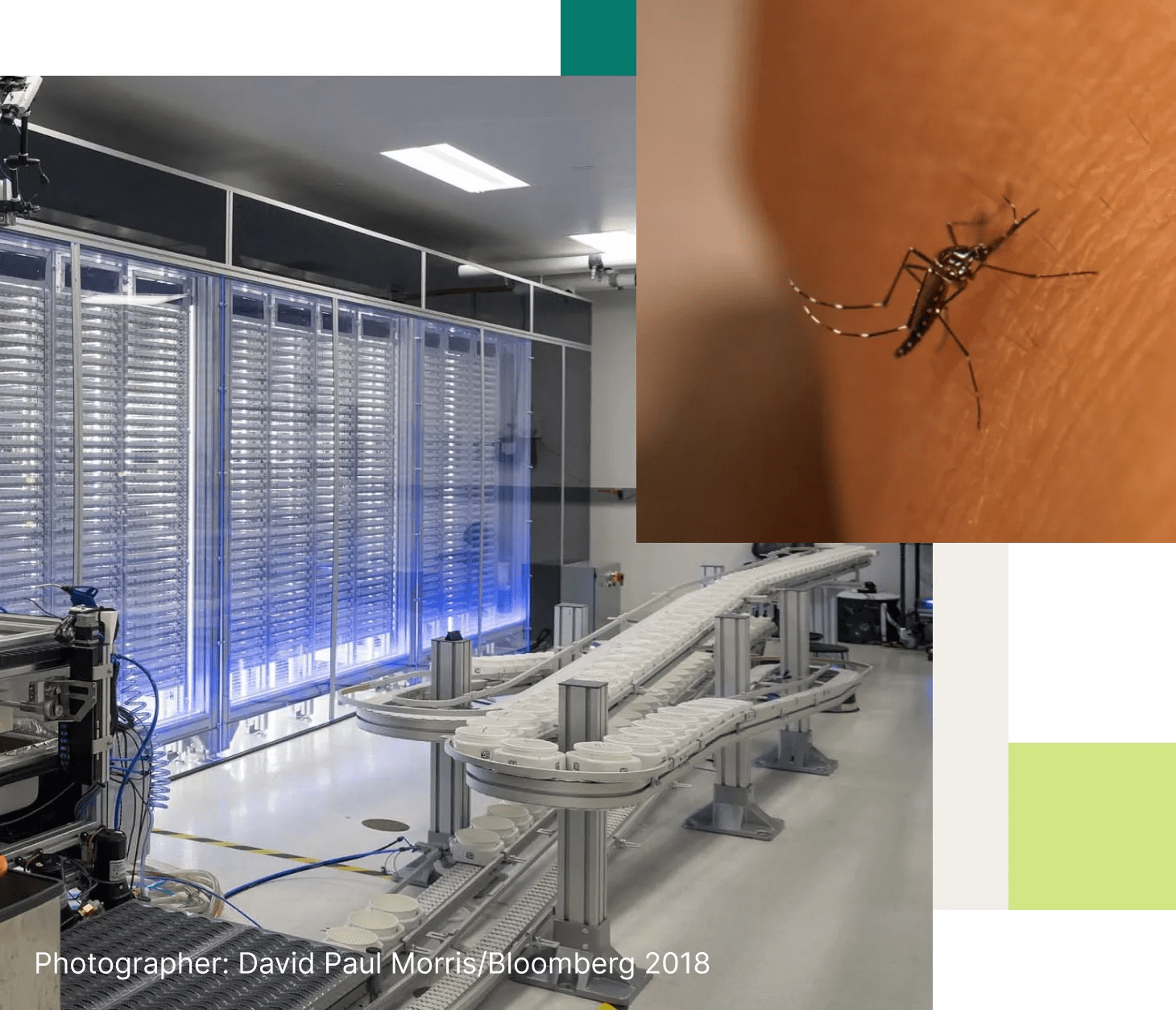
How the Wolbachia Sterility Cycle Works
The strategy does not rely on traditional pesticides or genetic modification in the way many fear. Instead, Independentespanol reports that the project focuses on male Aedes aegypti mosquitoes infected with Wolbachia. This bacterium is naturally occurring and already present in more than half of all insect species.
The biological “hack” is elegant in its brutality. Because the released mosquitoes are male, they do not bite humans. Their only purpose is to find wild females and mate. However, when a Wolbachia-carrying male mates with a wild female, the resulting eggs simply do not hatch.
By flooding a specific area with these sterile males, the population of the next generation collapses. It is a war of attrition played out in the brush and stagnant water of the American South and West.
Targeting the Aedes Aegypti Vector

The High Stakes of Aedes aegypti
The target is not just any mosquito, but the Aedes aegypti, also known as the yellow fever mosquito. These insects are aggressive, human-biting pests that are not native to the United States. They serve as primary vectors for a cocktail of dangerous pathogens:
The urgency is backed by grim data. Federal statistics indicate that mosquitoes are the deadliest animals on earth, with West Nile virus alone claiming 120 American lives every year. For a company like Alphabet, the “Debug” project is an attempt to apply the same logic used in software—identifying a bug in the biological system and deploying a patch to eliminate it.
Precedents and Scaling Biological Trials
A History of Biological Trials in the U.S.
While the scale of 32 million insects is jarring, this is not a first-attempt experiment. Verily has been testing these waters for nearly a decade. In 2017, the company released one million sterile mosquitoes in California as part of its early efforts.
Other players have also paved the way. A 2022 trial conducted by the British firm Oxitec in the Florida Keys was deemed a success, proving that targeted releases could measurably impact local mosquito populations without triggering an immediate ecological collapse.
This progression suggests a shift from “proof of concept” to “industrial application.” The leap from one million to 32 million indicates that the agency is moving toward a regional suppression strategy rather than isolated pocket tests.
Political Scrutiny and Ecological Concerns

Political Backlash and Ecological Risks
The project has not escaped scrutiny. Critics argue that removing a species—even a non-native one—could have unforeseen consequences for the food chain. Mosquitoes, which have existed since the era of the dinosaurs, serve as a food source for various pollinators and other wildlife that sustain human food systems.
The political reaction has been visceral. Tennessee Representative Tim Burchett has voiced sharp opposition to the tech giant’s involvement in biological engineering.
“Why does Google have 32 million mosquitoes? Have we not learned the lesson with kudzu, sparrows, starlings, and Asian carp? Shall I continue? Do not alter the balance of nature.”
Tim Burchett, U.S. Representative
Burchett’s reference to kudzu and Asian carp highlights a recurring American anxiety: the “invasive species paradox.” In an attempt to fix one ecological problem, humans often introduce another that proves impossible to contain.
The Global Blueprint for Insect Suppression
The U.S. request is part of a larger global strategy. Similar releases of Aedes aegypti infected with Wolbachia were scheduled for Brazil in March. By synchronizing these efforts, Alphabet’s subsidiaries are essentially creating a global laboratory to refine the process of species suppression.
The immediate future of the project depends on federal approval. If granted, the next few months will see the deployment of millions of sterile males across the humid corridors of Florida and the urban centers of California.
The tension here is between two different types of risk: the known, daily death toll from mosquito-borne illnesses versus the theoretical, long-term risk of altering a biological equilibrium. For the residents of Florida and California, the result will be a quiet, invisible war fought in their backyards, managed by one of the most powerful data companies in history.