
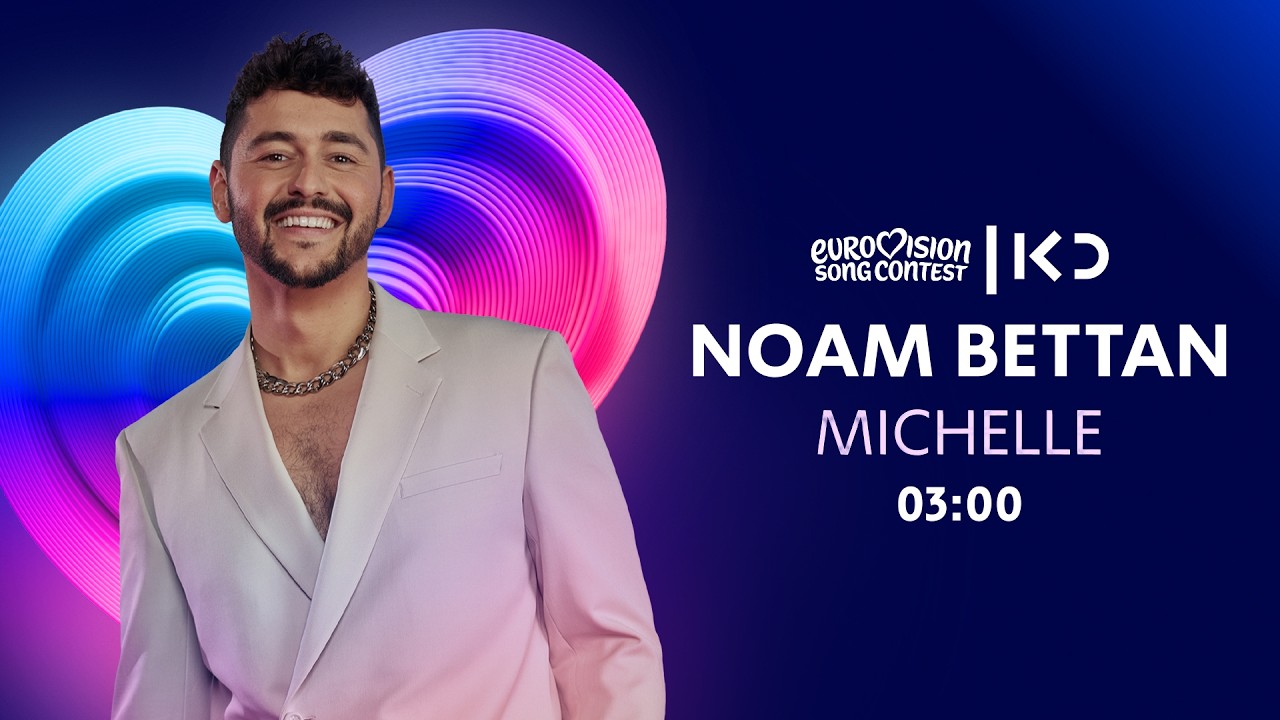
Noam Ban performed as the 10th act in the first semi-final of the 2026 Eurovision Song Contest in Vienna on Tuesday, May 12. Representing Israel with the song Michelle
, Ban’s appearance followed reported behind-the-scenes tension with Austrian directors and a secret rehearsal necessitated by a dancer’s injury.
The first semi-final of the 2026 Eurovision Song Contest in Vienna saw Israel’s Noam Ban take the stage during the latter portion of the evening’s program. Ban was slotted as the 10th performer in a sequence that included Moldova, Sweden, Croatia, Greece, Portugal, Georgia, Finland, Montenegro, and Estonia appearing before him. Following Ban’s performance, the running order continued with Belgium, Lithuania, San Marino, Poland, and Serbia.
The timing of the performance was a point of focus for viewers, with reports placing Ban’s ascent to the stage at approximately 22:55, while other sources indicated a start time of 23:00. This placement in the second half of the show is traditionally viewed as a strategic advantage in the contest, as later performers often remain fresher in the minds of the voting public.
Production Turmoil and Secret Rehearsals in Vienna
Despite the polished nature of the live broadcast, the lead-up to the performance was characterized by significant instability. Reports from the venue in Vienna detailed huge drama
occurring behind the scenes. The primary catalyst for this disruption was an injury sustained by one of the dancers in Ban’s troupe.
To mitigate the risk of a visible failure during the live transmission, the Israeli delegation conducted a secret rehearsal outside the main stage area. This clandestine session was designed to adjust the choreography and ensure the performance could proceed without a live incident following the dancer’s injury. These adjustments were critical for maintaining the visual integrity of the act under the scrutiny of millions of viewers.
The friction extended beyond the dance troupe. There was documented tension between the Israeli team and the Austrian directing staff. While the specific nature of the disagreements was not detailed, the conflict added a layer of volatility to the preparations for the first semi-final.
Vocal Performance and Technical Hurdles
The viability of Ban’s bid for the final was largely established during the jury rehearsals held on Monday, May 11. Professional juries from the 15 competing nations, supplemented by the “Big 4” representatives from Italy and Germany, cast their votes following these sessions.
Analysis of the rehearsal tapes indicated a dichotomy between technical execution and vocal ability. Ban encountered several technical glitches during the rehearsal phase, which could have compromised the act’s momentum. However, these issues were offset by a vocal delivery described as excellent. This strength in vocal performance is a key metric for the professional juries, who prioritize technical singing ability over the spectacle of the staging.
The presence of Italy and Germany during the evening served a non-competitive purpose. Both nations, as automatic finalists, performed their entries to showcase their songs to the audience, though they did not compete for a qualifying spot. Germany’s performance was scheduled to take place immediately after Noam Ban’s appearance.
Voting Mechanics and the Path to the Final
The determination of which acts advance to the grand final on Saturday, May 16, rests on a hybrid voting system. For the 2026 contest, the results are decided by a 50/50 split between the professional juries and the public televote.
This balanced system means that Ban’s strong vocal performance during the jury rehearsals provides a foundation of support from the professional side. However, the final outcome depends heavily on the public’s reaction to the live broadcast. The televote often favors high-energy performances and emotional resonance, making the resolution of the backstage drama and the successful execution of the modified choreography essential for public appeal.
The first semi-final serves as the primary filter for the competition, with only a limited number of countries securing a ticket to the final. With the jury votes already locked in from the previous day’s rehearsals, the focus now shifts entirely to the public’s response to Michelle
and how it compares to the other 14 competing entries in the first heat.