
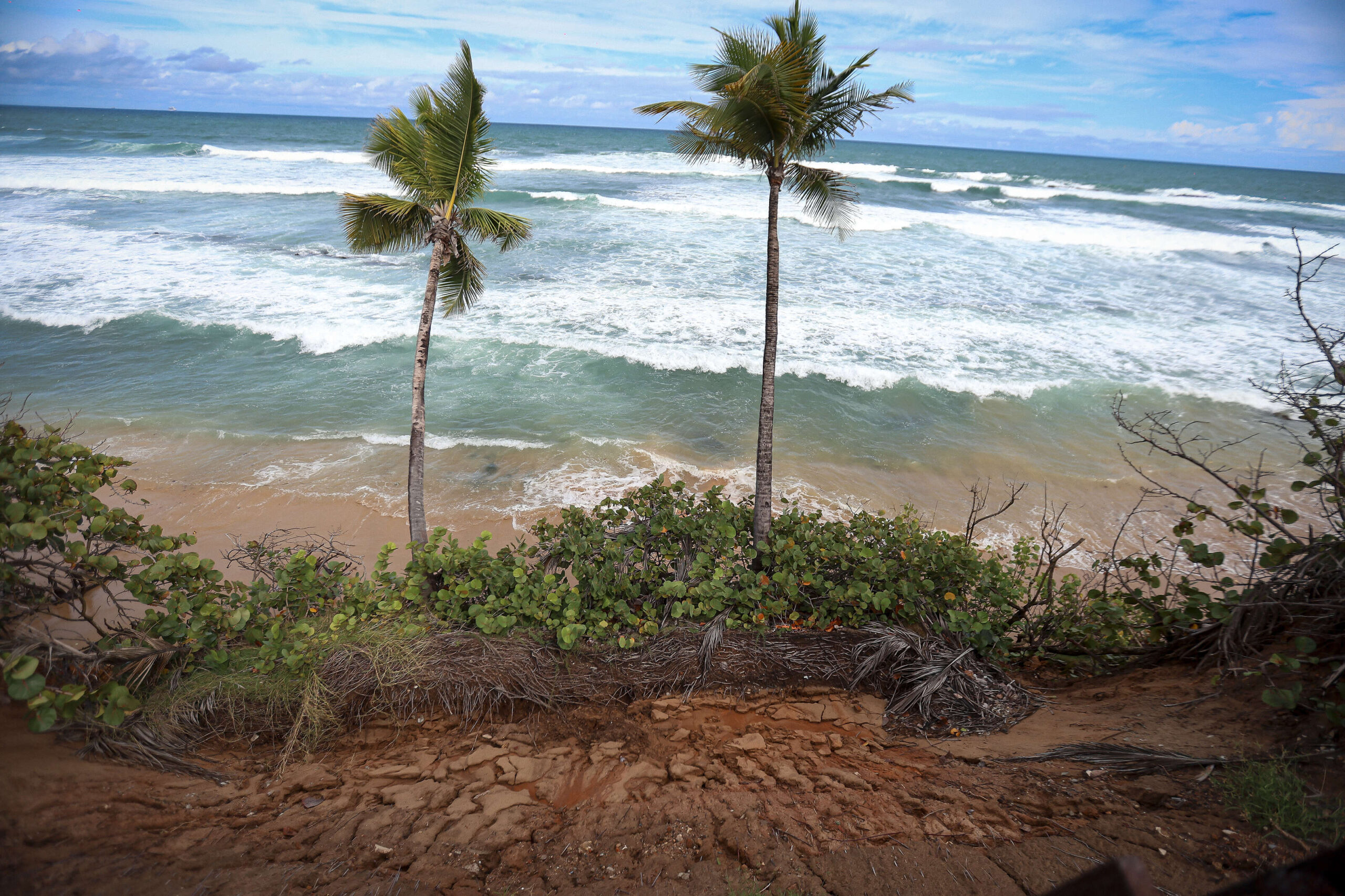
Governor Jenniffer González Colón signed Executive Order 2026-27 this week, declaring a state of emergency for critical coastal erosion in northern Puerto Rico. The order grants the Departamento de Recursos Naturales y Ambientales (DRNA) expanded powers to address the crisis, sparking criticism from experts over the lack of required permits and public consultations.
The declaration of a state of emergency on Wednesday, May 27, 2026, signals an urgent shift in how the Puerto Rican government intends to manage its deteriorating northern coastline. Executive Order 2026-27 establishes a legal framework to accelerate interventions in areas where land loss has reached critical levels. The governor’s order identifies a confluence of environmental pressures as the primary drivers of this instability, specifically citing the rise in sea levels, storm surges, and various atmospheric phenomena.
Expanded Authority of the DRNA
At the center of the current controversy is the breadth of authority delegated to the Departamento de Recursos Naturales y Ambientales (DRNA). Under the terms of the executive order, the agency is empowered to implement coastal defense and restoration measures with significantly reduced regulatory friction. The primary objective is to bypass the lengthy timelines typically associated with environmental impact assessments and administrative approvals to prevent further land loss.
However, this acceleration of authority has drawn immediate scrutiny. Analysts and experts have raised alarms regarding the potential for the DRNA to execute large-scale projects without the standard requirements for public consultations or the procurement of necessary permits. The concern is that the emergency designation provides a loophole to ignore established environmental safeguards that ensure coastal interventions do not inadvertently damage adjacent ecosystems or infringe on private property rights.
Regulatory Risks and Expert Warnings
The tension between the need for speed and the necessity of oversight is a recurring theme in Puerto Rico’s disaster management. Experts have warned that executing coastal works without rigorous consultation and permitting processes carries inherent risks. These risks include the possibility of implementing technically flawed solutions that could exacerbate erosion in other areas or destroy critical mangroves and coral habitats that provide natural protection.

The critique focuses on the potential for the executive order to override the checks and balances that usually govern the DRNA’s operations. By removing the requirement for public input, the government risks alienating the coastal communities most affected by the erosion, who often possess local knowledge of tide patterns and land behavior that formal engineering surveys might overlook.
Secretary Waldemar Quiles’ Response
In response to the growing criticism over the potential for administrative overreach, DRNA Secretary Waldemar Quiles has defended the government’s approach. Quiles has emphasized that the emergency powers are a necessary tool to combat a rapidly advancing environmental threat that cannot wait for traditional bureaucratic cycles.
The decree will not be used
to abuse.Waldemar Quiles, Secretary of the DRNA
The Secretary’s assurance suggests that the agency intends to maintain a level of internal discretion and responsibility, even as the formal external requirements for permits and consultations are waived. Despite these assurances, the lack of a defined set of guidelines on how the DRNA will replace these missing safeguards remains a point of contention for environmental advocates.
Drivers of Northern Coastal Erosion
The emergency declaration is a response to a measurable acceleration of coastal retreat in the north. According to the executive order, the intensification of erosion is not the result of a single event but a combination of systemic factors. Sea level rise has increased the baseline for flooding, making the coastline more vulnerable to the impact of storm surges during atmospheric events.
These factors create a cycle of degradation where the natural buffers of the coast are stripped away, leaving inland infrastructure and residential areas exposed. The urgency cited by Governor Jenniffer González Colón reflects a reality where the window for preventative action is closing, necessitating the aggressive posture adopted in Executive Order 2026-27.
As the DRNA begins to deploy resources under this emergency mandate, the focus will shift to the first set of projects implemented. The balance between the government’s goal of rapid stabilization and the experts’ demand for regulatory transparency will determine whether this state of emergency results in sustainable coastal resilience or a series of contested, short-term fixes.