
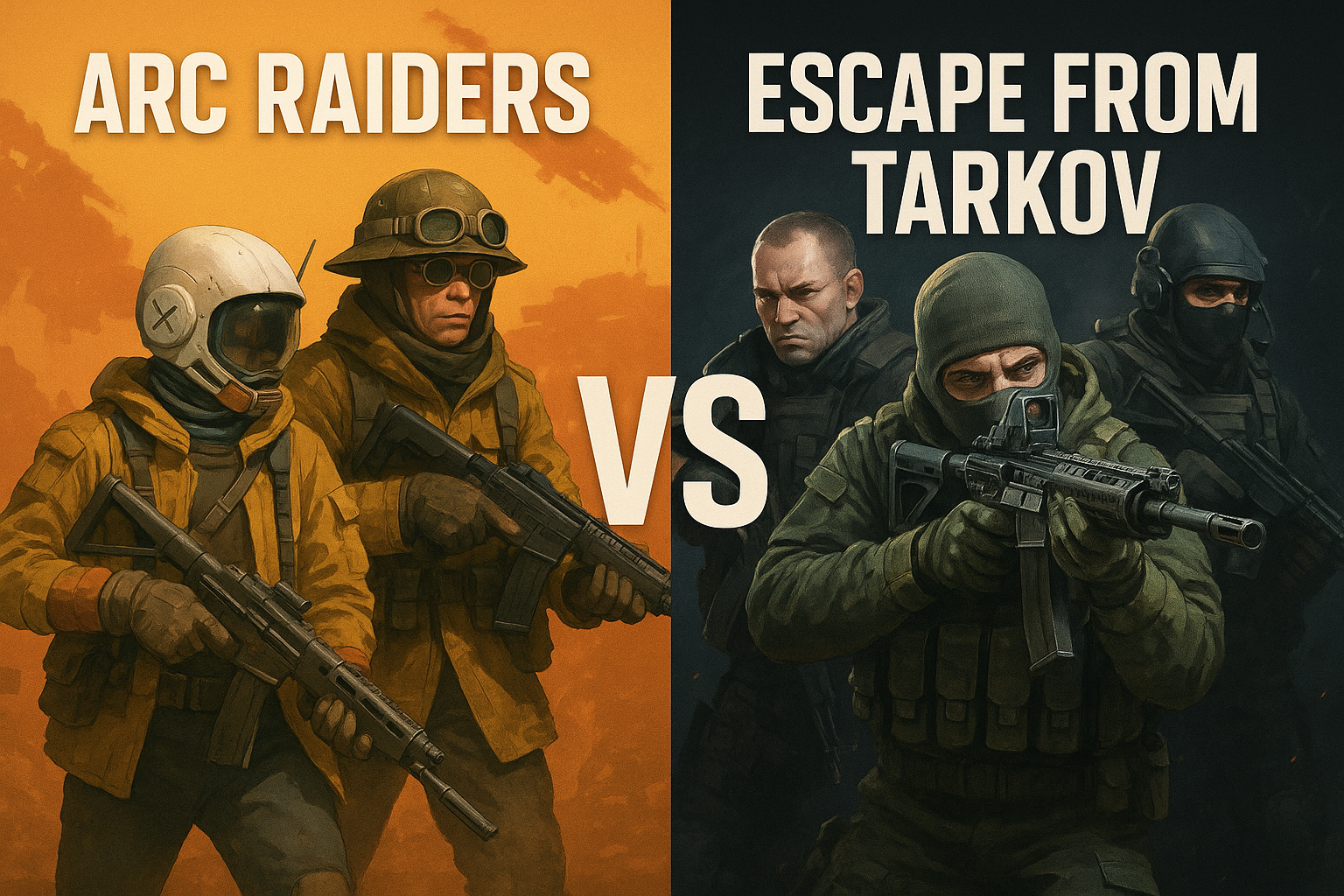
The extraction shooter genre’s biggest hit of 2025 is losing players faster than its rivals, yet still outlasting them in the long decline.
Arc Raiders, Embark Studios’ surprise hit that peaked at 481,966 concurrent players on Steam in January 2026, has shed 81.2% of its audience, dropping to just 44,419 active players as of mid-April. The drop mirrors a broader trend in the genre, where even flagship titles are seeing steep falloffs after initial hype cycles.
Meanwhile, Marathon, Bungie’s much-anticipated entry, launched with a peak of 88,337 players but now sees fewer than 9,000 concurrent users — a 72.2% decline from its peak. The game’s 24-hour high of 24,563 users underscores how quickly interest evaporated after launch.
Yet amid the grim statistics, one title stands out for its relative resilience. Escape from Tarkov, the decade-old pioneer of the extraction shooter genre, launched on Steam in November 2025 with a modest peak of 47,800 players. Despite its niche origins and reputation for punishing difficulty, it now holds 15,262 active players, with a 24-hour peak of 16,541 — representing only a 65.3% decline from its Steam debut.
That smaller drop, while seemingly minor, suggests something meaningful: Tarkov’s core audience, though small, may be more committed than the surge-driven crowds that flooded Arc Raiders and Marathon at launch. Battlestate Games, Tarkov’s developer, has sustained interest through consistent updates and a deliberate avoidance of live-service bloat, even as the game remains mired in controversy over its politics and steep learning curve.
The contrast reveals a deeper split in the genre’s trajectory. Arc Raiders and Marathon chased mass appeal with accessible mechanics and aggressive marketing, only to see their audiences evaporate when novelty wore off. Tarkov, by contrast, never chased the mainstream — it built a cult following through depth, rigidity, and community-driven endurance.
Industry observers note that the genre’s reliance on Steam for visibility distorts the full picture. Console player counts for these titles remain hidden behind platform-specific walls, making cross-platform comparisons impossible. But on Steam, where data is public, the pattern is clear: the games that burned brightest are fading fastest.
Critics point to multiple factors behind the decline: repetitive seasonal content, persistent cheating scandals, streamer fatigue, and a growing weariness with the genre’s loop-heavy design. Some analysts compare the trend to Helldivers 2, which has maintained steadier engagement through meaningful updates and community trust — a model Arc Raiders appears to be struggling to emulate.
Still, the genre isn’t dead. Even at reduced numbers, Arc Raiders retains a loyal base, and its developers continue to roll out patches and events. The real test may come not in player counts, but in whether studios can evolve beyond the launch-and-decline cycle that has defined the space so far.
What does this mean for the future of extraction shooters?
The genre may be splitting into two paths: one chasing fleeting virality, the other cultivating long-term devotion.
Why did Arc Raiders lose so many players so quickly?
Its rapid decline stems from a combination of underwhelming seasonal updates, ongoing cheating issues, negative sentiment among streamers, and a player base that grew tired of its PVE-heavy loops — a pattern seen in other live-service titles that fail to evolve beyond novelty.
How is Escape from Tarkov still holding on while others fade?
Tarkov’s smaller but more dedicated player base, combined with consistent content updates and a reputation for depth over accessibility, has allowed it to decline more slowly than its rivals despite launching with far fewer users.
Could Arc Raiders recover its player base?
Recovery is possible if the studio addresses core complaints — particularly cheating and content repetition — and rebuilds trust with a community that feels the game has strayed from its original promise.
Is the extraction shooter genre in decline overall?
Not necessarily. While individual titles are seeing sharp drops, the genre’s persistence — especially in niche corners like Tarkov — suggests it may be evolving rather than dying, with sustainability replacing virality as the new measure of success.