
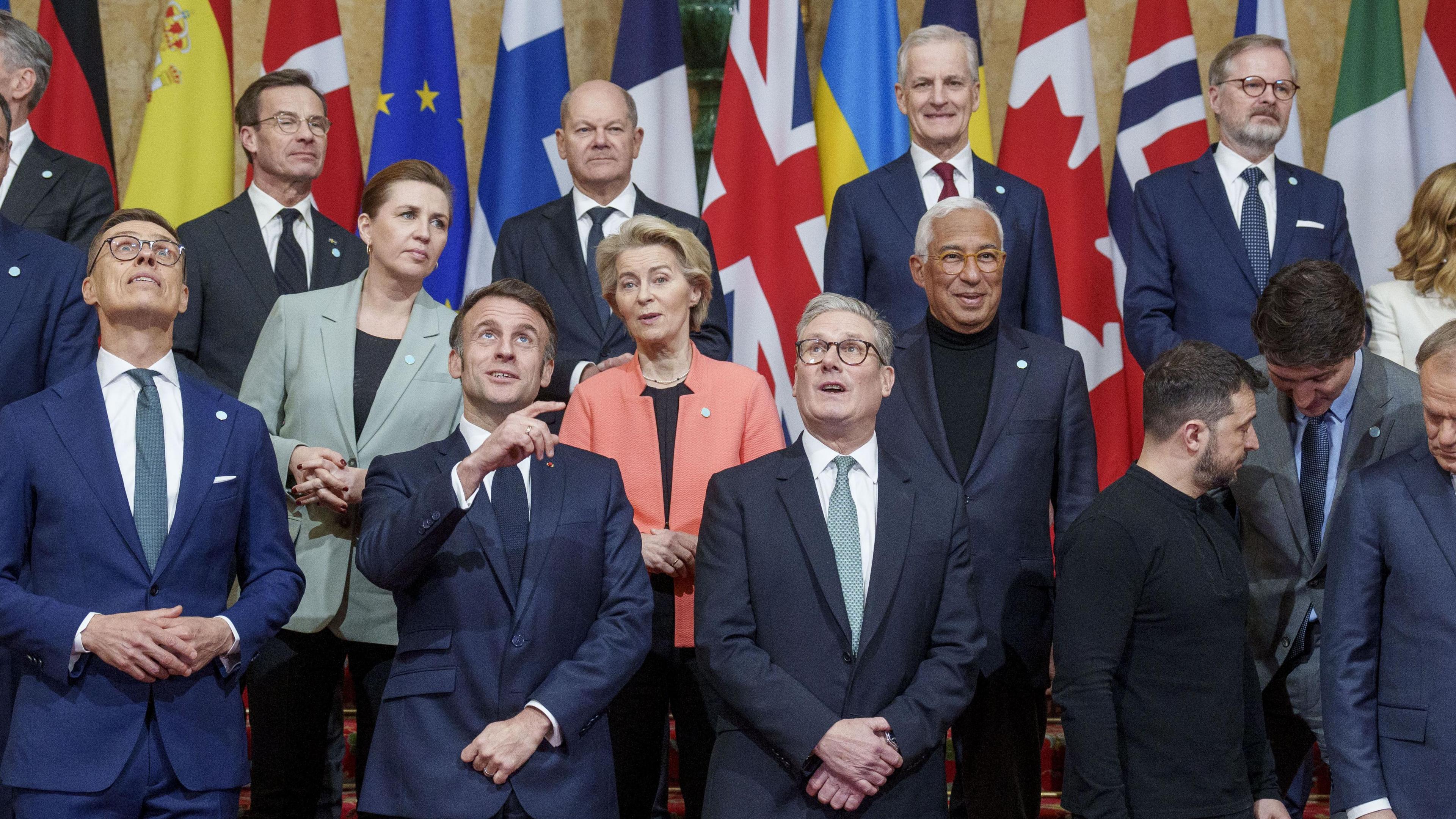
EU leaders have agreed the European Commission will prepare a blueprint for activating the bloc’s little-known mutual defence clause, a move driven by rising doubts about US commitment to Nato under Donald Trump.
The discussions, hosted by Cypriot President Nikos Christodoulides on Thursday night, focused on Article 42.7 of the EU treaty, which obliges member states to aid a fellow country under foreign attack by “all the means in their power.” The timing was notable: the talks concluded just before reports emerged that the US was exploring how to suspend Spain from Nato.
Trump’s criticism of the alliance has intensified after European nations declined to join the US-Israeli campaign in Iran, a conflict he has framed as joint action. This month he declared he was “absolutely without question” considering withdrawing the US from Nato, a step that would plunge the 77-year-old alliance into its gravest crisis.
Pedro Sánchez, Spain’s prime minister and one of Trump’s sharpest European critics over the Iran war, countered on Friday by affirming Spain’s loyalty to Nato while renewing his objection to “the failure of brute force in the Middle East.”
European Council President António Costa framed the initiative as practical preparation: “We are designing the handbook on how to employ this mutual assistance clause.” He pointed to a recent drone strike on a British base in Cyprus as a test case, noting that Greece, France, Italy, Spain and the Netherlands had mobilised equipment and forces to support Cypriot defences, while the Royal Navy faced criticism for limited deployable warships.
France remains the only EU member to have triggered Article 42.7, doing so after the 2015 Paris attacks that killed 130 people. At the time, France requested reinforcements for its overseas commitments to free troops for domestic security.
The vagueness of the treaty language around Article 42.7 was once viewed as an asset, allowing flexibility in response. Now, however, officials say the lack of detail creates uncertainty about execution — a gap the new blueprint aims to fill.
Christodoulides highlighted the practical questions at stake: if France were to invoke the clause, which countries would respond first, and what specific needs would the requesting government have? Answering those, he said, is essential to turning the provision from principle into action.
How the Cyprus drone strike became a reference point for EU defence planning
The recent drone attack on a British base in Cyprus served as the immediate catalyst for testing regional coordination. Although the base is UK-operated, the incident occurred on EU soil, prompting neighbouring states to demonstrate solidarity. The mobilisation of forces from Greece to the Netherlands showed that ad hoc cooperation is possible, even if naval readiness remains uneven.
Why Spain’s potential Nato suspension alarmed Brussels more than public rhetoric
While Trump’s threats to withdraw from Nato dominate headlines, the quieter exploration of suspending individual allies like Spain struck a deeper chord in European capitals. It suggested a shift from alliance-wide disengagement to targeted pressure, exploiting divisions among members over policies like the Iran war.
What the mutual assistance clause actually requires of EU members
Article 42.7 does not specify the form or scale of assistance, leaving it to each state to determine what “all the means in their power” entails. This could range from intelligence sharing and logistical support to direct military deployment, depending on the circumstances and the requesting nation’s capacity to act.

Why are EU leaders focusing on Article 42.7 now?
They are responding to growing uncertainty about US reliability in Nato, particularly after Trump’s repeated threats to withdraw and reports that the US is considering suspending Spain from the alliance.
Has the EU mutual defence clause ever been used before?
France is the only country to have triggered Article 42.7, doing so after the 2015 Paris attacks to request support for its overseas military commitments so it could redeploy troops domestically.