
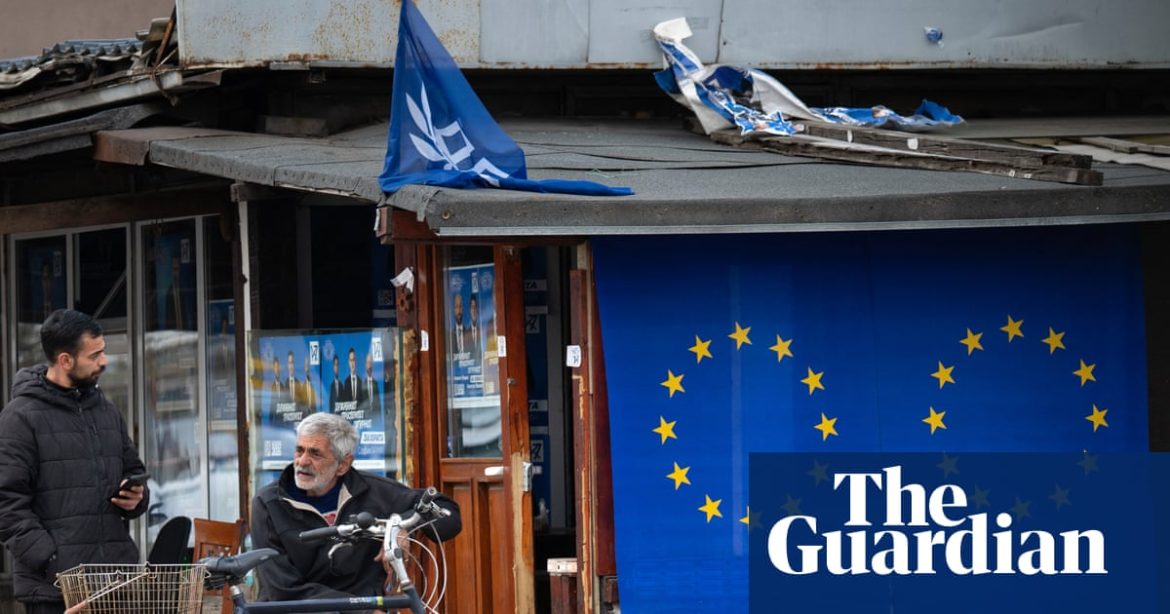
Anna Bodakova spent her morning knocking on doors in a Sofia suburb, her clipboard tucked under one arm and a smartphone ready to record voter concerns for her campaign’s TikTok feed. By afternoon, she was in a televised debate, arguing that the anti-corruption protests which toppled the government last December must translate into concrete legislation, not just street anger. The 23-year-old sociology graduate represents a generation of Bulgarians who believe their eighth parliamentary election in five years could finally break the cycle of turmoil that has seen no government last more than a year since 2021.
Yet as Bodakova campaigns for the pro-European We Continue the Change-Democratic Bulgaria coalition, her path forward is shadowed by the formidable lead of Rumen Radev in the polls. The former president, who resigned his ceremonial post in January to run for prime minister, is projected to secure over 30% of the vote in Sunday’s April 19 election — nearly 10 points ahead of his closest rival, ex-Prime Minister Boyko Borissov of the center-right GERB party. Radev’s appeal lies in his promise to dismantle what he calls an entrenched oligarchy of corrupt politicians and mafia ties, a message resonating strongly with older, rural voters disillusioned by years of instability.
This dynamic sets up a stark generational divide. Younger voters like Bodakova and Aleksandar Tanev, a 22-year-old law student, see Radev not as a reformer but as part of the same political elite that has failed to deliver change despite multiple opportunities. “He had the chance to employ caretaker governments to fight this mafia as president but did not,” Tanev told The Guardian. Dimitar Keranov of the German Marshall Fund’s Berlin office echoed this sentiment, noting that young Bulgarians broadly view Radev as representing the status quo they seek to dismantle.
AP News highlights how Radev’s campaign has gained momentum not only through his anti-establishment rhetoric but also by tapping into Eurosceptic and pro-Russian sentiments among certain voter blocs. His coalition, branded Progressive Bulgaria, positions itself as center-left while opposing military support for Ukraine and expressing skepticism about Bulgaria’s recent adoption of the euro — a stance that drew comparisons to Viktor Orbán in Hungary, whose authoritarian-leaning Fidesz party was defeated just days before Bulgaria’s vote.
The election comes amid unusually high stakes for Bulgarian democracy. After joining the eurozone and Schengen area on January 1, the country of 6.5 million has sought EU diplomatic assistance to counter Russian influence operations targeting public opinion via social media. Interim authorities have also attempted to bolster electoral credibility through nationwide police raids and pretrial proceedings for vote-buying, efforts that may help explain why pollsters predict turnout could rise from recent averages of 35% to over 50% on Sunday.
Bulgaria’s political volatility since 2021 — marked by seven inconclusive early elections in five years — has eroded public trust and fueled voter apathy. The last time a similar wave of protest-driven change emerged, in late 2020, it similarly failed to produce lasting reform as successive governments collapsed under street pressure or parliamentary maneuvering. Now, whether the energy of young activists like Bodakova can overcome the institutional inertia embodied by figures like Radev will determine if this election breaks the pattern or merely adds another chapter to it.
How the protest movement’s energy is being channeled into electoral politics
The mass demonstrations that forced Prime Minister Rosen Zhelyazkov’s resignation in December 2025 were fueled by anger over economic policies and perceived corruption, drawing hundreds of thousands — mainly young people — into the streets. Activists like Anna Bodakova now argue that transforming that energy into legislative change requires working within the parliamentary system, a view she expressed directly: “The protest is only half of the work. I want to turn what was expressed in the protest into laws and into rules.” This shift from protest to policy reflects a deliberate strategy by pro-reform forces to institutionalize demands for transparency and European integration.
Why Radev’s lead reflects deeper societal fractures beyond simple popularity
Rumen Radev’s polling advantage stems not just from personal popularity but from his ability to appeal to voters who feel left behind by Bulgaria’s rapid European integration and frustrated with perceived elite corruption. His background as a former fighter pilot and air force commander lends him credibility as a disciplined outsider, while his rhetoric against oligarchic structures taps into widespread resentment. Yet, critics note that as president, he had access to caretaker governments and constitutional tools to investigate corruption but did not pursue aggressive action — a point underscored by young voters who see his candidacy as a continuation of familiar patterns rather than a rupture.
What the election means for Bulgaria’s foreign policy orientation
The outcome will test Bulgaria’s commitment to its Western alliances at a time of heightened geopolitical tension. Radev has opposed military support for Ukraine and expressed skepticism about eurozone membership, positions that contrast sharply with the pro-European stance of groups like We Continue the Change-Democratic Bulgaria. A victory for his coalition could signal a shift toward greater strategic autonomy — or even rapprochement with Russia — despite Bulgaria’s NATO and EU commitments. Conversely, a strong showing by pro-European forces would reinforce the country’s post-January 1 trajectory of deeper Western integration, even as it grapples with internal challenges to democratic norms and rule of law.
Why is this Bulgaria’s eighth election in five years?
Since 2021, no Bulgarian government has lasted more than a year due to a combination of street protests over corruption and backroom parliamentary deals that have repeatedly triggered votes of no confidence or collapsed coalitions, forcing early elections.
How does Rumen Radev’s candidacy compare to Viktor Orbán’s situation in Hungary?
While both leaders have been described as populist figures challenging established elites, Radev leads a center-left coalition with pro-Russian and Eurosceptic tendencies, whereas Orbán’s Fidesz party is a right-wing nationalist force; crucially, Orbán was defeated in Hungary’s recent election, while Radev is currently leading in Bulgarian polls ahead of Sunday’s vote.