
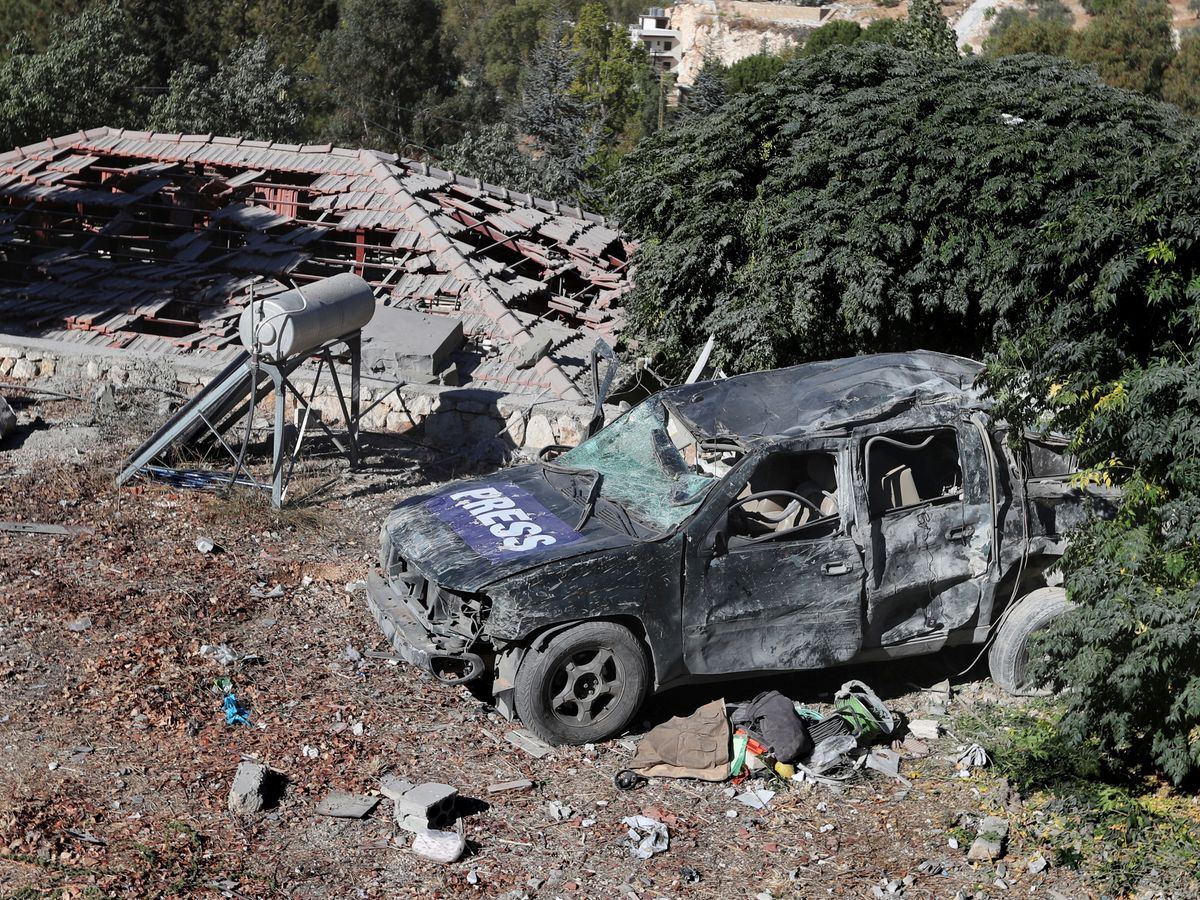
Amal Khalil lay buried under concrete and dust for nearly six hours after an Israeli airstrike struck the house where she had taken shelter in southern Lebanon.
The Lebanese journalist, who worked for the pro-Hezbollah daily Al-Akhbar, was covering developments near the village of at-Tiri with photographer Zeinab Faraj when an Israeli strike hit the vehicle in front of them. They fled to a nearby house, which was then struck in a second attack, according to Lebanon’s health ministry. Faraj sustained a head wound and was rescued by emergency crews, but when they returned to retrieve Khalil, Israeli fire — including a sound grenade and live ammunition — blocked their access to the building. Her body was pulled from the rubble shortly before midnight, hours after the initial strike.
The Israel Defense Forces said it targeted two vehicles that had emerged from a building used by Hezbollah in the area and crossed its “forward defense line,” a newly declared security zone in southern Lebanon. The military stated the vehicles approached troops in a manner posing an immediate threat, prompting the strikes. While the IDF acknowledged receiving reports that two journalists were injured, it maintained it does not target journalists and claims to mitigate harm to them during operations.
Rescuers said they were prevented from reaching Khalil by renewed Israeli fire, a claim echoed by Lebanon’s health ministry, the Union of Journalists in Lebanon, and a senior military official. The ministry said Israeli forces “prevented the completion of the humanitarian mission” by firing on ambulances and rescue teams. Khalil’s death brought the total number of people killed in Israeli strikes on Wednesday to five, despite an ongoing ceasefire that had taken effect the previous Friday.
Her killing came on the eve of the second round of direct talks between Israeli and Lebanese officials in Washington, D.C., aimed at extending the ceasefire. Lebanon’s Prime Minister Nawaf Salam condemned the attack, stating that targeting journalists and obstructing relief efforts constituted war crimes, and pledged to pursue accountability through international bodies.
This is not the first time journalists have come under fire in southern Lebanon during the current escalation. In March, an Israeli airstrike killed three journalists in the region, with the military saying it had intended to target one of them. Since Israel launched its offensive in response to Hezbollah missile launches into Israel, more than 2,400 people have been killed in Lebanon, according to Lebanese authorities.
Why did the Israeli military say it carried out the strikes?
The military said it struck the vehicles and building after identifying them as having emerged from a Hezbollah-used structure and crossed its “forward defense line,” claiming the vehicles approached troops in a manner posing an immediate threat to their safety.
What did Lebanon say about the killing of Amal Khalil and the blocking of rescuers?
Lebanon’s government, through its health ministry, prime minister, and journalistic unions, said Israeli forces prevented rescue teams from reaching Khalil by firing sound grenades and live ammunition, calling the act a war crime and pledging to pursue accountability internationally.