
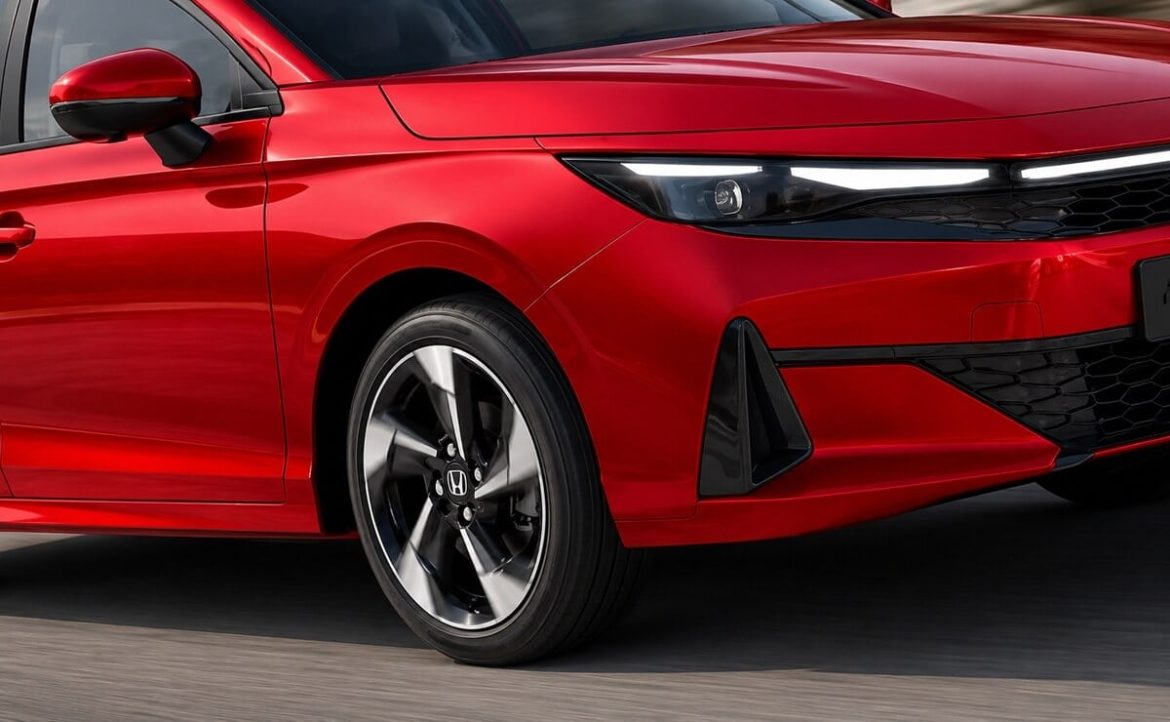
Honda has unveiled the refreshed 2027 City, introducing significant design changes and a strategic pivot toward hybrid powertrains. Available as both a sedan and hatchback, the updated model targets the competitive B-segment, aiming to outperform rivals like the Toyota Yaris through enhanced technology and high-efficiency e:HEV engines.
Redesigned Aesthetics and the Sporty RS Identity
The latest iteration of Honda’s renewed City sedan represents a calculated effort to modernize a platform that has been in use since 2019. While the general silhouette and platform remain largely unchanged, the visual updates are substantial, particularly at the front of the vehicle.
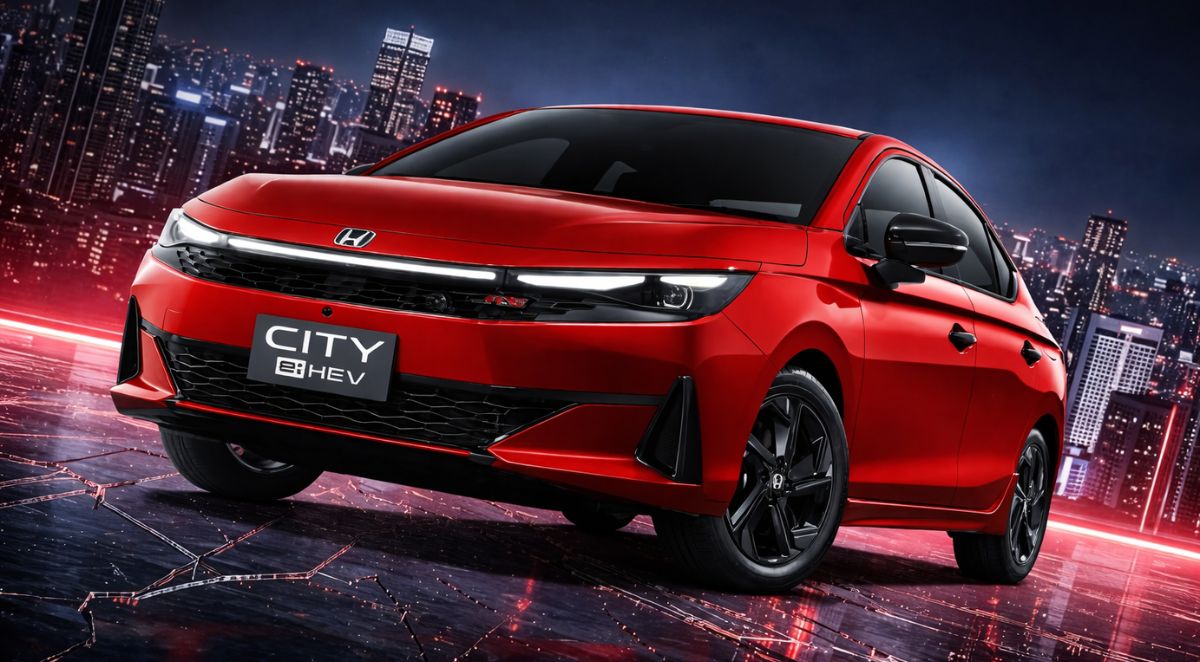
The new fascia features more aggressive lines and a redesigned honeycomb-style grille that appears slimmer and more stylized than previous versions. This design choice is paired with thinner, more sophisticated LED headlights. In certain markets, these headlights are even visually linked by a continuous LED bar that spans the width of the front end. According to reports from Motorpasión México, the reduction in grille size has allowed Honda to reposition the brand emblem lower on the hood, creating a more contemporary look.
- Red Honda emblems.
- A unique front bumper design.
- New 16-inch aluminum wheel designs.
- A more pronounced rear diffuser.
- Exclusive color options, including “Rojo Belzing” and “Gris Urbano.”
The rear of the vehicle has also seen a subtle evolution. The LED taillights now utilize a dark grey background with transparent lenses, a styling cue intended to give the sedan a more modern, premium appearance.
Digital Integration and Premium Cabin Features
Inside the cabin, Honda is attempting to move the City upmarket by prioritizing digital connectivity and convenience. The most prominent upgrade is the introduction of a 10-inch multimedia touchscreen. While entry-level variants may receive a slightly smaller display, the 10-inch unit is better integrated into the dashboard, offering a more seamless and user-friendly interface than the outgoing model.
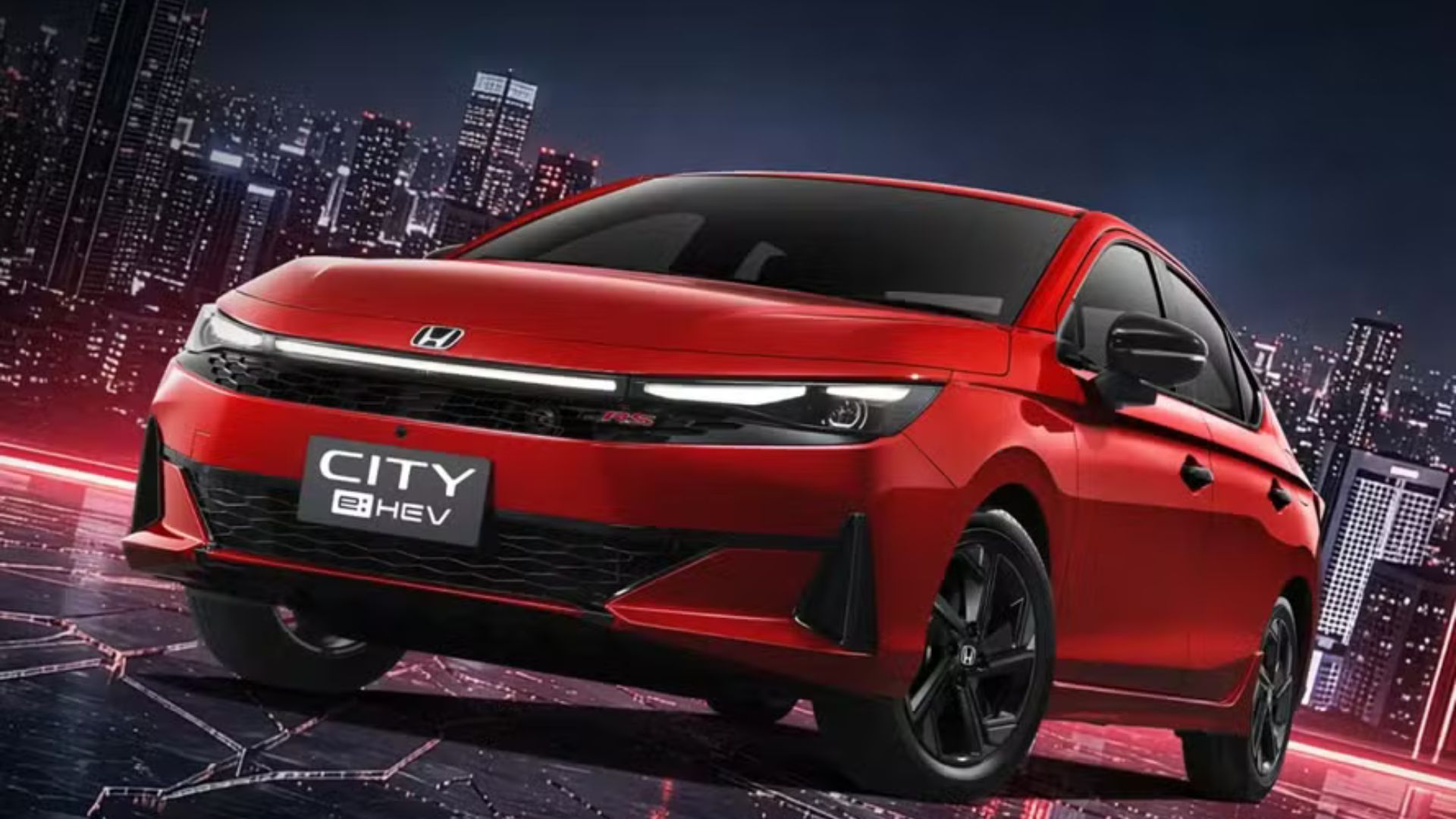
The technological suite has expanded to include several features typically found in higher-tier segments. As El Carro Colombiano noted, the updated lineup emphasizes a “tech-forward” approach, incorporating a 360-degree camera system, a wireless smartphone charger, and an electrochromic rearview mirror with anti-glare functionality.
Comfort-oriented upgrades vary by trim level and market. Higher-specification models are expected to offer ambient lighting, ventilated front seats, and ivory-colored upholstery. In some regions, a panoramic sunroof will also be available, further distinguishing the City from its more utilitarian competitors.
The Strategic Pivot to e:HEV Hybridization
The most significant transformation occurs under the hood. Honda is aggressively transitioning the City from a traditional internal combustion engine (ICE) lineup to one dominated by electrification. This shift is best exemplified by the e:HEV self-charging hybrid system.
The e:HEV powertrain combines a 1.5-liter naturally aspirated engine with an electric motor to produce a combined output of approximately 125 to 126 CV. This system is designed for maximum efficiency; in the Indian market, the City has demonstrated fuel economy figures as high as 27.2 km/l. This emphasis on hybrid technology is a clear signal of Honda’s intent to lead in the efficiency-conscious B-segment.
However, the hybrid system will not be the only option available globally.
| Engine Type | Horsepower | Transmission | Market Context |
| 1.0L 3-cylinder Turbo | 120 CV | CVT | Base/S versions in select markets |
| 1.5L 4-cylinder (NA) | 119–126 CV | CVT | Standard ICE versions in India/Brazil |
| 1.5L e:HEV Hybrid | 125–126 CV | e:HEV System | Primary focus for Thailand and high-trim models |
In markets like Thailand, the hybrid strategy is so pronounced that most versions of the City are offered exclusively with the e:HEV system, leaving the 1.0-liter turbocharged engine as the sole non-electrified option for entry-level buyers.
Regional Availability and Market Rollout
The global rollout of the refreshed City is staggered, reflecting the importance of different markets to Honda’s overall strategy. The vehicle has already seen significant activity in Asia, with recent presentations in India and Thailand serving as a blueprint for what is to come in other territories.
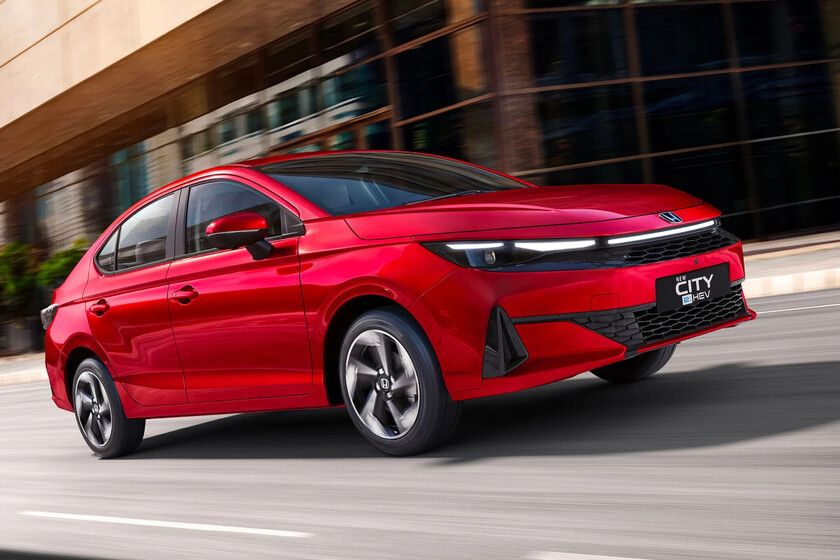
In India, Autocosmos reported that the updated City has already been presented by Honda Cars India Ltd, with local pricing starting at approximately 1,200,000 rupees. While this translates to roughly 217,000 Mexican pesos, industry analysts expect the pricing in Mexico to be higher once local market factors are applied.
- Brazil: The new line is expected to arrive during the second half of the year, with August being a key window for the official debut. Pricing is anticipated to be around the R$ 129,000 mark.
- Chile: While the current model is imported from Brazil, there is significant anticipation regarding whether the new e:HEV hybrid technology will be made available to Chilean consumers before the end of the year.
- Mexico: The refreshed model is expected to arrive in the coming months, though specific pricing has yet to be finalized.
By combining a more aggressive design language with a heavy emphasis on hybrid efficiency, Honda is positioning the City not just as a reliable commuter, but as a sophisticated technological contender capable of challenging the dominance of the Toyota Yaris.