
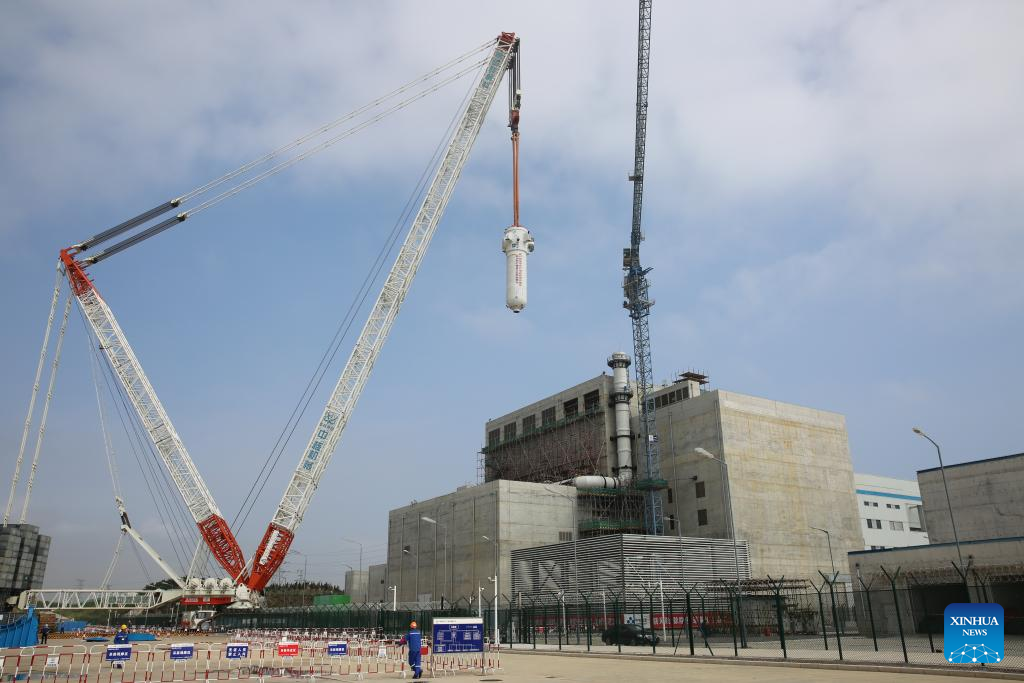
China established a global precedent with the 2023 operation of the 200,000 kW commercial demonstration station in Shidaowan, Shandong. This project marks the entry of fourth-generation nuclear technology into the commercial sector, promising enhanced safety, reduced waste, and higher efficiency compared to traditional water-cooled reactor designs.
The Engineering Shift: From Water to Helium
The transition to fourth-generation (Gen IV) nuclear technology represents a fundamental change in reactor physics, fuel cycles, and cooling methods. While traditional nuclear plants rely on water-cooled systems, Gen IV designs aim to resolve long-standing safety and waste concerns through radical technical shifts.
One of the primary reactor types being developed is the Very High Temperature Gas-Cooled Reactor (VHTR). These systems utilize graphite and ceramic materials within the reactor core to withstand extreme thermal environments. The ability to reach core temperatures near 1000 degrees Celsius allows for much higher thermal efficiency than current models.
Unlike the water-cooled methods used in existing plants, the VHTR employs helium, an inert gas, for core cooling and heat transfer. This shift to gas cooling is a central component of the technology’s revolutionary
nature, as it changes how heat is managed and how the reactor responds to thermal fluctuations.
Another priority design is the Supercritical Water-Cooled Reactor (SCWR). By operating at supercritical pressures, these reactors aim to achieve higher efficiency, though the specific technical parameters for widespread commercial deployment remain a focus of ongoing international research.
China’s Commercial Milestone in Shidaowan
The Shidaowan demonstration project in Shandong province serves as the primary evidence of Gen IV viability. In 2023, the 200,000 kW commercial demonstration station officially began operations, making it the first fourth-generation nuclear power plant in the world to enter commercial service.
This deployment aligns with China’s national energy objectives. The country’s 15th Five-Year Plan explicitly includes the steady promotion of fourth-generation reactor research and application demonstrations. The Shidaowan project demonstrates a move toward inherent safety
, a technical state where the reactor’s physical properties prevent a meltdown even without active intervention.
The economic implications of this technology are also being tracked by industry analysts. The China Investment Industry Research Institute published a report titled 2025-2029 China Future Industry Fourth-Generation Nuclear Power Industry Trend Forecast and Investment Opportunity Research Report
, which examines the commercial trajectory of these advanced systems. The focus is on moving from experimental phases to scalable, cost-effective energy production that can meet rising industrial demands.
The Global Roadmap and the 2030 Horizon
The development of Gen IV technology is not a solitary pursuit but a coordinated international effort governed by the Generation IV International Forum (GIF). Established in 2001 by the United States, Argentina, France, Japan, and seven other nations, the GIF has identified six priority reactor types for development.
The forum’s roadmap targets the year 2030 as the threshold for the commercialization of these next-generation technologies. China has been a deep participant in this international framework since joining the organization in 2006.
The technical goals of the GIF focus on three main pillars:
- Enhanced safety through inherent physical characteristics.
- Improved sustainability via the reduction of nuclear waste.
- Increased efficiency and the prevention of nuclear proliferation.
As these technologies mature, they are expected to redefine the global energy map by offering a more stable and low-carbon alternative to fossil fuels.
Meeting the Surge in Electricity Demand
The push for Gen IV nuclear power is driven by a massive increase in global electricity requirements. The rise of electric vehicles and the expansion of energy-intensive data centers have placed unprecedented pressure on existing power grids.
Traditional energy sources face challenges in meeting this demand while simultaneously hitting carbon reduction targets. Fourth-generation reactors offer a potential solution by providing high-capacity, base-load power that is more efficient than previous generations.
By addressing the safety concerns that have historically hindered nuclear expansion, Gen IV technology seeks to provide a reliable energy foundation for the digital and electric age. The success of the Shidaowan project suggests that the transition from laboratory demonstration to commercial reality is already underway.
