

The image of shrimp is inherently very close to the people of the South in general and the West in particular. Unlike sea urchins, which have thin, tiny bodies, Western gull shrimps are usually larger than shrimps, with bodies the size of chopstick heads and hard shells as clear and blue as jade.
On hot summer days, when the surrounding river’s water dries up, I often follow my father into the fields to scoop shrimp. Most people in my hometown choose to scoop up shrimp to use as food to feed eels and storks. Every time I bring shrimp home, my father often recites the folk song: “The peacock scoops up shrimp and feeds the eel / Raise it until it grows big and it crawls away.”
When he saw that we were wondering about the meaning of the sentence, my father – who was a young retired literature teacher – gently explained that the image of a shrimp was included in folk songs and proverbs to express an honest, caring heart. Just help and share. But unfortunately, sometimes helping with all your heart still meets people’s betrayal and ingratitude.
Roasted shrimp. Photo author provides
“In my childhood memories, around May, when the cool wind sways the Hau River, shrimp will appear in most of the canals, ditches, ponds, and lakes in the fields. After a long sleep in the season In the spring, in the shells clinging to the surface of the fields or in the holes of frogs, crabs, eels, snakes… the shrimp will begin a self-reliant life. This is also the time when farmers in my hometown begin to sow. The rice and green rice seedlings gradually mature with the flow of water, and the shrimps also grow larger.
Around the 7th and 8th months of the lunar calendar, when the rice begins to ripen and become golden, the people in my hometown are excited for the new harvest so they start draining the fields into most of the canals and canals. This is also the ideal shrimp fishing season. In my hometown, there are many different ways of fishing. However, the simplest way is usually to use the method of closing the bottom, thickening, placing in a trap, fishing with a net or scooping with a basket.
I still remember a time in my hometown, suddenly there was a movement to catch shrimp using bagua nets. I heard that was quite interesting so I decided to imitate it as well as my friends. Seeing me carrying homemade bagua nets to catch, my father just smiled and said nothing. I thought it was a simple job. As a child, I gently placed the net in the ditch and sat leisurely waiting. I could not have imagined that when I pulled it up, there were only a few seaweed shrimp jumping around as if making fun of my naivety.
Looking at the son who kept pulling his hair, my father felt sorry for him and said: “If you don’t put the bait in the net, how can the shrimp bite the bait?” After Dad said that, he quickly went to the neighbor to ask for some crabs from Uncle Tu’s field, then gently crushed them and put them in my net. I felt confident when I saw that, so I gently placed the net in the evening. Sure enough, when I woke up in the morning, I saw a lot of seaweed shrimp and goby fish.
For the people of my hometown, shrimp are a popular, cheap food source but rich in protein and calcium and easy to prepare. On leisurely days, my father often prepares shrimp dishes to share with his drinking friends. Every day when she scoops up a lot of shrimp, my mother will take the opportunity to prepare spicy and fragrant roasted shrimp, or use the shrimp to make fish sauce with a strong but sweet and delicious smell.
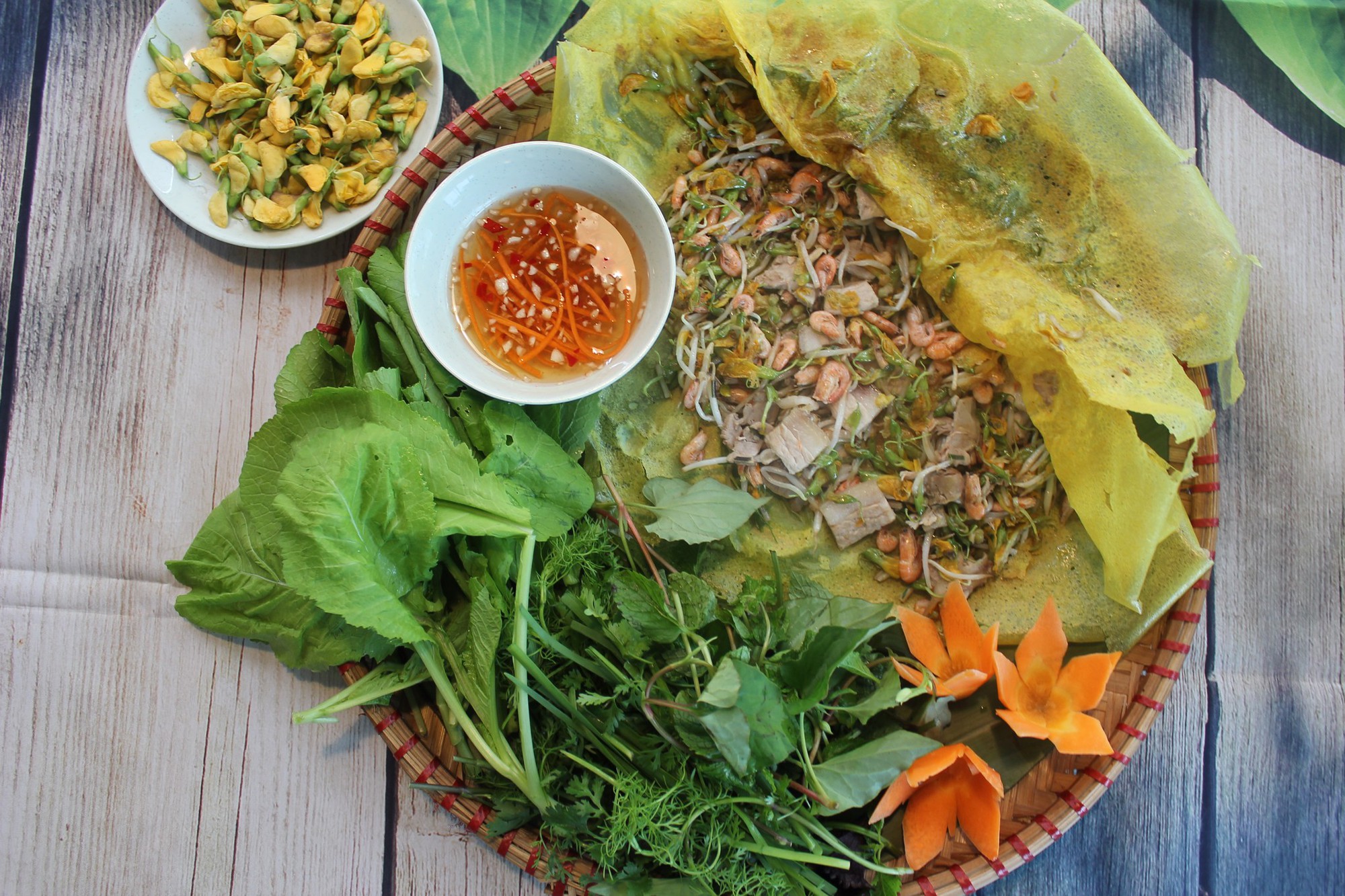
Pancakes filled with shrimp. Photo author provides
Sometimes, when there is no food at home, my mother often braises shrimp and fish with pepper, adding a few spices such as fish sauce, chili, garlic… just that is enough for the family to have a delicious meal. People from my hometown also often take advantage of homegrown plants to create delicious dishes that suit their taste, such as shrimp cooked in sour soup with chopsticks, seasoned with rice, and eaten with salty dishes like roasted shrimp with coconut milk. Just like that, the feeling of being gathered around a tray of rice, eating, drinking, makes anyone who has gone through difficult times of childhood nostalgic.
Occasionally, during the shrimp season, after catching, my family also has the habit of using the shrimp for daily eating, while the rest is dried to cook soup when it rains or when there is no opportunity to go to the fields to look for food. Eat differently. On hot summer days, our children just need to go to the garden to pick natural vegetables such as: spinach, pennywort, mustard greens, amaranth, wild amaranth… and bring them home. My mother will take advantage of those available ingredients to cook a pot of vegetable soup with shrimp. The soup is sweet, cool and pure, with a strong hometown flavor.
On slow death anniversaries, small shrimp are transformed into fried shrimp cakes by the ladies in my hometown or filled with shrimp pancakes with bacon, eaten with herbs and raw vegetables and dipped in fish sauce. sweet and sour, combined with a little garlic and chili.
If you want to change the flavor, people from my hometown will combine it with boiled shrimp mixed with grated papaya salad and boiled pork skin, it’s still very delicious. Just sit around together, enjoy the shrimp cakes, enjoy the crispy aroma mixed with the sweetness of boiled shrimp meat, the fatty, chewy feeling of the pork skin and the crunch of the papaya salad. full of happiness.
Many years have passed, I have grown up and left my hometown, but I still remember my childhood. Sometimes, tired from all the hustle and bustle in the city, I crave the delicious soup cooked with seaweed shrimp. It’s just a pity that my parents are gone, the old house has long been sold, all childhood memories remain only in my mind.
Electronic media Vietnamese people Open the column “Telling village stories” from March 4, 2020. This column is for all professional and amateur authors who have love for the countryside and want to share their true stories with readers.
The article must not have been published in any mass media or publication. Authors please clearly state your full name, pen name (if any), contact address, email, phone number, account number to receive royalties.
Articles in collaboration with the column “Telling village stories” should be sent to email: [email protected]; Contact phone: 0903226305.
