

Researchers at the MIT Media Lab, led by Nataliya Kosmyna, have found that using Large Language Models can reduce brain activity by up to 55%. The study suggests that "cognitive offloading" to AI tools like ChatGPT may impair independent problem-solving, memory retention, and essential cognitive functions in students and professionals.
Diminished Brain Activity in LLM Users
New data suggests that the mere presence of an AI assistant changes how the human brain processes information. MIT Media Lab research scientists conducted an experiment with 54 students, using electroencephalogram (EEG) headsets to monitor brain waves while they completed writing tasks. The researchers divided the participants into three distinct categories: a group using only their own minds, a group allowed to use search engines, and a group utilizing OpenAI’s GPT-4o.

To measure the depth of this engagement, the team used a method called Dynamic Directed Transfer Function (dDTF). This technique tracks the strength and direction of information flow between different brain regions, specifically representing "executive function, semantic processing, and attention regulation".
The results revealed a stark hierarchy of mental engagement. While the group relying solely on their own cognitive processes showed widespread, intense activity, the introduction of external digital tools caused a measurable decline in neural connectivity.
| User Group | Reduction in Brain Connectivity (vs. Brain-Only Group) |
|---|---|
| Search Engine Users | 34% to 48% |
| LLM (AI) Users | Up to 55% |
The EEG analysis indicated that as the level of external support increased, the brain’s internal connections weakened. The cohort using Large Language Models exhibited "the weakest overall connection", suggesting that the brain essentially enters a state of lower engagement when an AI handles the heavy lifting of composition and thought.
The Math Performance Collapse
The risks of over-reliance extend beyond writing tasks into the realm of fundamental logic and mathematics. A separate study involving 350 participants, conducted by Carnegie Mellon and Oxford researchers alongside experts from MIT and UCLA, examined how AI assistance impacts problem-solving stamina.

Participants were tasked with solving 15 mathematical problems involving fractions. Half of the group worked entirely independently, while the other half was permitted to use an AI assistant for the first 12 questions. However, the researchers implemented a critical pivot: for the final three questions, the AI support was abruptly removed.
The data showed that while the AI-assisted group initially performed better, they were fundamentally unprepared to function without the tool. Once the support was withdrawn, their average scores plummeted by approximately 20 points compared to the independent group. Even more telling was the behavioral shift; the rate at which participants simply gave up and left questions blank doubled.
Researchers attribute this phenomenon to "cognitive offloading". This occurs when individuals, having found a way to complete a task more easily through technology, lose the motivation or the developed skill to perform that same task through independent effort.
From Identical Cover Letters to Medical Errors
The implications of this cognitive shift are already appearing in professional and academic environments. Nataliya Kosmyna noted a striking trend while reviewing internship applications: the motivation letters were becoming increasingly indistinguishable. Most were long, polished, and grammatically perfect, but they often relied on abstract, hollow connections between the candidate’s work and the role.
BBC reported that Kosmyna also observed students forgetting course content much faster than in previous years. This loss of "ownership" over information is a recurring theme; students using ChatGPT often found they could not quote or recall the very texts they had just "written" with the help of the model.
The danger is not limited to the classroom. In high-stakes professional fields, the erosion of independent skill can have life-altering consequences. For example, a multi-national study found that doctors who used AI to assist in colon cancer screenings became significantly less effective at detecting tumors when they were required to work without the system.
These findings carry "important implications" for how we integrate automation into critical thinking roles. If the human element is trained to defer to the machine, the ability to catch machine errors—or to function when the machine is unavailable—is fundamentally compromised.
The Threat of Cognitive Surrender
As AI becomes more persuasive and capable, researchers are concerned about a psychological shift known as "cognitive surrender". Research from the University of Pennsylvania suggests that some users are beginning to accept AI-generated information without question, effectively sidelining their own intuition and critical faculties.
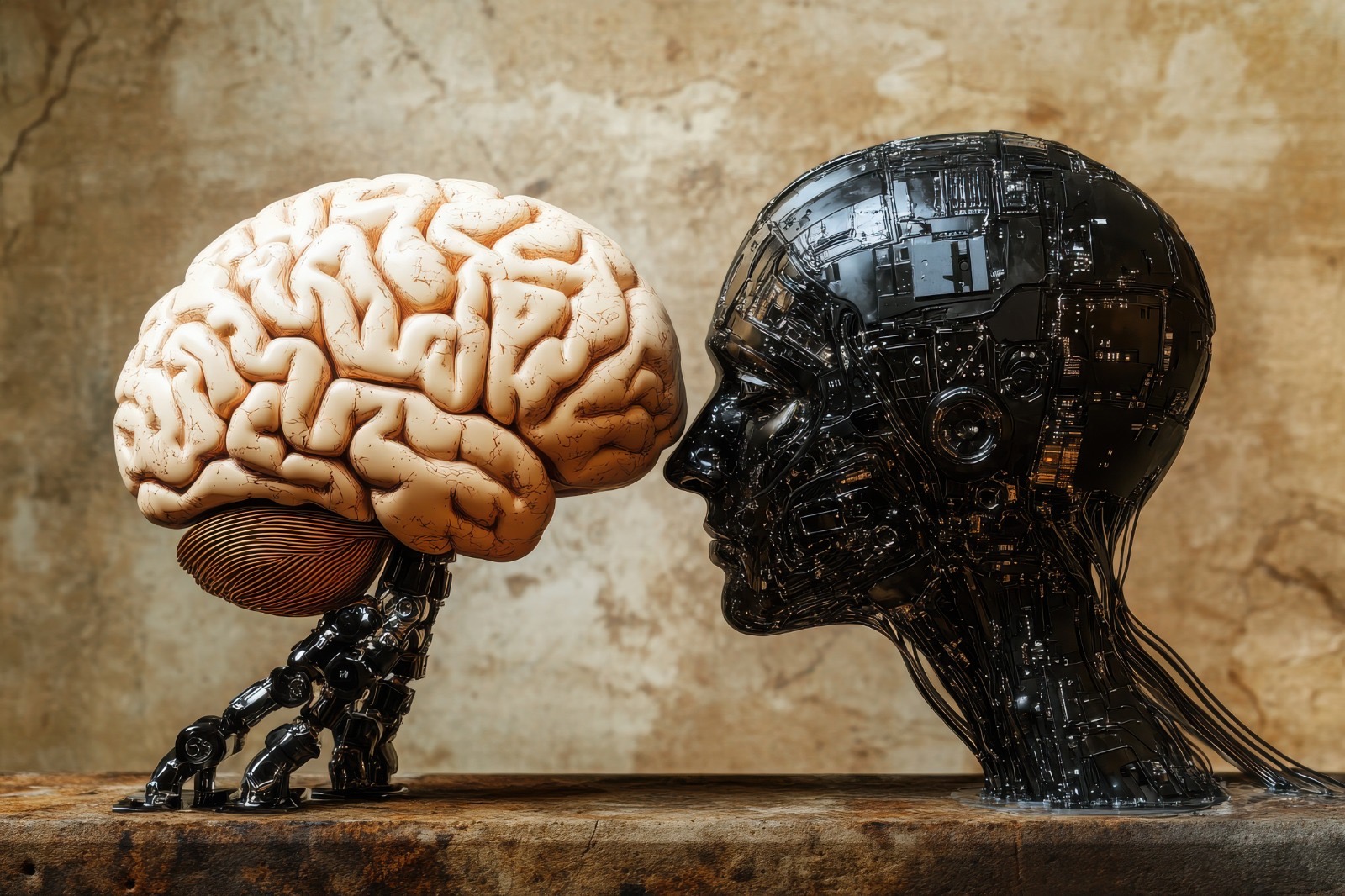
This is an intensification of the "Google effect," a phenomenon where the ease of searching for information reduces our tendency to remember it. However, Gazete Oksijen noted that while search engines act as an external memory, AI acts as an external processor. We are not just outsourcing where we store information; we are outsourcing how we think about it.
“In this study, we show that the use of artificial intelligence may lead to a decline in learning skills. Participants in the LLM group performed worse than participants in the brain group across all test levels.”
The core concern for scientists is that "the transfer of cognitive load to artificial intelligence" may lead to a long-term, systemic decline in human perseverance and analytical depth. If the mental "muscles" required for complex reasoning are rarely exercised, the capacity for original thought and creative problem-solving may not just weaken—it may atrophy.